The Negotiation Paradox: Why the Best Deals are Built on Empathy, Not Force
Golden Hook & Introduction
SECTION
Nova: Most of us walk into a negotiation ready for battle. We sharpen our arguments, we prepare our defenses, we steel ourselves for the clash of wills. We think it's about winning.
Atlas: And honestly, Nova, for a lot of us, that's just how the game is played. You come in strong, you hold your ground, you get what you want. Anything less feels like... losing.
Nova: Exactly! But what if that entire mindset is precisely what's holding us back from the deals, the ones that actually build lasting value? Today, we're flipping that script entirely. We're diving into what we call 'The Negotiation Paradox,' exploring why the most powerful deals aren't won through force, but through a profound, almost counterintuitive, understanding of the other side.
Atlas: Oh, I like that. 'The Negotiation Paradox.' That certainly goes against the grain for anyone who's ever had to fight for a budget or close a tough deal.
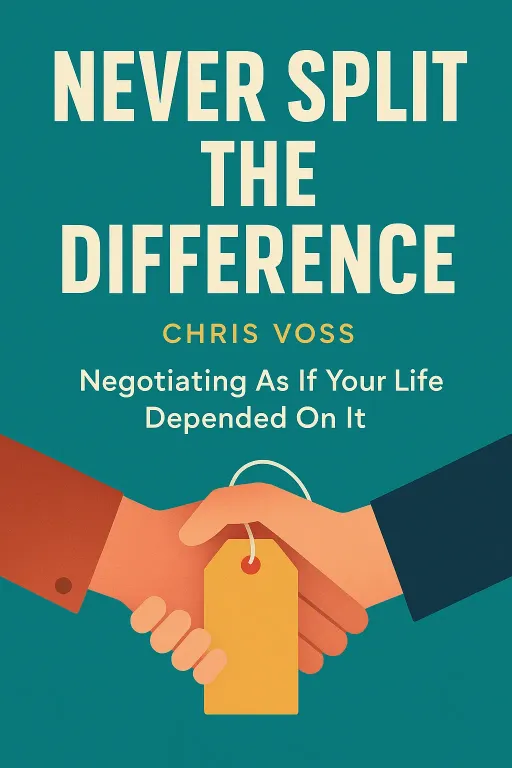
Nova: It absolutely does. And we’re drawing our insights from two absolute titans in the field. First, Chris Voss, a former FBI hostage negotiator, whose book "Never Split the Difference" completely redefines what it means to be effective under pressure. His background alone tells you this isn't about pleasantries; it's about life-or-death stakes.
Atlas: A former FBI hostage negotiator? That's not your typical business school professor. That immediately ups the ante on what he has to say.
Nova: Precisely. And then, we’ll also look at the classic framework from Roger Fisher and William Ury, whose groundbreaking work "Getting to Yes" has been the gold standard for principled negotiation for decades. Together, these two perspectives reveal that the cold fact about negotiation isn't about demanding; it’s about truly listening.
Atlas: So, you're saying the secret isn't a bigger sword, but better ears? I'm curious how these different approaches, one from high-stakes law enforcement and the other from academia, converge on that idea.
Tactical Empathy: Unlocking Hidden Motivations
SECTION
Nova: They converge beautifully, Atlas. Let's start with Voss and his concept of tactical empathy. It sounds soft, doesn't it? Empathy in a negotiation? But Voss argues it's one of the most potent weapons in your arsenal. It’s not about agreeing with someone, it’s about understanding their worldview and communicating that understanding back to them.
Atlas: Hold on. For a strategist, for someone building a business, empathy can feel like a vulnerability. How do you maintain a position of strength, or even leverage, if you're trying to empathize with the other side? Isn't that just giving them more power?
Nova: That’s a common misconception, and a critical one to address. Voss teaches that tactical empathy is about being nice or compromising your position. It's an information-gathering tool. It's about recognizing, legitimizing, and then using the other person’s emotions to your advantage. He has a technique called 'mirroring' – simply repeating the last three significant words someone says. It sounds almost too simple.
Atlas: Mirroring? Like, if I say, "This proposal is too expensive," you'd say, "Too expensive?"
Nova: Exactly! And then you stay silent. What happens is remarkable. The other person feels heard, even understood, and they often elaborate. They'll tell you it's too expensive, or what their underlying concern really is. It’s a subtle invitation to reveal their hidden motivations.
Atlas: That’s fascinating. I can see how that bypasses the immediate defensiveness. Instead of arguing "too expensive," you're inviting them to explain the of that statement. It feels less like a confrontation and more like a collaboration in understanding.
Nova: And that's the magic. It uncovers the "Black Swan" information – those hidden, unexpected details that can completely reframe the negotiation. Think of a scenario where a supplier is demanding a higher price for a critical component. Your initial reaction is to push back on cost.
Atlas: Of course. My analytical brain immediately goes to unit economics, alternative suppliers, competitive pricing.
Nova: Right. But if you use tactical empathy, if you mirror their "We need this price increase to stay afloat," and then label their emotion – "It sounds like you're under a lot of pressure to maintain your margins" – they might reveal something deeper. Perhaps their raw material costs have skyrocketed due to an unforeseen global event, or they're facing a labor shortage.
Atlas: So, you're not just getting a price, you're getting context. And that context might allow for a completely different solution than just haggling over numbers. Maybe you can help them source materials, or offer a longer-term contract for stability.
Nova: Precisely! You move from fighting over the price to solving the underlying problem. It’s about leveraging emotional intelligence to find breakthrough agreements, which is a far more strategic outcome than just winning a single skirmish. For a strategist focused on lasting impact, understanding the 'why' behind the 'what' is invaluable.
Principled Negotiation: Crafting Mutual Gain
SECTION
Nova: And that brings us perfectly to Fisher and Ury’s work in "Getting to Yes," which provides the structural framework for building on that emotional understanding. While Voss focuses on the psychology of the moment, Fisher and Ury give us the principles to craft sustainable, mutually beneficial outcomes.
Atlas: Okay, so once I understand the other side's motivations and emotions, how do I actually something from that? For someone trying to build strategic alliances, it can't just be about understanding; it has to be about actionable, sustainable agreements.
Nova: Absolutely. Their core idea is to focus on, not. A position is what someone says they want – "I want $100 for this." An interest is they want it – "I need $100 to cover my rising operational costs and ensure my team gets paid."
Atlas: So, the position is the surface demand, and the interest is the underlying need or desire. That goes back to what you were saying about understanding the 'why.'
Nova: Exactly. Fisher and Ury also advocate for "separating the people from the problem." This means recognizing that the person across the table isn't the problem; the problem is the shared challenge you both face. Emotions are real, but they shouldn't derail the pursuit of a rational solution.
Atlas: That’s a tough one, especially when negotiations get heated. It’s easy to personalize things, to see the other person as an obstacle rather than a partner in solving a problem.
Nova: It takes discipline, but it’s crucial. Their third principle is to "invent options for mutual gain." Once you understand everyone's interests, you can brainstorm creative solutions that address those interests, rather than just splitting the difference on rigid positions.
Atlas: Give me an example. How does this play out in a real-world scenario, especially for someone looking to build strategic alliances, where you need long-term trust, not just a one-off deal?
Nova: Think of two companies negotiating a joint venture. Company A insists on 60% ownership, while Company B demands 50%. If they just haggle over percentages, it’s a zero-sum game. But if they explore their: Company A wants control over product development to protect brand quality, while Company B wants a larger share of revenue from sales for expansion capital.
Atlas: Ah, so their interests aren't directly conflicting on the surface. They both want to succeed, but they have different priorities for how that success is measured or achieved.
Nova: Precisely. Now you can invent options. Maybe Company A gets 55% ownership but Company B gets a higher royalty rate on sales, or exclusive distribution rights in a new market. Or Company A gets full control of product dev, and Company B gets a guaranteed minimum profit share. You’ve expanded the pie by addressing underlying interests, not just fighting over a fixed slice.
Atlas: That’s a fundamentally different way to approach it. It moves beyond a win-lose dynamic to a win-win, which is critical for sustainable growth and those strategic alliances you mentioned. It ensures that the deal isn't just closed, but that the relationship is strengthened for future collaborations.
Synthesis & Takeaways
SECTION
Nova: What we see, then, is that both Voss and Fisher/Ury, from their very different vantage points, are pushing us towards the same profound truth: negotiation isn't about imposing your will; it's about profound understanding. It's about using tactical empathy to uncover the other side's true needs and then using principled negotiation to craft solutions that satisfy those needs, alongside your own.
Atlas: So, it's not about being the loudest voice, but about being the most perceptive. It's about building trust and finding common ground, even when it looks like there isn't any. That’s a powerful shift for anyone who's used to a more adversarial approach, and it actually aligns with building deeper connections, which is so crucial for leadership today.
Nova: It's the ultimate strategic advantage, Atlas. Because when you truly understand and address the other party's interests, you don't just close a deal; you build a relationship. You create a foundation for future collaboration, innovation, and mutual growth. It transforms a one-time transaction into a lasting, strategic partnership.
Atlas: That’s actually really inspiring. It frames negotiation not as a necessary evil, but as an opportunity for creation. So, for our listeners, what’s one tiny step they can take this week to start practicing this?
Nova: Here’s your tiny step: In your next important conversation—whether it's with a colleague, a client, or even a family member—simply practice mirroring the last three words a person says without judgment. Just listen, repeat, and then wait. See what new information emerges. You might be surprised at how much more you learn, and how much deeper your connection becomes.
Atlas: That’s a simple, powerful action. It’s about building understanding, not just scoring points. What a way to shift perspective.
Nova: Indeed. It's the core of the negotiation paradox: strength comes from genuine understanding, not from force.
Atlas: This is Aibrary. Congratulations on your growth!