The Empathy Advantage: How to Negotiate Beyond the Numbers
Golden Hook & Introduction
SECTION
Nova: Most people walk into a negotiation thinking it's a chess match of logic. They're meticulously planning their moves, armed with data, ready to outsmart the other side. But what if I told you that approach is fundamentally flawed? What if the fastest way to get to 'yes' isn't with more data, but with more feelings?
Atlas: Oh, that's a bold claim, Nova. My initial thought is, "Feelings? In a negotiation? That sounds like a recipe for disaster, or at least a very messy conversation." We're often taught to keep emotions out of it, to be objective.
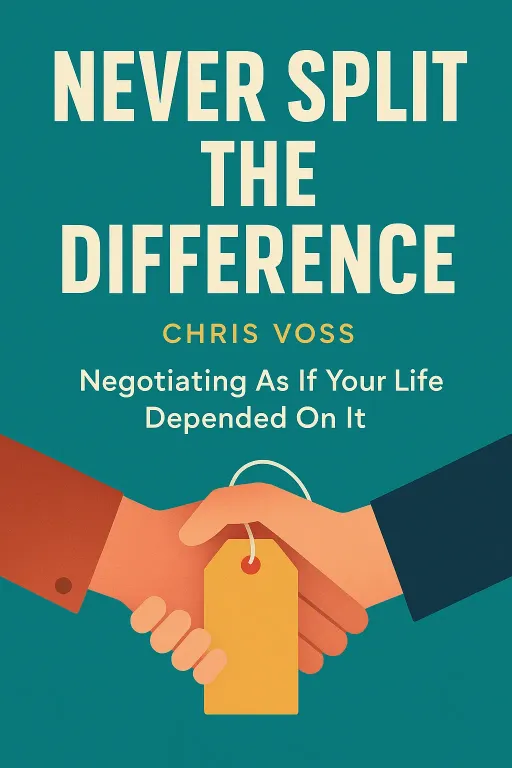
Nova: Exactly! And that's where the conventional wisdom steers us wrong. Today, we're diving into what we call "The Empathy Advantage: How to Negotiate Beyond the Numbers." This isn't just about being 'nice'; it's about a profound shift in how we approach conflict and collaboration, drawing from two titans in the field. We're talking about Chris Voss, the former FBI hostage negotiator and author of "Never Split the Difference," and the classic "Getting to Yes" by Roger Fisher and William Ury.
Atlas: Ah, Voss. The name alone conjures images of high-stakes situations. What's fascinating about Voss is his background; you'd expect a negotiator from the FBI to be all about hard facts and leverage, but he brought this intensely human, psychological approach to the most critical scenarios. And then Fisher and Ury, from the Harvard Negotiation Project, bringing that academic rigor. It's a powerful combination.
Nova: It really is. Voss’s methods were literally life-or-death, which gives his concept of 'tactical empathy' an unparalleled, real-world edge. And Fisher and Ury's work, while more academic, is grounded in decades of research into what makes negotiations succeed or fail. Together, they paint a complete picture. For our listeners who are constantly navigating complex professional interactions, understanding this blend of street smarts and scholarly depth is a game-changer for those seeking mastery.
Atlas: Right. So, let's unpack that initial provocative statement. What's the core flaw in the 'logic-first' approach to negotiation?
The Myth of Pure Logic in Negotiation: Why Emotions Are Not a Bug, But a Feature
SECTION
Nova: The core flaw, Atlas, is that it ignores the cold, hard fact that negotiation isn't just about logic; it's deeply human. Many conflicts stall, or worse, completely collapse, precisely because emotions are either dismissed or actively ignored. We walk in with our bullet points and our spreadsheets, assuming the other side is doing the same, but beneath all that, there's a swirl of fear, pride, frustration, or a desire for recognition.
Atlas: Oh, I know that feeling. You're trying to resolve a difficult patient inquiry, armed with all the facts, and it just hits a wall. It’s like you’re speaking different languages. So, what you're saying is that those 'stalled' moments aren't necessarily about a disagreement on the facts, but an unaddressed emotional undercurrent?
Nova: Precisely. Chris Voss developed the concept of "tactical empathy" from this very insight. He realized that in hostage situations, you couldn't just demand things; you had to understand the emotional landscape of the person you were dealing with. Tactical empathy isn't about agreeing with the other side's feelings; it's about understanding their perspective and feelings so deeply that you can influence outcomes. It’s about listening to what's unsaid.
Atlas: Wait, so isn't empathy about being soft? In a high-stakes business negotiation, showing too much emotion, or even acknowledging the other side's feelings, might feel like a weakness. Like you're giving away too much. How does tactical empathy apply there without making you seem—I don't know—manipulable?
Nova: That's a crucial distinction. Tactical empathy is not about being soft or agreeing. It's a data-gathering tool. Think of it like this: A client is furious because a project deadline was missed. Logically, you can explain the reasons, the unforeseen circumstances. But if you just stick to the facts, they'll likely just get angrier because their underlying feeling – their frustration, their fear of looking bad to boss, the feeling of being let down – hasn't been acknowledged.
Atlas: Right. They just hear excuses.
Nova: Exactly. Now, imagine instead, you say something like, "It sounds like you're feeling incredibly frustrated and perhaps even a bit exposed because this delay has put you in a tough spot with your stakeholders." You're labeling their emotion, showing you've heard them. You haven't agreed to their demands, you haven't taken blame, but you've validated their experience. What happens next? Often, the tension deflates, and they become more open to hearing your logical explanation or working towards a solution.
Atlas: That's incredible. It's like you're disarming them, not by force, but by understanding. So, the 'unsaid' part isn't just about words, but the emotional landscape that's driving those words. For anyone who deals with complex inquiries, where people might be stressed or anxious, this feels like a fundamental tool.
Nova: It is. Ignoring those emotions makes people defensive, and defensiveness shuts down communication. Tactical empathy opens it back up. It allows you to move from a battle of wills to a space where collaboration can actually begin. And that naturally leads us to the second key idea we need to talk about, which often acts as a powerful complement to what we just discussed.
Tactical Empathy vs. Principled Negotiation: Bridging the Gap Between Influence and Interests
SECTION
Atlas: Okay, so we've established that emotions are paramount. But then we have Fisher and Ury's "Getting to Yes," which champions "principled negotiation," focusing on interests rather than positions. My question is, how do these two ideas, tactical empathy and principled negotiation, actually work together? Because on the surface, it sounds like one is about feelings and the other is about objective needs. Is it about feelings, or about objective interests? How do you reconcile them when you're dealing with someone who might not be acting 'rationally'?
Nova: That's the million-dollar question, and it's where the true "empathy advantage" lies. They aren't contradictory; they're two sides of the same coin, two phases of a successful negotiation. Voss gives you the tools to manage the element – the 'people' part of Fisher and Ury's famous advice to "separate the people from the problem." Fisher and Ury then give you the framework for structuring the around underlying interests.
Atlas: So, Voss helps you get past the initial emotional blockages, and then Fisher and Ury help you build the bridge once the path is clear?
Nova: Exactly! Let's take that difficult client scenario again. You've used tactical empathy to acknowledge their frustration about the missed deadline. The emotional temperature has come down. Now, instead of them just demanding a discount, you can ask, "What specifically is important to you about getting this project back on track? What are your biggest concerns now?" You're not asking about their position, but their underlying interests. Perhaps their interest isn't just a discount, but ensuring they maintain credibility with their boss, or avoiding future delays, or even getting some extra support to catch up.
Atlas: I see. So, once you've acknowledged their feelings, you can then dig deeper to uncover what truly matters to them. It's not just about what they they want, but they want it. That makes perfect sense for a strategic negotiator. It’s about influencing outcomes by understanding the 'why' behind the 'what.'
Nova: Precisely. And once you understand their underlying interests, you can then, as Fisher and Ury suggest, "invent options for mutual gain." It’s no longer about you winning and them losing, or vice versa, but about finding creative solutions that satisfy both sets of interests. Maybe it’s not a discount, but extra resources at no charge, or a faster turnaround on the next phase, or even a public acknowledgment of their patience.
Atlas: That's a powerful shift. It transforms negotiation from a confrontational battle of wills into a collaborative problem-solving exercise, driven by psychological understanding. It's not just about getting what you want; it's about achieving better, more sustainable results because you’ve built consensus on a deeper level.
Nova: It fundamentally shifts the dynamic. You're not just moving numbers around; you're moving people towards common ground.
Atlas: So, for our listeners, especially those who navigate complexity and seek mastery in their interactions, what's a tiny, actionable step they can take to start applying this "Empathy Advantage"?
Synthesis & Takeaways
SECTION
Nova: The tiny step is deceptively simple but incredibly powerful: In your very next interaction, whether it's with a colleague, a client, or even a family member, practice active listening for emotions, not just facts. Make a conscious effort to identify and label one feeling the other person expresses.
Atlas: Just one? Not solve their problem, not agree with them, just identify and label a feeling?
Nova: Just one. It could be, "It sounds like you're feeling overwhelmed," or "It seems like you're really excited about that," or "I'm hearing a lot of frustration in your voice." You don't have to be right; the act of attempting to understand and articulate their emotion is often enough to shift the dynamic. It shows you're truly listening, truly seeing them.
Atlas: That's actually really inspiring. It’s a proactive step that costs nothing, but has the potential to unlock so much. It moves you from just processing information to understanding and influencing outcomes, which is exactly what a future-focused leader needs. Mastering emotional intelligence in negotiation isn't just a soft skill; it's a strategic imperative.
Nova: Absolutely. It's about recognizing that behind every position, there's a person with feelings and interests. And once you engage with that human element, you unlock possibilities you never knew existed.
Atlas: Incredible. Thank you, Nova.
Nova: Thank you, Atlas. This is Aibrary. Congratulations on your growth!