The Art of Asking: Influencing Decisions and Driving Progress
Golden Hook & Introduction
SECTION
Nova: Atlas, if I told you that the secret to getting what you want, in almost any situation, isn't about being the loudest voice or the most aggressive negotiator, but actually about empathy and asking the right questions, what would you say?
Atlas: I'd say, "Tell me more, Nova, because my internal monologue is usually just me loudly asking myself where I left my keys." And frankly, that strategy hasn't yielded many positive results.
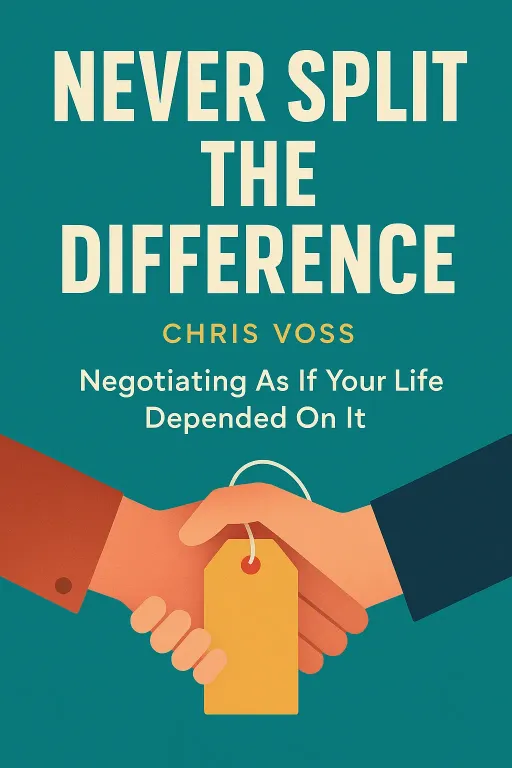
Nova: Exactly! And that's precisely what we're diving into today with a fascinating look at the art of asking and influencing decisions. Specifically, we'll be drawing insights from the world of high-stakes negotiation and psychology, primarily through the lenses of Chris Voss's "Never Split the Difference" and Robert Cialdini's seminal work, "Influence: The Psychology of Persuasion."
Atlas: Ah, Voss, the former FBI hostage negotiator. I remember hearing that he actually applied these tactics in real-life, life-or-death situations. It’s not just some academic theory, which makes it all the more compelling.
Nova: Absolutely. Voss's journey from a Kansas City beat cop to the FBI's lead international hostage negotiator is a testament to the power of these counter-intuitive methods. He literally wrote the book on dealing with high-pressure, emotionally charged scenarios, and then showed the rest of us how to apply those same principles to our everyday lives. It's a book that's been widely acclaimed for its practical, no-nonsense approach.
Atlas: And Cialdini, he’s like the godfather of persuasion science, isn't he? His work has been foundational for decades.
Nova: Precisely. Cialdini, a renowned professor of psychology and marketing, spent years undercover, immersing himself in the world of influence professionals—salespeople, fundraisers, advertisers—to understand the real-world application of persuasion. "Influence" has been a consistent bestseller, praised for its clarity and ethical framework, making it a staple for anyone looking to understand human behavior. Critics often highlight how Cialdini's work provides a scientific underpinning to what many intuitively feel about human interaction, all while maintaining a remarkably accessible style.
Atlas: So, we're talking about mastering the art of getting people to say "yes," but not in a manipulative, shadowy kind of way. More like, understanding how people operate to achieve better outcomes for everyone involved?
Nova: You've hit the nail on the head, Atlas. It's about shifting from manipulation to mutual benefit, from coercion to collaboration. And a huge part of that begins with what Voss calls "tactical empathy."
Tactical Empathy & Mirroring
SECTION
Nova: Tactical empathy, as Voss defines it, is not about agreeing with someone's perspective, but about understanding it so deeply that they understood. It's about demonstrating that understanding, even if you don't condone their actions or agree with their demands.
Atlas: Wait, so you're not even trying to solve the problem or push your agenda yet? You're just... listening? That feels incredibly counter-intuitive when you're in a high-stakes conversation and you feel like you need to control the narrative.
Nova: Exactly! That's the counter-intuitive genius of it. And a key technique Voss advocates for achieving this is called "mirroring." It’s incredibly simple, yet profoundly effective. You simply repeat the last three words, or the one to three most critical words, of what someone just said.
Atlas: Huh. "Of what someone just said." So if I say, "I'm really frustrated with this project deadline," you'd say, "Project deadline?"
Nova: Exactly! Or "Frustrated with this project deadline?" The magic happens because it encourages the other person to elaborate without feeling interrogated. It subtly signals that you're listening, you're processing, and you want to understand more. It disarms them because they don't feel like they're being challenged, only heard.
Atlas: That’s actually really inspiring, because it sounds like it could de-escalate so many tense situations. I can imagine someone getting increasingly agitated, and instead of me jumping in with solutions, I just mirror them, and they start explaining they’re frustrated.
Nova: Precisely. Voss recounts a fascinating story of a bank robber who had taken hostages. Negotiations were stalled. The robber kept repeating, "I just want to get out of here." The negotiator mirrored, "Get out of here?" And the robber, instead of becoming more aggressive, started explaining he felt trapped, why he made the choices he did, revealing crucial information that eventually led to a peaceful resolution.
Atlas: That gives me chills. So, it’s not about agreeing with the bank robber, but about understanding the underlying human need or emotion driving their actions. It's almost like a psychological judo move.
Nova: It absolutely is. It turns confrontation into collaboration by making the other person feel safe enough to reveal their true motivations. And once you understand their motivations, you have a much better chance of finding a solution that works for everyone. It’s about creating psychological safety.
Labeling & Open-Ended Questions
SECTION
Nova: Building on tactical empathy, Voss also emphasizes "labeling." This is when you verbally acknowledge the other person's emotions. You might say, "It sounds like you're feeling frustrated," or "It seems like you're concerned about..."
Atlas: Oh, I see. So, after mirroring, once they've elaborated a bit, you then put a name to the emotion you're observing. "Sounds like you’re feeling unheard."
Nova: Perfect! When you label an emotion accurately, it validates their experience and diffuses the intensity of that emotion. It’s a way of saying, "I see you, and I understand what you're going through." It creates a connection. And then, we introduce the power of open-ended questions. Not just any open-ended questions, but specific ones designed to uncover information and engage the other party in problem-solving.
Atlas: Like the "How am I supposed to do that?" or "What makes you ask that?" questions you mentioned earlier.
Nova: Exactly! Let's take "How am I supposed to do that?" Imagine someone presents you with an unrealistic demand. Instead of saying "That's impossible!" which shuts down the conversation, you ask, "How am I supposed to do that?" It’s an elegant way to make them explain their thought process, or even force them to realize the unfeasibility of their own demand without you ever having to say no directly.
Atlas: That’s brilliant! It shifts the burden of proof, or the burden of finding a solution, back onto them, but in a way that feels collaborative rather than confrontational. They have to think it through themselves.
Nova: Absolutely. And "What makes you ask that?" is another gem. When someone asks you a loaded or challenging question, instead of answering defensively, you flip it back. It helps you understand their underlying concern or motivation behind the question. Are they genuinely curious? Are they trying to trap you? Their answer reveals a lot.
Atlas: That makes me wonder, how does this tactical empathy and these specific questions connect with Cialdini's principles of persuasion? Are they two sides of the same coin, or is one foundational to the other?
Cialdini's Principles of Ethical Influence
SECTION
Nova: That's a fantastic question, Atlas, and they absolutely interplay beautifully. Cialdini's work provides the psychological scaffolding, the "why" behind why these techniques work. He identified six universal principles of persuasion: Reciprocity, Commitment and Consistency, Social Proof, Authority, Liking, and Scarcity.
Atlas: Okay, so six principles. Can you give me a quick rundown?
Nova: Of course. Reciprocity is the idea that we feel obligated to return favors. If you do something for someone, they're more likely to do something for you. Commitment and Consistency means we want to be consistent with what we've already said or done. Social Proof is our tendency to follow the lead of others, especially if those others are similar to us. Authority means we're more likely to comply with requests from perceived experts. Liking means we're more easily persuaded by people we like. And Scarcity is the principle that things are more attractive when their availability is limited.
Atlas: So, when Voss talks about building rapport through tactical empathy, that's directly tapping into Cialdini's "Liking" principle, isn't it? If someone feels understood and heard, they're more likely to like you, and thus be more open to your influence.
Nova: Exactly! And when you use open-ended questions like "How am I supposed to do that?" and they start explaining their position, they are, in a sense, committing to that position, which then ties into "Commitment and Consistency." They're articulating their thoughts, and people tend to want to stay consistent with their articulated thoughts.
Atlas: That’s a great way to put it. So, it's not about tricking people. It's about understanding these natural human tendencies and using them ethically to guide conversations towards productive outcomes. It's about becoming a better communicator, not a better manipulator.
Nova: Precisely. Nova's take, if you will, is that these works collectively highlight that effective communication and influence are not about manipulation, but about understanding human psychology and building rapport to achieve mutually beneficial outcomes. It's about seeing the other person's perspective, not just your own. It's about finding the "Black Swan," as Voss would say—that hidden, crucial piece of information that changes everything.
Atlas: And the "Tiny Step" for our listeners this week, in their next significant conversation, would be to try using those open-ended questions: "How am I supposed to do that?" or "What makes you ask that?" to encourage deeper engagement and uncover hidden information.
Nova: Absolutely. It's a small shift in language that can lead to profound shifts in understanding and outcomes. It’s about moving from a mindset of confrontation to one of curiosity.
Synthesis & Takeaways
SECTION
Nova: What we've explored today isn't just about winning an argument or closing a deal; it's about fundamentally improving our interactions, whether with a colleague, a family member, or even a complete stranger. The core insight is that truly influencing decisions, and driving progress, comes from a place of deep understanding and respect for the other person’s perspective. It’s about making them feel heard, seen, and valued, which then opens the door for genuine collaboration.
Atlas: That’s a really profound point, Nova. It transforms communication from a battle of wills into a shared exploration. It’s not just about getting to 'yes,' but about getting to a yes, one that works for everyone. It makes me think about how many conflicts could be avoided, or how many impasses could be broken, if we just took the time to truly understand, rather than immediately react.
Nova: Exactly. In a world that often rewards quick answers and aggressive stances, the power of tactical empathy and ethical persuasion lies in its quiet strength. It's the long game, built on rapport and psychological insight, that yields far more sustainable and positive results. It’s about building bridges, not burning them.
Atlas: And it’s a skillset that, once you start practicing it, I imagine you see its applications everywhere, from the boardroom to the dinner table. It’s not just for FBI negotiators anymore.
Nova: Absolutely not. It's for anyone who wants to navigate the complexities of human interaction with greater skill, insight, and ultimately, greater success and fulfillment. It’s about mastering the art of asking, not just telling.
Atlas: This is Aibrary. Congratulations on your growth!