Negotiation is Not a Battle: How to Win by Understanding Human Emotion.
Golden Hook & Introduction
SECTION
Nova: We’re told negotiation is a battle, a high-stakes poker game where you hide your hand and bluff your way to victory. It’s all about leverage, power, and not showing weakness.
Atlas: Oh, I know that feeling. The pit in your stomach before a big meeting, mentally steeling yourself for a fight. It’s exhausting, frankly.
Nova: Exactly! But what if that entire premise is fundamentally flawed? What if the real secret to winning, to achieving truly impactful, lasting agreements, lies not in outsmarting, but in truly understanding?
Atlas: Really? That sounds almost… too simple, or maybe incredibly complex, depending on how you look at it. For anyone who's ever felt drained after a "win" that damaged a relationship, this idea is definitely intriguing.
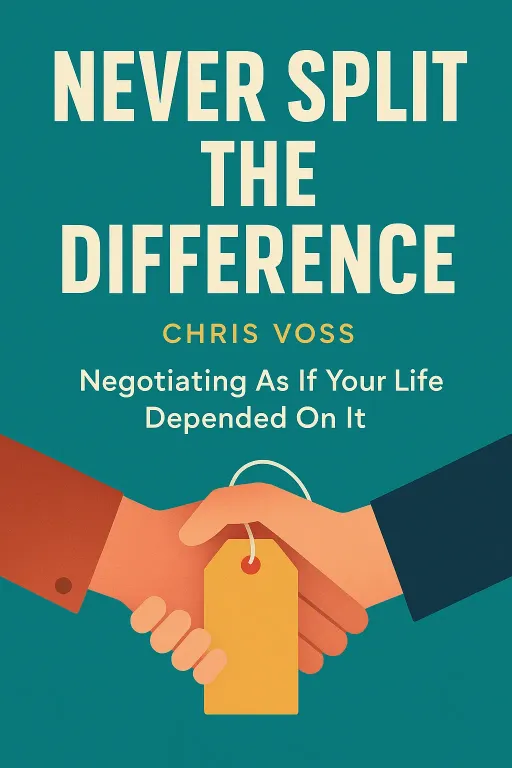
Nova: It’s both simple in its core and profound in its application. Today, we’re unpacking a revolutionary idea that completely flips the script on how we approach high-stakes conversations. We're drawing heavily from the insights of two masterminds: Chris Voss, a former FBI hostage negotiator, and Robert Cialdini, a renowned psychologist of persuasion.
Atlas: That’s a powerful duo. One from the intense world of life-or-death situations, the other from the academic rigor of human behavior.
Nova: Their combined wisdom isn't just theory; it's forged in the crucible of real-world pressure and decades of rigorous scientific study. It’s about achieving your goals while strengthening, not destroying, your most valuable relationships.
Tactical Empathy: Disarming with Understanding
SECTION
Nova: And that brings us to the first master key in this new approach: tactical empathy, a concept honed in the most extreme negotiations imaginable. Chris Voss, after years of negotiating with bank robbers and kidnappers, realized something crucial.
Atlas: Oh, I’ve heard him talk about that. He’s got this intense way of explaining things. But what exactly is "tactical empathy"? It sounds a bit like a contradiction.
Nova: It’s not about agreeing with the other side’s position or even liking them. It's about consciously and strategically understanding their perspective and, critically, their emotions. It’s about vocalizing that understanding to them. Imagine you’re in a tense business negotiation. Your counterpart is irrationally angry about a past perceived slight, maybe a previous deal that went sideways.
Atlas: Yeah, I’ve been there. You try to bring it back to the facts, the numbers, and they just dig in deeper, getting more emotional. It feels like hitting a wall.
Nova: Precisely. The old playbook says to ignore the emotion, or maybe try to calm them down. But Voss would say, "It sounds like you feel deeply disrespected by how that last deal went down, and that’s making it hard to trust us now."
Atlas: Whoa. So, you’re not just saying "I hear you," which can feel dismissive. You're actively their emotion and linking it to their perspective. Isn't that manipulative? For someone trying to build genuine trust, that sounds like a risky move.
Nova: That’s the critical distinction. It’s not manipulation; it's identification. You’re not agreeing with the of their anger, but you are acknowledging the and of their feeling. When someone feels truly heard and understood, even their most intense emotions begin to de-escalate. It creates a sudden, almost disorienting, sense of safety.
Atlas: That’s actually really inspiring. So, it’s like creating a mental space where they can finally breathe and feel seen, and only then can you start to talk about solutions?
Nova: Exactly. It’s about building rapport through active, emotional listening. He even advocates for "no-oriented" questions. Instead of saying, "Would you be open to this new proposal?" which can trigger a defensive "no," you might try, "Is it ridiculous for me to ask for your consideration on this new proposal?"
Atlas: Huh. That makes them feel in control because they can easily say "yes, it’s ridiculous" or "no, it's not ridiculous," which still opens the door. It flips the power dynamic in a subtle way, giving them agency.
Nova: It's brilliant. It makes the other side feel empowered, and it subtly invites them to explore possibilities rather than defend a position. It's a huge shift from just presenting facts and demands.
The Architecture of Influence: Ethical Persuasion
SECTION
Nova: While tactical empathy helps disarm the immediate tension and build that initial connection, the next layer of understanding comes from the invisible forces that guide all human decisions – what Robert Cialdini masterfully uncovered as the six principles of persuasion.
Atlas: I've heard Cialdini’s name mentioned a lot. Are these like the "ninja moves" of persuasion? The psychological hacks?
Nova: They are, but Cialdini’s brilliance is in showing that these aren't tricks; they are fundamental, innate human responses. Think of them as the architecture of our decision-making. Let's touch on two: reciprocity and scarcity.
Atlas: Reciprocity and scarcity. Okay, give me an example of how those play out in the real world, especially for someone trying to build lasting client relationships.
Nova: Take reciprocity. It’s the deep-seated human need to return a favor. If I give you something, you feel a natural inclination to give something back. This isn't just about a free sample at a grocery store, although that's a classic example.
Atlas: Right, like when a software company offers a free trial, and you feel more inclined to buy the full version because you've already received value.
Nova: Precisely. In a strategic context, it’s about genuinely providing value upfront. Maybe you share a piece of market research with a client that’s incredibly relevant to their business, without asking for anything in return. Or you go above and beyond on a small task. That creates a powerful, often subconscious, obligation.
Atlas: So, it's about investing in the relationship, not just extracting from it. But that still feels like a subtle form of leverage. How do we use these without feeling like we're just playing mind games? Especially when our goal is lasting relationships, not just a one-off win.
Nova: That’s the crucial distinction: ethical application. It's not about fabricating value or creating artificial obligations. It’s about authentically providing value, highlighting genuine unique opportunities, and aligning with existing values. For scarcity, it’s not about creating a fake limited offer. It’s about truthfully communicating when a resource, opportunity, or expert's time is genuinely limited.
Atlas: So, if a client is genuinely interested in a new, innovative solution, and you know your company has limited capacity to implement it for new clients this quarter, you're not manufacturing urgency, you're just stating a fact. And that fact, because of the scarcity principle, makes them more likely to act.
Nova: Exactly! It’s about being transparent. If you're a strategic persuader highlighting a client's commitment to innovation, and you're showing how your solution aligns perfectly with that commitment, you're leveraging Cialdini's principle of commitment and consistency. You’re not pushing them; you’re helping them act in alignment with their own stated values.
Atlas: That’s a great way to put it. It’s about understanding the psychology so you can a positive outcome that benefits everyone, not manipulate one. It's almost like giving them the framework to say 'yes' to something that truly benefits them, without feeling pressured.
Synthesis & Takeaways
SECTION
Nova: So, when you combine tactical empathy—the ability to truly understand and label the other person's emotional landscape—with the ethical application of Cialdini's principles of influence, you move far beyond the old "negotiation as battle" mindset.
Atlas: It’s a complete paradigm shift. It transforms what felt like a zero-sum game into a collaborative journey. It’s about building trust and strengthening relationships, not just getting a signature on a dotted line.
Nova: Absolutely. It empowers you to achieve your goals by creating deeper connections and uncovering shared interests, even in the most challenging conversations.
Atlas: So for our listeners who are navigating complex client relationships or high-stakes internal discussions, what's one tiny step they can take this week to apply this? Something tangible.
Nova: Here’s the "Tiny Step" from our content today: Before your next important conversation, dedicate just a few minutes to list three potential emotional drivers of the other person. What are their potential fears, hopes, frustrations, or desires related to this discussion? Then, draft one open-ended question to explore each of those drivers.
Atlas: Oh, I like that. So, not just guessing, but preparing to listen.
Nova: And here's the kicker: listen without judgment. That's the hardest part, isn't it? Putting our own agenda aside for a moment to truly understand, to let their perspective genuinely inform your approach. It’s a muscle we need to build.
Atlas: It really is. It’s not just about winning the negotiation; it’s about mastering the craft of human connection, which, as a 'Strategic Persuader' or 'Growth Architect,' is your ultimate superpower.
Nova: A true empathetic closer, indeed. What a powerful way to redefine what 'winning' actually means.
Atlas: Absolutely. This is a framework that truly builds, rather than breaks.
Nova: This is Aibrary. Congratulations on your growth!