Mastering the Art of Influence: Communication for Engineers
Golden Hook & Introduction
SECTION
Nova: Atlas, I want you to imagine a world where the most brilliant engineering ideas, the most elegant solutions, often die a silent death because the person who conceived them couldn't effectively communicate their value.
Atlas: Oh, I know that feeling. It’s like having a perfectly engineered, state-of-the-art machine sitting in a garage, but nobody knows how to turn it on, let alone appreciate what it can do. It’s a frustratingly common scenario in technical fields.
Nova: Exactly! And that frustration is precisely what we're tackling today. We're diving into a fascinating intersection: the world of high-stakes communication and negotiation, specifically tailored for the analytical minds of engineers.
Atlas: That makes me wonder, we often think of engineers as problem-solvers, logical thinkers. Where does 'influence' and 'communication' fit into that precise, often black-and-white world? Is it not just about presenting the facts?
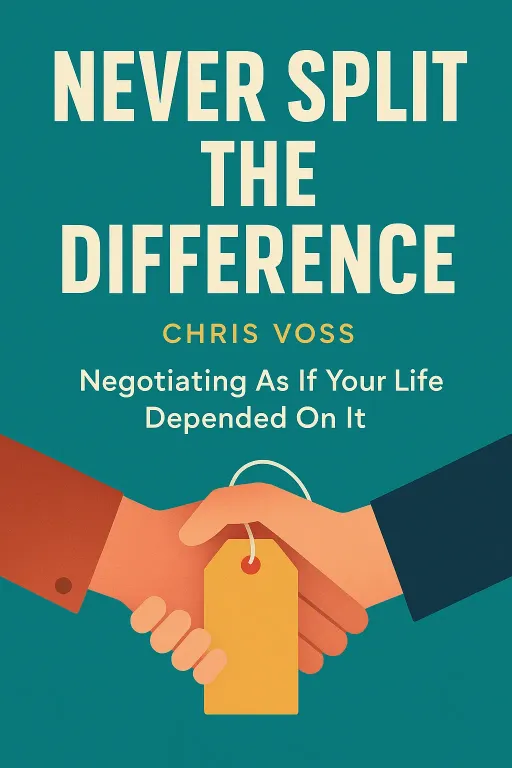
Nova: Well, that's the common misconception we're here to shatter. Today, we're drawing insights from two incredibly powerful books: by Chris Voss, and by Kerry Patterson, Joseph Grenny, Ron McMillan, and Al Switzler.
Atlas: Ah, Chris Voss. I've heard of him. Isn't he the former FBI hostage negotiator? That's quite a leap from hostage situations to design reviews. How did he end up writing a book for, well, everyone?
Nova: It’s a fantastic story, actually. Voss spent years as the FBI’s lead international hostage and kidnapping negotiator. He was literally in life-or-death situations where understanding human psychology and communication wasn't just useful, it was paramount. What's truly remarkable is how he translated those extreme, high-stress tactics into principles that work in boardrooms, and yes, even in engineering teams. His journey from the streets of New York, working bank robberies, to the highest echelons of international diplomacy, taught him that negotiation isn't about logical debate; it's about emotional intelligence.
Atlas: That’s a great way to put it. So, he's basically saying that whether you're negotiating for a hostage's life or for a project's budget, the underlying human dynamics are surprisingly similar.
Nova: Precisely. And that brings us to our first core idea: the power of tactical empathy and negotiation for engineers. We're talking about moving beyond just presenting data and learning to truly influence.
Tactical Empathy and Negotiation for Engineers
SECTION
Nova: So, let's unpack 'tactical empathy.' It sounds a bit like an oxymoron, doesn't it? 'Tactical' implies strategy, 'empathy' implies feeling. But Voss argues they're inseparable. For an engineer, this means understanding the underlying concerns, fears, and desires of your stakeholders, even when they're expressing them as purely technical objections. It's not about agreeing with them, but about their perspective so deeply that you can articulate it better than they can.
Atlas: That sounds rough, but isn't that just active listening? We're always told to 'actively listen.' What makes tactical empathy different, especially for someone who thrives on precision and logic?
Nova: It goes beyond simply hearing words. Active listening is the baseline. Tactical empathy is about behind those words. Voss would say you need to 'label' their emotions. If a project manager is pushing back on a design change, saying it's too complex, an engineer might be tempted to overwhelm them with data proving its simplicity. But tactical empathy suggests you might say, "It sounds like you're concerned about the timeline impact and potential for unforeseen complications. You want to ensure we don't introduce unnecessary risk."
Atlas: Oh, I see. So you're not just acknowledging their statement; you're acknowledging the and the behind it. That's a subtle but powerful shift. It’s like you’re saying, 'I get why you feel that way,' even if you don't agree with the conclusion.
Nova: Exactly. And the magic happens because when people feel truly understood, their defenses drop. They become more open to hearing your perspective. Voss has countless stories, but one of my favorites involves a bank robber who had taken hostages. Negotiations were stalled. Voss started using mirroring—simply repeating the last few words the robber said—and labeling his emotions. He said something like, "It sounds like you're feeling desperate. You feel like you're trapped." And the robber, surprisingly, started to elaborate, explaining his situation, softening his stance. This opened a pathway to resolution.
Atlas: Wow, that’s incredible. So, instead of going in with a hard 'no' or trying to logically dismantle their argument, you're building a bridge first. For an engineer presenting a complex idea, let's say a new algorithm for optimizing a manufacturing process, how does this translate?
Nova: It means before you launch into the elegant mathematical proofs, you first acknowledge the likely concerns. "I imagine some of you might be thinking this is a radical departure from our current process and fear the disruption it could cause to our production lines. You might be concerned about the learning curve for the team." By articulating those fears first, you show you've considered them, and you disarm the immediate resistance. Then, and only then, do you present your solution as the answer to those very concerns.
Atlas: That’s fascinating because it flips the typical engineering presentation on its head. Most engineers would lead with the solution and the data. You're saying lead with the first.
Nova: Precisely. And another key technique Voss teaches is the 'accusation audit.' This is where you list all the negative things your counterpart might be thinking about you or your proposal. For example, "You probably think I'm just trying to push my own agenda here, or that this is going to be a massive headache for your team." It sounds counter-intuitive, but it inoculates them against those accusations and makes you appear transparent and trustworthy.
Atlas: That sounds like a high-risk, high-reward move. You're basically putting all their potential criticisms out there yourself. But I can see how it could build immense trust if done right. It's almost like you’re saying, "I know what you're thinking, and I'm still here to talk."
Nova: It’s incredibly effective. The goal is to get to 'That's right!' from your counterpart, not 'Yes.' 'Yes' can be a hollow agreement, but 'That's right!' means they feel truly understood and are ready to engage. This is crucial for engineers who need buy-in from non-technical stakeholders or even other departments. It’s about building consensus and driving action, not just conveying information.
Mastering High-Stakes Conversations in Technical Environments
SECTION
Nova: And that naturally leads us to our second key idea, which often acts as a counterpoint or a necessary complement to Voss’s techniques: mastering high-stakes conversations. This comes from, a book that provides a framework for handling those discussions where the stakes are high, opinions vary, and emotions run strong. Think about troubleshooting a critical system failure, or debating a fundamental design flaw with a colleague.
Atlas: Oh man, I’ve been there. Those are the conversations where you feel your heart rate go up, and you just want to either avoid them entirely or charge in and just 'fix' it with logic. But often, it just makes things worse.
Nova: Exactly. The authors of argue that most people handle these moments poorly, either by resorting to silence—avoiding the issue—or violence—forcing their will. Neither leads to productive outcomes. Their core insight is that when stakes are high, and opinions differ, the first thing to suffer is the free flow of meaning. People stop sharing crucial information.
Atlas: So, the goal is to keep the information flowing, even when things are tense. How do they suggest you do that when emotions are running high and you're trying to discuss, say, a programming bug that cost the company a million dollars?
Nova: The central principle is to 'Start with Heart.' This means clarifying your own motives and focusing on what you want for yourself, for the other person, and for the relationship. Do you want to "win" the argument, or do you want to find the best solution and maintain a good working relationship? For an engineer, this might mean wanting to identify the root cause of the bug, but also wanting to ensure the team learns from it without assigning blame.
Atlas: That’s actually really inspiring. It frames the conversation not as a battle, but as a collaborative effort towards a shared goal. But what happens when the other person isn't starting with heart? What if they're clearly just trying to pin the blame?
Nova: That's where the framework shines. They talk about 'Making it Safe.' When people feel unsafe, they withdraw or attack. You need to re-establish safety by creating mutual purpose and mutual respect. For example, if someone is blaming, you might say, "My goal here isn't to point fingers, it's to understand what happened so we can prevent it in the future. I believe we all want to deliver reliable software, right?" That establishes a mutual purpose.
Atlas: Right, like finding common ground. And I imagine for engineers, who value precision, the idea of 'mutual purpose' can be a powerful anchor in a chaotic conversation. It brings it back to the objective.
Nova: Absolutely. They also emphasize 'Stating Your Path.' This means sharing your facts, telling your story, and asking for others' paths. So, instead of saying, "Your code is buggy," you might say, "I've observed these specific test failures. My interpretation is that the recent update to the authentication module is causing a memory leak. What have you seen on your end?."
Atlas: That makes so much sense. It breaks down the problem into objective observations and then invites collaboration, rather than presenting an accusation. It's like you're laying out the puzzle pieces and asking, "What pieces do you have?"
Nova: Exactly. And the power of these frameworks is that they provide a methodical approach to human interaction, which resonates deeply with an analytical mind. It’s about applying a structured problem-solving approach to communication. Nova's take is that effective communication isn't just about conveying information; it's about building consensus and driving action, crucial for an engineer aiming for leadership.
Synthesis & Takeaways
SECTION
Nova: So, whether we're talking about Voss's tactical empathy or the framework, the underlying message for engineers is profoundly consistent: your technical prowess is a given, but your ability to influence, to navigate complex human dynamics, is what truly amplifies your impact.
Atlas: That’s a great way to put it. It sounds like these aren't just 'soft skills,' but rather 'essential skills' that enable your technical skills to actually be realized and adopted. For any engineer listening, what’s one tiny step they could take this week?
Nova: A tiny step, Atlas, would be this: before your next team meeting, identify one key message you want to convey. Then, try to anticipate potential objections or emotional responses using Voss's techniques. Practice articulating those objections yourself, then phrase your message as the solution to those anticipated concerns. It’s a small shift, but it can be incredibly powerful.
Atlas: That’s a very actionable step. And it actually ties into the deep question these books leave us with: How can we apply the principles of active listening from these books to better understand both technical and non-technical perspectives in our projects? It’s about bridging that gap.
Nova: Absolutely. And the healing moment in all of this is to recognize that mastering communication is a continuous process. Every conversation, every interaction, is an opportunity to refine your influence. It reduces the stress of misunderstandings because you have a toolkit to navigate them. It’s not about being perfect, it’s about being present and intentional.
Atlas: That’s actually really inspiring. It’s easy to get frustrated when communication breaks down, but seeing it as a skill to be honed, just like any other engineering skill, makes it feel much more approachable.
Nova: It’s about embracing the power of soft skills, not as a distraction from your technical work, but as an enhancement to it. It’s about leading with clarity and amplifying your impact.
Atlas: And that, I think, is a blueprint for persuasion that every engineer can benefit from. Thank you, Nova.
Nova: Always a pleasure, Atlas. This is Aibrary. Congratulations on your growth!