Personalized Podcast
Golden Hook & Introduction
SECTION
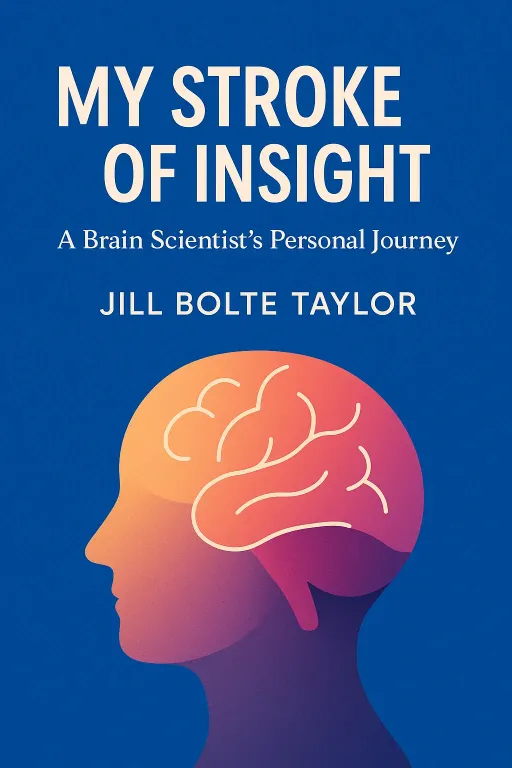
Prof. Eleanor Hart: Imagine waking up one morning, and over the course of four hours, watching your ability to speak, read, write, and even walk completely disintegrate. But instead of sheer panic, you are enveloped by a profound, boundless sense of inner peace—a state of oneness where the physical boundaries of your body simply dissolve. This isn't a mystical fable; it's the real-time observation of Dr. Jill Bolte Taylor, a Harvard neuroanatomist who suffered a massive left-hemisphere stroke. Today, we're going to tackle this extraordinary journey from three different angles. First, we'll explore the neuroanatomy of spiritual oneness and the right brain's Nirvana. Then, we'll discuss how mental health conditions like schizophrenia challenge our constructed reality. And finally, we'll focus on the practical power of the ninety-second emotional rule to reclaim our inner peace. I'm Professor Eleanor Hart, and joining me today is laiba, an analytical thinker who loves exploring the intersections of science, mind, and the deeper questions of human existence. Welcome, laiba.
laiba: Thank you, Eleanor. I am absolutely thrilled to be here. When we look at Dr. Taylor's experience, what fascinates me most is how it completely upends our traditional divisions between science and theology. We often treat the physical brain and the spiritual soul as two entirely separate domains. But here we have a world-class neuroanatomist experiencing a literal physical catastrophe—a ruptured blood vessel in her left hemisphere—and describing the result as a state of deep, spiritual grace. It makes you wonder: is what we call the soul actually wired into our very biology?
Prof. Eleanor Hart: That is the ultimate question, isn't it? Jill was a brain scientist at Harvard, traveling the country as the Singin' Scientist, researching schizophrenia, when a congenital malformation of blood vessels—an arteriovenous malformation, or AVM—ruptured. She literally watched her own mind deteriorate from the inside out.
laiba: It's a double-edged sword of the highest order. On one hand, it's a terrifying medical emergency. On the other, as she herself put it, how many scientists ever get the opportunity to study their own brain function and mental decline from the inside out? Her analytical mind was active even as her language centers were failing. It's a beautiful, tragic, and deeply illuminating starting point for our conversation today.
Deep Dive into Core Topic 1
SECTION
Prof. Eleanor Hart: Let's paint a picture of that morning, December tenth, 1996. Jill wakes up with a sharp pain behind her left eye. She tries to go about her routine, getting on her cardio-glider exercise machine, but she feels this bizarre sense of dissociation. Her hands look like claws; her body feels fluid rather than solid. When she steps into the shower, the sound of the water is deafening, screeching like a hair dryer. And then, she realizes she can't feel the boundaries of her own skin. She looks at her arm and can't tell where her body ends and the shower wall begins. From a neuroanatomical perspective, laiba, what was actually happening in her brain at that moment?
laiba: This is where the science gets incredibly precise and beautiful. The hemorrhage was flooding her left hemisphere, specifically knocking out the orientation association area. Now, in a normal, healthy brain, this area in the left parietal lobe is constantly working. It takes in sensory data and calculates exactly where our physical body ends and the rest of the world begins. It's the reason you don't bump into walls or wonder if you are part of the chair you're sitting on. But when that area went dark for Jill, her brain could no longer construct that boundary.
Prof. Eleanor Hart: And without that boundary, she felt like a genie liberated from its bottle. Her spirit felt like a giant whale swimming in a sea of silent euphoria. She describes it as a state of Nirvana. It's fascinating because, in theological terms, mystical traditions across almost every major religion describe this exact same state—the dissolution of the self, the feeling of absolute oneness with the universe, or union with the divine.
laiba: Exactly, Eleanor. And this isn't just subjective poetry. There is groundbreaking research by doctors like Andrew Newberg and Eugene D'Aquili using SPECT imaging on Tibetan meditators and Franciscan nuns. They had these practitioners pray or meditate inside a scanner, and when they reached that peak state of spiritual ecstasy or oneness with God, they pulled a cotton twine to signal the researchers to inject a radioactive tracer. And guess what the scans showed? A dramatic decrease in activity in that exact same left-hemisphere orientation association area.
Prof. Eleanor Hart: That is a stunning parallel. So, whether it's through decades of disciplined meditation, intense prayer, or a sudden, life-threatening stroke, the neurological pathway to that feeling of universal oneness is the same. It's the silencing of the left brain's analytical, boundary-making machinery.
laiba: It really makes you rethink the nature of spiritual experiences. Some might look at this and say, oh, so spiritual experiences are just a glitch in the brain, just a reduction in parietal lobe activity. But from a theological perspective, you could argue the exact opposite. Perhaps our brains are deliberately wired with this circuitry so that we are capable of experiencing the divine, of stepping outside our isolated egos to feel our fundamental connection to everything. The left brain acts as a filter, keeping us grounded in physical survival, but the right brain holds the key to a deeper, unitive reality.
Prof. Eleanor Hart: I love that perspective, laiba. It suggests that the left brain's constant chatter—the voice that says, I have to pay bills, I am separate from you, I am running late—is actually what keeps us exiled from a state of peace that is always running in the background of our right hemisphere. Jill's stroke didn't create a new state of peace; it simply unmasked the peace that was already there, waiting.
laiba: Yes, she describes her right mind as being entirely focused on the richness of the present moment, filled with gratitude, optimism, and compassion. It doesn't care about the past or the future because it doesn't think linearly. It exists in the eternal now. When her left brain went silent, the constant, critical internal dialogue stopped. There was no more self-criticism, no more judgment. Just pure, unadulterated being.
Deep Dive into Core Topic 2
SECTION
Prof. Eleanor Hart: But, of course, we can't survive in a state of pure right-brain bliss. We have to navigate a physical world that requires structure, language, and logic. And that brings us to the profound challenges of mental health and how we construct our shared reality. Long before her stroke, Jill's entire career path was inspired by her brother's diagnosis of schizophrenia. She watched him grow up in Indiana, perceiving a completely different reality than her own. She wondered how two people could share the same environment but walk away with entirely different interpretations of what had just happened.
laiba: That personal connection is so powerful. Schizophrenia is a devastating condition where the brain's internal wiring misfires, creating hallucinations or delusions that feel entirely real to the person experiencing them. Statistically, about sixty percent of people diagnosed with schizophrenia don't even recognize that they are ill—a condition called anosognosia. They are trapped in a reality that doesn't align with the shared consensus of society.
Prof. Eleanor Hart: And Jill's stroke gave her a firsthand taste of that. During her stroke, she tried to call for help. She knew she was having a medical emergency, but her left brain was failing. She spent over forty-five minutes just trying to find her doctor's business card. She had a stack of cards, but she couldn't read the words or recognize the symbols. She had to wait for a wave of clarity, remember that her doctor's card had a green Harvard crest, and then painstakingly match the squiggles on the card to the squiggles on her telephone keypad. When she finally got her colleague, Dr. Stephen Vincent, on the phone, she thought she was saying, this is Jill, I need help. But what came out of her mouth was just grunts and groans. And when he spoke back to her, his voice sounded like a golden retriever barking.
laiba: It's a terrifying illustration of how fragile our connection to a shared reality really is. To the external world, she was a severely impaired stroke victim making unintelligible noises. But internally, she was a highly sophisticated scientist trying to orchestrate her own rescue while simultaneously floating in a state of cosmic euphoria. This has massive theological and ethical implications. How do we treat people whose brains do not allow them to share our consensus reality? Whether it's schizophrenia, dementia, or a stroke, we often write these individuals off as being gone or empty.
Prof. Eleanor Hart: Absolutely. Jill talks about her experience in the emergency room at Massachusetts General Hospital. She felt completely bombarded by the sensory input—the bright lights, the loud voices, the rough handling. She felt like an organic lump of cells, an electrical being trapped in a cold, heavy body. She could sense the energy of the people around her. She encountered two very different types of caregivers. One nurse was completely oblivious, never making eye contact, speaking loudly as if Jill were deaf rather than language-impaired, and leaving her food containers closed when Jill couldn't physically open them. But then there was another nurse, and doctors like Dr. Anne Young, who approached her with gentle touch, soft voices, and deep empathy. They brought their energy down to her level.
laiba: That distinction is crucial. When our analytical left-brain systems are down, our right-brain systems—which are highly sensitive to non-verbal cues, tone of voice, and emotional energy—become our primary way of navigating the world. Jill could instantly sense who cared about her as a human being and who viewed her as just a clinical task on a checklist. From a theological standpoint, this is about recognizing the inherent dignity of the soul, regardless of the brain's functional capacity. It's a call for a radical kind of empathy. We must learn to meet people in their reality, rather than forcing them to conform to ours before we offer them compassion.
Prof. Eleanor Hart: It reminds me of that beautiful, heartbreaking quote from the book, where Jill says, I am in here, come find me. She wasn't stupid; she was wounded. And she needed people to love her not for the Harvard doctor she had been, but for the fragile, newborn-like being she was in that moment. Her mother, G. G., understood this perfectly. When G. G. arrived in Boston, she didn't treat Jill like a broken academic. She crawled into the hospital bed, held her, and essentially became her external left brain, guiding her through the slow, agonizing process of relearning everything from scratch.
laiba: G. G.'s role in Jill's recovery is a testament to the power of unconditional love as a biological healing force. Relearning to walk, to read, to use a spoon—it took eight years of intense, daily effort. And Jill had to make the conscious decision to recover. She actually struggled with that decision initially. She asked herself, why would I want to leave this peaceful, boundless Nirvana of my right brain to return to the stressful, detail-obsessed, competitive rat race of the left-brain world? She had to be convinced that the journey back was worth the agony.
Deep Dive into Core Topic 3
SECTION
Prof. Eleanor Hart: And that brings us to our third core topic: the power of choice and the ninety-second emotional rule. Jill realized that as her left brain began to heal and rebuild its neural connections, her old emotional baggage started to resurface. The old circuits of anger, impatience, jealousy, and anxiety wanted to plug themselves back in. But because she had experienced a completely silent mind, she realized something revolutionary: we do not have to run those negative circuits. We have a choice.
laiba: This is perhaps the most empowering, scientifically grounded insight in the entire book. Jill explains that from a biological perspective, when an emotion like anger is triggered, a chemical surge is released by our limbic system. This chemical floods our body, causing a physiological response—a rapid heartbeat, a tight chest, a flush of heat. But here is the kicker: that entire chemical process, from the moment of the trigger to the moment the chemical is completely washed out of our bloodstream, takes only ninety seconds. Ninety seconds!
Prof. Eleanor Hart: It's a revelation. If you are still angry after ninety seconds, it's not because of the initial trigger. It's because you have consciously—or unconsciously—chosen to keep running that loop. You are feeding the circuit with your thoughts, telling yourself the story of why you have a right to be angry, which triggers another ninety-second chemical release.
laiba: Exactly. We become addicted to our own emotional drama. Jill refers to this negative, looping part of her brain as the Peanut Gallery, or the Itty Bitty Shitty Committee. It's that voice that obsesses over past grievances and projects future anxieties. But once you understand the ninety-second rule, you realize you have response-ability—the literal ability to choose how you respond to stimulation. You can watch the anger rise, feel the physical sensation in your body for ninety seconds, and then say, I appreciate your ability to feel this, but I am choosing to let it go. I am not interested in running this circuit anymore.
Prof. Eleanor Hart: It's a profound form of spiritual stewardship. In many theological traditions, there is a strong emphasis on guarding your heart, or keeping watch over your thoughts. We often think of this as a purely moral or spiritual duty. But Jill gives us the biological manual for how to actually do it. Our minds are like a garden. We can't stop weeds from occasionally sprouting, but we absolutely have the power to choose which plants we water and which ones we prune.
laiba: I love that garden metaphor, Eleanor. It fits perfectly with the idea of neuroplasticity—the brain's ability to physically change and reorganize itself based on our experiences and conscious focus. If you constantly run the anger circuit, you strengthen those neural pathways, making it easier to get angry in the future. But if you actively choose to interrupt that circuit and redirect your focus to the present moment, to gratitude, to the peaceful awareness of your right brain, those old negative pathways will eventually wither and die from lack of use. You are literally sculpting your own brain.
Prof. Eleanor Hart: She shares a wonderful, lighthearted story about this in the book. She was driving down the road, singing enthusiastically to a CD, when she got pulled over by a police officer and given a speeding ticket. Now, her old left-brain personality would have let that ruin her entire day, obsessing over the money, the unfairness, the frustration. But she caught herself. She felt the negative voice starting to loop, and she consciously chose to step back into the present moment, to appreciate the beauty of the day, and to not let a ninety-second event dictate her state of mind for the next twelve hours.
laiba: It's a perfect real-world application. And it shows that choosing happiness over being right is a daily, moment-by-moment practice. It's not about denying our emotions or suppressing them; it's about honoring them for ninety seconds, letting the physiology run its course, and then choosing where we want to place our attention. It's the ultimate synthesis of neuroscience and spiritual wisdom.
Synthesis & Takeaways
SECTION
Prof. Eleanor Hart: As we wrap up our conversation today, it's clear that Dr. Jill Bolte Taylor's journey offers us far more than just a clinical case study of stroke recovery. It is a profound map of human consciousness. We've explored how the right brain holds a constant, accessible circuit of deep inner peace and universal oneness—a state that closely mirrors the highest mystical and theological experiences of humanity. We've looked at how fragile our constructed reality is, as seen through the lens of stroke and schizophrenia, and why that demands a deeper, more compassionate approach to mental health and caregiving. And finally, we've discussed the ninety-second rule, showing that we are not helpless victims of our brain's wiring, but active stewards of our own minds.
laiba: Beautifully summarized, Eleanor. For me, the ultimate takeaway is that deep internal peace is not some far-off, unattainable goal that requires us to retreat from the world or wait for a crisis to experience. It is a physical, biological reality that is only a thought away. By silencing the dominating, critical voice of our left mind and consciously stepping into the present-moment awareness of our right mind, we can access that peace at any time. We have the power to choose who and how we want to be in this world.
Prof. Eleanor Hart: It is a message of immense hope and personal empowerment. I want to leave our listeners with a thought-provoking question to ponder as they go about their day: the next time you feel a surge of anger, anxiety, or resentment, can you pause, watch the clock for ninety seconds, and consciously choose to step into the peace of your right brain?
laiba: It's a simple test, but it has the power to completely transform your life. Thank you so much for having me, Eleanor. This has been an incredibly rich and enlightening conversation.
Prof. Eleanor Hart: Thank you, laiba, for bringing your brilliant analytical insights and deep curiosity to this discussion. And thank you to all our listeners. Until next time, keep tending the garden of your mind, and remember that peace is always just a breath away.