Mastering Investment Psychology: Beyond Pure Rationality
Golden Hook & Introduction
SECTION
Nova: It's a common belief, etched into the very bedrock of finance, that the most successful investors are purely rational, cold, hard numbers people. They see the data, they make the move, no emotion involved. But what if that's the biggest, most dangerous lie we tell ourselves? What if our own brains are silently, almost imperceptibly, sabotaging our financial future, nudging us towards predictable pitfalls?
Atlas: Whoa, Nova. That's a bold claim right out of the gate. Are you saying the ultimate risk factor isn't market volatility or geopolitical shifts, but... ourselves? Our own internal operating system? That's a bit unsettling, honestly.
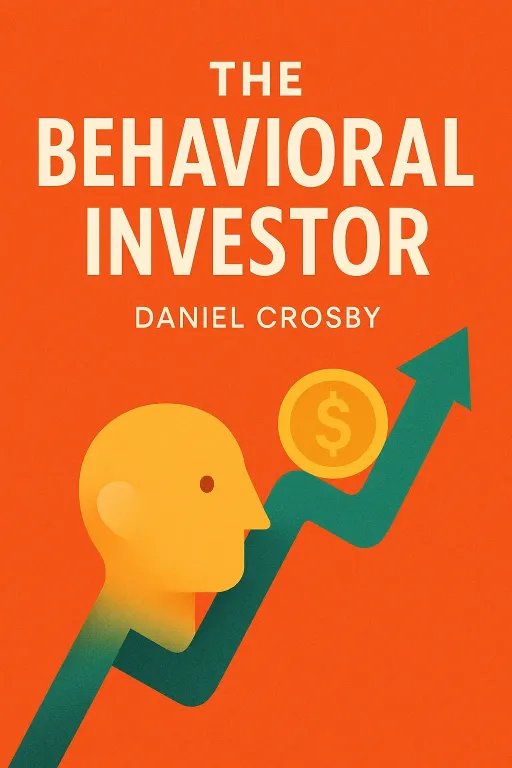
Nova: Unsettling, yes, but also incredibly empowering once you understand it. Today, we're diving deep into the fascinating world of investment psychology, exploring two seminal works that peel back the layers of our supposedly rational minds. First up, we have Daniel Crosby's brilliant book, "The Behavioral Investor," which systematically unpacks how our cognitive biases lead us astray. Crosby, a renowned expert in behavioral finance, has built a career on showing how these mental shortcuts aren't just quirks, but systematic errors that impact real-world outcomes.
Atlas: Okay, so Crosby is shining a light on the traps. What’s the other side of this coin?
Nova: The other side, and arguably the more revolutionary one, comes from Denise K. Shull and her groundbreaking book, "MARKET MIND GAMES." Shull, with her unique background blending neuroscience and elite performance coaching, argues that emotions aren't just noise in the system to be suppressed. They're actually. Valuable, often predictive, data that we can learn to recognize and harness to improve our decision-making. It’s a powerful shift from the traditional "leave emotions at the door" mentality in finance.
Atlas: That's a huge pivot. So, it's not just about avoiding errors, but actively leveraging something we're told to ignore. I'm curious how these two ideas, seemingly contrasting, actually work together.
Nova: Exactly! It's a two-pronged approach to mastering your financial mind. And for anyone who's a disruptor, an architect, a futurist, constantly looking beyond the now to identify scalable models and the next big thing, understanding these internal mechanisms isn't just about personal wealth. It’s about spotting the unseen forces shaping markets, consumer behavior, and ultimately, the success or failure of truly disruptive ventures.
The Unseen Architects of Our Decisions: Unpacking Cognitive Biases
SECTION
Nova: So, let's start with Daniel Crosby's work on behavioral biases. He lays out how cognitive biases like confirmation bias, overconfidence, and herd mentality aren't just abstract concepts. They have a very real, very measurable impact on investment outcomes. Think about confirmation bias, Atlas. We naturally seek out information that confirms what we already believe, right?
Atlas: Oh, I know that feeling. It's like when you're convinced a certain tech trend is the future, and suddenly every article, every podcast, every conversation seems to validate your initial hunch. You almost filter out anything that challenges it.
Nova: Precisely. Crosby points out that this isn't just a casual preference; it's a deeply ingrained mental shortcut. In investing, it means we might hold onto a losing stock because we keep finding articles that echo our initial, flawed belief that it turn around. Or we ignore warning signs about a "hot" sector because we’ve already committed to its narrative. It's a self-reinforcing loop that can be incredibly costly.
Atlas: That makes perfect sense. But wait, for someone whose entire modus operandi is to see beyond the now, to identify disruptive trends and back founders with a challenging vision, isn't a certain amount of conviction, even bordering on overconfidence, almost necessary? How do you distinguish between visionary intuition and just plain old bias?
Nova: That's a brilliant question, and it's where Crosby's framework becomes truly insightful. He's not saying conviction is bad. The danger lies in conviction. Overconfidence, for instance, leads us to underestimate risks and overestimate our own abilities. We might think we're smarter than the market, or that our unique insight makes us immune to downturns. The dot-com bubble, the housing crisis – these were fueled by collective overconfidence and herd mentality, where everyone piled into the same assets because "everyone else was doing it."
Atlas: Right, like the collective delusion that a particular crypto coin was going to the moon, despite any underlying fundamentals. I've seen founders fall into this trap too, convinced their idea is infallible, ignoring market feedback or competitive threats because it doesn't align with their vision.
Nova: Exactly. And the herd mentality just amplifies it. We're wired to conform, to follow the crowd, because historically, that offered safety. But in financial markets, the herd often leads you off a cliff. Crosby's genius is in providing a framework to these pitfalls. It’s about building in checks and balances. Actively seeking information that your initial assumptions, not just confirms them. Creating a 'devil's advocate' process, even if it's just in your own head, before making a significant decision.
Atlas: So, it's about intellectual humility, even when you're trying to be a disruptor. It’s not about losing your intuition or conviction, but about stress-testing it against uncomfortable truths. That’s actually a really strategic approach for an architect building scalable models – you need to identify the potential points of failure you scale.
Nova: Absolutely. It's about becoming a better, more self-aware decision-maker, not a less confident one. And that naturally leads us to the second key idea we need to talk about, which often acts as a counterpoint to what we just discussed. What if the very emotions we're told to suppress in investing are actually giving us crucial data?
The Emotional Compass: Harnessing Feelings as Investment Data
SECTION
Nova: This is where Denise K. Shull's "MARKET MIND GAMES" truly shines. For decades, the mantra in finance has been: "Take emotion out of it." Shull challenges this, arguing that emotions aren't just noise; they're valuable signals rooted in our neurobiology. They're data points that, if understood, can significantly improve our decision-making.
Atlas: So you're saying my gut feeling isn't just a random anxiety attack, but potentially a sophisticated early warning system? That's… counterintuitive to everything I thought I knew about investing. I always assumed the goal was to be a robot.
Nova: That’s the traditional view, but Shull's research, often with high-stakes traders, reveals a different reality. She suggests that emotions like fear, excitement, anxiety, or even intuition are often our brain's rapid-fire assessment of a situation, drawing on vast amounts of subconscious data. A trader who feels a subtle pang of anxiety might be subconsciously picking up on market uncertainty that hasn't yet manifested in clear data. If they just dismiss it as "fear" and try to suppress it, they miss a critical signal.
Atlas: That's fascinating. I can see how that applies to a trader in the moment. But for someone looking to identify truly disruptive and resilient ventures, how does understanding the of founders or early market participants give you an edge? Is it about empathy for the market, or something more strategic in predicting consumer behavior?
Nova: It’s profoundly strategic, Atlas. Think about it: disruptive innovations don't just succeed on technology; they succeed because they tap into a fundamental human need or desire, often an emotional one. Shull's work encourages us to recognize and interpret these emotional signals. If a founder is driven by an intense, almost obsessive conviction, is that overconfidence or is it a deep, intuitive understanding of a future market need? The ability to differentiate is key.
Atlas: So, it's about being able to "read the room," not just for current market sentiment, but for the underlying emotional currents that will drive the wave of adoption. It’s like understanding the emotional landscape of a problem before you build a scalable solution for it. That ties directly into the "why" behind things, not just the "what."
Nova: Exactly. And it’s about self-awareness too. If you're feeling an intense surge of excitement about a particular investment, Shull would encourage you to pause. Is that excitement a genuine signal of opportunity you've identified, or is it a manifestation of overconfidence or wishful thinking? By recognizing these feelings, you can then consciously choose how to respond, rather than letting them unconsciously dictate your actions. It's about bringing conscious awareness to the subconscious signals.
Atlas: That’s a powerful distinction. It’s not about letting emotions run wild, but about treating them like any other data stream – something to analyze, interpret, and integrate into your strategic decision-making. For a futurist like me, identifying what truly resonates emotionally with people can predict which technologies will become ubiquitous, not just novelties.
Nova: Absolutely. It's a more holistic, more human approach to investing that acknowledges the complex interplay between our cognitive shortcuts and our emotional intelligence. It's about cultivating a "market mind" that is both critically analytical and deeply self-aware.
Synthesis & Takeaways
SECTION
Nova: So, what we've really explored today is that mastering investment psychology isn't about becoming an emotionless machine. It's about a sophisticated dance between understanding our inherent cognitive pitfalls and then leveraging our emotional intelligence as a powerful analytical tool.
Atlas: That’s a profound shift. It moves beyond the simplistic idea of just avoiding mistakes to actively cultivating a deeper, more nuanced understanding of ourselves and the market.
Nova: It truly does. And this brings us to a crucial question from our content today: How might understanding both the psychological drivers of founders and market participants give you an edge in identifying truly disruptive and resilient ventures? For someone like you, Atlas, who cares about ethical growth and the future of technology, this must resonate.
Atlas: It does, deeply. If I can recognize a founder's confirmation bias, I can challenge them to diversify their perspective, making their vision more robust. If I can interpret the emotional signals of early adopters, I can better predict the stickiness and scalability of a new technology. And if I understand the collective emotional state of a market, I can spot the true inflection points, not just the hype cycles. It's about investing in human potential, but with a clear-eyed view of human nature.
Nova: Precisely. It’s about building resilience into your portfolio and your decision-making process by acknowledging the human element at every stage. And this isn't just for seasoned pros. There’s a tiny, powerful step anyone can take right now.
Atlas: Oh, I'm all for tiny, powerful steps. Lay it on me.
Nova: Before you make any significant investment decision – whether it's buying a stock, funding a startup, or even choosing where to allocate your time and energy – list three potential cognitive biases that might be influencing your judgment. Are you falling prey to confirmation bias, only seeking information that supports your initial idea? Are you overconfident in your past successes? Is there a herd mentality at play?
Atlas: And then? Just acknowledge them?
Nova: More than acknowledge. Actively seek information that your initial assumptions. Go out of your way to find a dissenting opinion, a contrarian view, or data that might disprove your hypothesis. It’s not about being indecisive; it’s about building a more robust, bias-resistant decision. It’s about making your intuition sharper, not blinder.
Atlas: That's a practical, actionable takeaway. It’s about self-auditing your own mind. It really does make you wonder how many opportunities we miss, or how many mistakes we make, simply because we're not aware of the silent architects inside our own heads.
Nova: Indeed. The future of investing isn't just about algorithms and data sets. It's about mastering the most complex, unpredictable variable of all: ourselves.
Nova: This is Aibrary. Congratulations on your growth!