Designing Your Day: Productivity & Purpose
Golden Hook & Introduction
SECTION
Nova: Atlas, if I say "productivity," what's your gut reaction? First word that pops into your head.
Atlas: Oh, easy: "Overwhelm." Or maybe "Never enough."
Nova: That’s it! We’re constantly chasing this elusive feeling, aren't we? It’s often about doing more, cramming more in, and yet for many, it just leads to more stress, more burnout, and that gnawing feeling that you’re still falling behind.
Atlas: Absolutely. I imagine a lot of our listeners, especially those who are always looking to build better habits and think clearer, feel that exact pressure. It's like we're on a treadmill, but the scenery never changes, and we’re not sure where we’re running to.
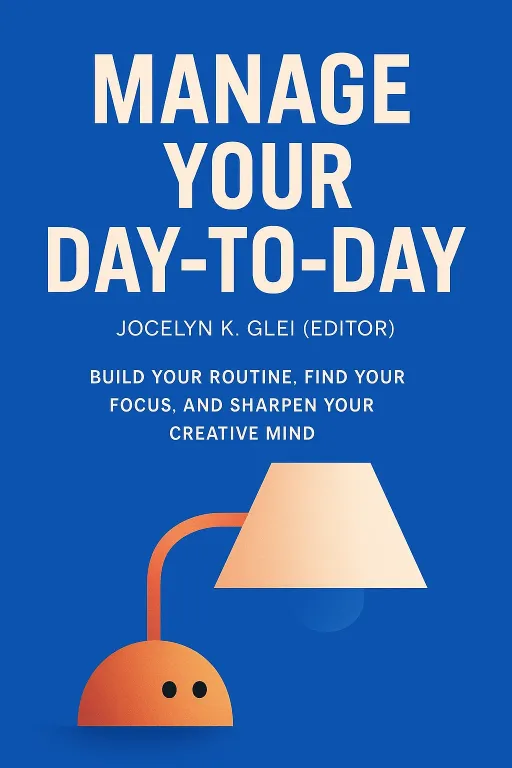
Nova: Well, what if we told you that the secret isn't about running faster, but about your day with the precision of an architect and the foresight of a wise investor? Today, we’re diving into two brilliant books that offer a profound blueprint for just that. We'll be exploring insights from Jocelyn K. Glei’s "Manage Your Day-to-Day," which is a fantastic compilation of wisdom from some of the world's leading creative professionals, many of whom contributed to her influential 99U conference and publication.
Atlas: Oh, I've heard of 99U! So this isn't just generic corporate advice; it's coming from people who actually things. That's intriguing. And the other book?
Nova: Then we'll shift our focus to Elizabeth Grace Saunders’ "The 3 Secrets to Effective Time Investment." Saunders is a renowned time management coach, and her approach is rooted in practical, client-focused strategies. Her work really pushes us to move beyond simple time management and towards a deeper, more intentional investment of our most precious resource.
Atlas: So we’re talking about both the of getting things done and the of making sure those things actually matter. I'm already hooked. For those of us who are lifelong learners and always seeking core concepts, this sounds like it's going to hit deep.
Architecting Your Day: The Art of Tactical Execution and Routine Building
SECTION
Nova: Precisely. Let's kick things off with Glei and the art of "Architecting Your Day." Her central thesis, drawn from these incredible creative minds, is all about creating a kind of fortress around your most valuable work. She talks about "Protecting Your Peak Hours."
Atlas: Protecting peak hours. I hear that phrase a lot, but what does it really mean in practice? For someone who's a curious strategist, their peak hours might be when they're doing deep conceptual thinking, but how do you actually guard that time when the world seems determined to interrupt you every five minutes?
Nova: That’s the million-dollar question, isn't it? Glei’s contributors emphasize that it's not enough to your peak hours – those times when your brain is naturally most alert and creative. You have to them with almost militant discipline. Imagine a highly successful novelist. They don't just hope inspiration strikes; they have a ritual. Perhaps they wake up before dawn, make a specific type of coffee, sit at their desk, and for the first three hours. That’s their peak time, protected from the digital onslaught.
Atlas: So it’s about creating an intentional barrier. That makes sense. It’s not just about saying "I'll work from 9 to 12," it's about eliminating the potential for distraction during that window.
Nova: Exactly. And it’s not just about you do during those hours, but also about how you. Glei champions "Intentional Breaks." These aren't scrolling through Instagram or checking the news. These are structured moments to truly disconnect and recharge. Think about an architect stepping away from their blueprint to walk around the block, letting their mind wander and synthesize ideas without direct pressure.
Atlas: That’s a powerful distinction. I know I often fall into the trap of a "break" meaning just shifting from one screen to another. But a true intentional break, that sounds like a way to maintain focus, not just escape from it.
Nova: It is. It’s about replenishing your cognitive resources. And this leads directly into her concept of "Cultivating Rituals." These are those consistent, often small, actions that signal to your brain: "It's time to create," or "It's time to focus." For some, it might be a specific playlist, for others, it's organizing their desk in a particular way before starting a task. These routines create a sense of predictability and psychological safety, allowing creativity and productivity to flourish.
Atlas: So, it's almost like building a mental on-ramp for deep work. You're training your brain to enter a specific state. I can see how that would help someone who's trying to build sustainable routines, which is a big part of personal growth. It's not about forcing yourself, it's about setting up the environment to succeed.
Nova: Precisely. The goal is to make the the path towards your most important work, rather than towards distraction. It's about quality over sheer quantity of hours.
Investing Your Time: Strategic Alignment with Values and Energy
SECTION
Nova: Now, while Glei gives us the tactical blueprint for to build that fortress around our focus, Elizabeth Grace Saunders' work asks a more fundamental question: are we building in there? Her book, "The 3 Secrets to Effective Time Investment," pivots us from merely managing time to consciously it.
Atlas: Investing your time. That’s a really different way to frame it. I imagine many listeners, myself included, often feel like we're just trying to with time, not invest it. So, what’s the first secret?
Nova: Her first secret is "Value-Based Prioritization." This is about aligning your daily activities with your long-term aspirations, your core values. It's a profound shift. Instead of just listing tasks, you ask: "Does this task contribute to my value of, say, 'creative expression,' 'family connection,' or 'intellectual growth'?"
Atlas: That sounds a bit abstract initially. How do I translate my "long-term vision for mental clarity and well-being" – which is a huge goal for many of us – into what I actually do tomorrow morning? It sounds great in a mission statement, but how does it hit the ground?
Nova: That’s where the power of it lies. Saunders would say if your long-term vision includes mental clarity, then a daily activity like meditation, journaling, or even that protected deep work time we just discussed, becomes a high-priority "investment," not just another item on a to-do list. It moves from being a chore to being a direct contribution to your deepest self. A designer she worked with realized their value of 'creative freedom' wasn't being met because their schedule was filled with client work they didn't enjoy. By aligning their priorities, they started blocking out time specifically for their passion projects, even if it meant saying no to some paying gigs. The result was more impactful work and less burnout.
Atlas: Wow. So it’s not just about guarding time, but making sure the time you guard is for the things that truly fuel you. That makes me think about how many people, especially in demanding roles, just react to their inbox or their boss's latest request all day, without ever checking if it aligns with their own compass.
Nova: Exactly. And that leads to her second secret: "Energy Management." It's understanding and working your natural energy cycles, not against them. If you're a morning person, don't schedule your most cognitively demanding tasks for 4 PM. If you hit an afternoon slump, schedule your administrative tasks or intentional breaks then. It's about recognizing that your energy is a finite resource, and where you invest it matters just as much as where you invest your time.
Atlas: Oh, I totally know that feeling! Trying to push through a complex problem when my brain is already fried feels like trying to run through quicksand. This is about acknowledging our human limitations and working smarter within them.
Nova: And her third secret is "Realistic Scheduling." This means avoiding overcommitment and building in buffer time. It sounds simple, but it's revolutionary for many. It's the antidote to the "hero mentality" of constantly pushing yourself to the brink. It acknowledges that things take longer than expected, and emergencies happen. It’s about creating a schedule that you can stick to, rather than one that looks impressive but leaves you constantly feeling like a failure.
Atlas: So, it's about building a schedule that respects your values, your energy, and the unpredictable nature of life. This feels like a holistic approach to productivity, not just a set of hacks. It’s about truly building better habits, not just adding more to the plate.
Synthesis & Takeaways
SECTION
Nova: When we put Glei and Saunders together, we get a powerful synthesis. Glei gives us the tools to create protected time and effective routines, while Saunders gives us the compass to ensure that protected time is spent on what truly matters, aligning with our values and energy.
Atlas: It suddenly makes that "tiny step" from our growth recommendations – spending 15 minutes planning your day before checking emails, identifying top 3 priorities aligned with long-term goals – feel less like a chore and more like a profound investment. It's about proactive design, not just reactive management.
Nova: Absolutely. And this brings us back to that deep question: "How can you consistently invest your daily 15 minutes in ways that nourish both your immediate studies and your long-term vision for mental clarity and well-being?" It’s a question that asks for continuous, thoughtful action, not a one-time fix.
Atlas: That question resonates so deeply with the idea of being a lifelong learner and striving for mental clarity. It's not about perfection; it's about the consistent, intentional steps that build towards a more purposeful and less overwhelmed existence. It’s embracing the journey of learning, knowing every step forward is progress.
Nova: Indeed. It's about designing a life, one day at a time, that truly reflects who you are and who you aspire to be. It's about moving from simply being busy to being truly effective and fulfilled. We encourage all our listeners to take that 15 minutes tomorrow, and every day, to truly architect and invest in their most valuable asset: their time. We'd love to hear how you're incorporating these ideas into your daily rhythm. Share your insights and experiences with the Aibrary community.
Atlas: Let's make every day an intentional masterpiece.
Nova: This is Aibrary. Congratulations on your growth!