The Doctor and the Soul: Finding Meaning in Modern Healthcare
Golden Hook & Introduction
SECTION
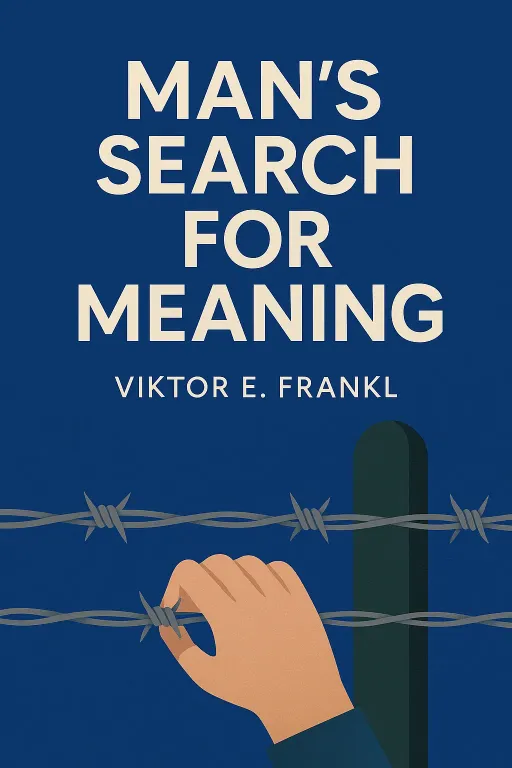
Nova: What if the success of one of the 20th century's most beloved books wasn't a cause for celebration, but a symptom of a deep and pervasive sickness in our society? The author himself, Viktor Frankl, believed so. When asked about the millions of copies sold of 'Man's Search for Meaning,' he said it wasn't a testament to his achievement, but a sign of our collective misery. A sign that the question of meaning 'burns under our fingernails.'
James Mwangi Rukenya: That's a startling thought, Nova. To see your own success as a reflection of widespread suffering. It’s incredibly humble, but also deeply insightful.
Nova: Exactly. And James, as a fellow professional dedicated to human well-being, I feel you're the perfect person to explore this with. Frankl wasn't just a survivor; he was a neurologist and psychiatrist. He was one of us, in a way—a clinician trying to understand the human condition. Today, we're going to tackle his work from two powerful perspectives. First, we'll diagnose the problem he called the 'existential vacuum'—the hidden epidemic of meaninglessness in our time.
James Mwangi Rukenya: The diagnosis. I like that. It’s our starting point in healthcare.
Nova: And then, we'll explore his profound solution: the ultimate freedom to find meaning, not in spite of suffering, but through it. So, let's begin.
Deep Dive into Core Topic 1: The Existential Vacuum
SECTION
Nova: So James, let's start with that diagnosis. Frankl argued that unlike animals, humans are no longer told what we do by instinct, and unlike in the past, we're no longer told what we do by tradition. We're left in a void... an 'existential vacuum.' Does that resonate with you, especially in the context of health and well-being?
James Mwangi Rukenya: It resonates profoundly. In healthcare, we see the physical manifestations of illness every day. But so often, there's a parallel, non-physical suffering. A patient might have a clear diagnosis, a treatment plan, but what they're really struggling with is this feeling of, 'What's the point of it all now?' Their life has been upended, their identity as a provider, a parent, an athlete—it's all been thrown into question. That void you mention, that's the space we often find our patients in.
Nova: And Frankl saw this coming. He points to a survey done at Johns Hopkins University where they asked thousands of students what they considered most important. Only 16% said 'making a lot of money.' A staggering 78% said their primary goal was 'finding a purpose and meaning to my life.' This was decades ago! He saw that this hunger for meaning was becoming the primary driver for the modern person.
James Mwangi Rukenya: That’s fascinating, Nova. It makes me think about the concept of 'unemployment neurosis' that Frankl wrote about. He studied young patients during the Great Depression who were suffering from a specific type of depression. He realized it wasn't just about not having a job; it was that they equated being jobless with being useless, and being useless with having a meaningless life.
Nova: And what was his intervention? It's brilliant.
James Mwangi Rukenya: He didn't find them jobs. He couldn't. Instead, he got them to volunteer—unpaid work in libraries, in youth organizations. And their depression lifted! Their financial situation hadn't changed, but they had found a purpose. They were needed again. We see this all the time. When a patient loses their role in life due to chronic illness, it's not just the physical symptoms we're treating; it's this profound loss of purpose. That feeling of uselessness can be more debilitating than the disease itself.
Nova: You've just perfectly described the existential vacuum. It's this gaping hole where purpose used to be. And Frankl's point is that if we don't fill it with meaning, it gets filled with other things—neurosis, addiction, aggression, what he called the 'mass neurotic triad.' He believed a lot of what we treat as purely psychological or biological has roots in this spiritual emptiness.
James Mwangi Rukenya: It’s a paradigm shift. We’re trained to look for pathogens, for chemical imbalances. Frankl is asking us to also look for a 'meaning imbalance.' It suggests that part of our role as healers is to help patients reconnect with a 'why' to live for.
Nova: Exactly. And that brings us to the heart of Frankl's message, and arguably his most challenging and beautiful idea. If we are doomed to suffer, if life will inevitably present us with pain, guilt, and death—what he called the 'tragic triad'—how on earth do we find meaning in it? Frankl's answer came directly from the hell of Auschwitz.
Deep Dive into Core Topic 2: Finding Meaning in Suffering
SECTION
Nova: Frankl describes these forced marches in the bitter cold of Bavaria. The prisoners' feet are covered in sores, they're slipping on icy patches, and a guard is walking alongside, occasionally striking them with the butt of his rifle. The man next to him whispers, "If our wives could see us now! I hope they are better off in their camps; I don't know what to think."
James Mwangi Rukenya: Unimaginable.
Nova: In that moment, Frankl starts thinking of his own wife. He doesn't know if she's alive or dead. But he begins to have a vivid conversation with her in his mind. He sees her smile, he feels her presence. And a thought pierces through him, a truth he says he saw for the first time: "The salvation of man is through love and in love." He realized, right there, that even if a man has nothing left in this world, he can still know bliss, if only for a moment, in the contemplation of his beloved.
James Mwangi Rukenya: So his meaning came from an internal act of love, completely independent of his external reality.
Nova: Completely. He writes, and this is one of the most beautiful passages in all of literature for me, "Love goes very far beyond the physical person of the beloved. It finds its deepest meaning in his spiritual being, his inner self. Whether or not he is actually present, whether or not he is still alive at all, ceases somehow to be of importance." He found his meaning, his reason to endure, in that inner spiritual connection. But it gets even more profound.
James Mwangi Rukenya: I'm almost afraid to ask how.
Nova: He tells a story from the typhus ward, a place of absolute misery and death. There was a young woman who knew she was going to die in a few days. But she was cheerful. Frankl was puzzled. She told him she was grateful for her fate because her previous life had been trivial, and this suffering had forced her to take her spiritual life seriously. And then she pointed out the window.
James Mwangi Rukenya: What was out there?
Nova: A single chestnut branch with two blossoms on it. She said she spoke to the tree, and it spoke back to her. It told her, "I am here—I am here—I am life, eternal life." She found her connection to the eternal, her meaning, in a single branch outside a death camp window. Frankl says this wasn't a hallucination; it was a profound spiritual experience. She had exercised what he called "the last of the human freedoms"—the ability to choose one's attitude in any given set of circumstances. She couldn't change her fate, so she changed herself, and in doing so, she turned her suffering into a victory.
James Mwangi Rukenya: That's... incredibly powerful. As clinicians, we're trained to fight death, to extend life, to manage pain. We see suffering as the enemy to be defeated. But this story... it suggests that the quality and meaning found in one's final days can be a victory in itself. It reframes our entire goal. It's not just about saving a life, but about helping a person find meaning in their existence, however long or short it is. That's a profound responsibility.
Nova: It's a terrifying responsibility, isn't it? Because it's not something you can prescribe.
James Mwangi Rukenya: No, you can't. Frankl says each person's meaning is unique. Our job, then, isn't to give them meaning, but perhaps to help them see the 'chestnut branch' in their own lives. To help them discover the attitude that will allow them to find it for themselves. It shifts the focus from us as the all-powerful healer to us as a guide, a fellow traveler.
Synthesis & Takeaways
SECTION
Nova: And that feels like the perfect synthesis of Frankl's work. We live in a time where many feel adrift in an existential vacuum, a problem that manifests in our clinics and hospitals every day. But we also possess this incredible, uniquely human power to fill that void. We can find meaning through what we create, through the people we love, and, most radically, through the attitude we take toward the suffering we cannot avoid.
James Mwangi Rukenya: It brings me back to what Frankl called his 'Copernican turn' in psychotherapy. For centuries, we've been asking, "What can I expect from life? What can life give me?" Happiness, success, comfort...
Nova: The pursuit of happiness.
James Mwangi Rukenya: Exactly. And Frankl flips it completely. He said we have to stop asking what we expect from life and start asking a different question: "What does life expect from me?" What task, what person, what situation is calling out for my response? For anyone in a helping profession, or frankly, for any human being facing a struggle, that question changes everything. It's not about what you can get, but what you can give. And in that giving, in that responsible answer to life's questions... that's where you find your meaning.
Nova: A powerful and timeless lesson. James, thank you for walking through this with us.
James Mwangi Rukenya: Thank you, Nova. It's a book that doesn't just give you answers; it makes you live the questions.