

Unlocking Your Inner Resilience: Navigating Life's Toughest Moments
Golden Hook & Introduction
SECTION
Nova: You know, Atlas, there’s this fascinating concept that what doesn't kill you makes you stronger. But what if that's not just a feel-good platitude, but a scientifically observable phenomenon that can fundamentally change how we approach every challenge?
Atlas: Oh, I love that! Because honestly, for a long time, I thought what didn't kill me just made me… more tired. Or slightly more paranoid. So, the idea that there's a deeper science to actually from adversity? That's compelling.
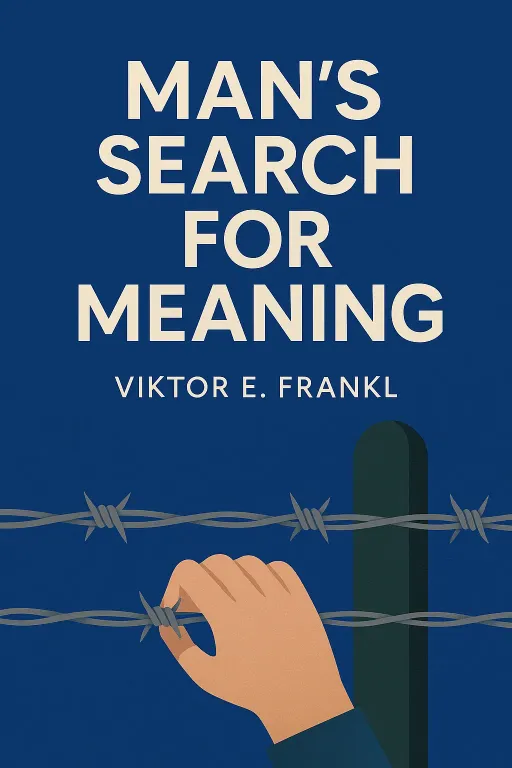
Nova: Absolutely. And it’s a core idea we’re diving into today, inspired by two profound works. We’re talking about Viktor Frankl’s seminal "Man's Search for Meaning" and Angela Duckworth’s groundbreaking "Grit: The Power of Passion and Perseverance."
Atlas: Wow, two heavy-hitters right there. Frankl, a psychiatrist and Holocaust survivor, writing about finding purpose in unimaginable suffering, and Duckworth, a psychologist, dissecting the traits that lead to sustained achievement. That’s a powerful combination. It makes me wonder, what's the thread connecting these two seemingly different explorations of human strength?
Nova: That's precisely what we're here to unravel. Frankl, who penned his masterpiece in just nine days after liberation from concentration camps, offered the world a profound insight: that even when we can't change our circumstances, we retain the ultimate freedom to choose our attitude. His unique blend of existential philosophy and clinical psychology, which he termed Logotherapy, profoundly influenced humanistic psychology and continues to resonate today.
Atlas: That context is incredibly important. To write something so impactful, so quickly, after such an experience… it speaks volumes about the power of his message. It’s not just theory; it’s lived truth.
Nova: Exactly. And then you have Duckworth, whose work on "grit" has been celebrated as a game-changer in understanding success, although it's also sparked lively academic debates, with some critics suggesting that factors beyond individual grit, like privilege and systemic opportunities, play a significant role. But her core argument remains incredibly powerful for personal development.
Atlas: That’s fair. So, we're looking at resilience not just as enduring, but as actively seeking meaning and applying persistent effort, even when the world throws its worst at us. It’s about more than just bouncing back.
Nova: Precisely. Today, we're really exploring how perspective and perseverance are not just coping mechanisms, but active tools for growth. We’ll first dissect Frankl's revolutionary idea that meaning can be found in suffering, and then pivot to Duckworth’s research on how passion and persistence can fuel our long-term goals.
The Power of Perspective in Adversity
SECTION
Nova: So, let's kick off with Frankl and his profound statement: "When we are no longer able to change a situation, we are challenged to change ourselves." Atlas, what's your initial take on that? Because it sounds simple, but it's anything but.
Atlas: It's deceptively simple, isn't it? Because our first instinct is always to change the situation. To fight it, to run from it, to negotiate with it. But Frankl is saying, "Nope, sometimes the external battle is lost, and the only battle left is internal." And that's a tough pill to swallow for anyone who feels like they’re losing control.
Nova: It is. Frankl’s whole philosophy, Logotherapy, is built on the premise that the primary motivational force in humans is a search for meaning. He observed this firsthand in the concentration camps. He saw that those who survived, or at least maintained their humanity, weren't necessarily the strongest physically, but those who clung to a sense of purpose.
Atlas: Like, having a loved one to return to, or a book to finish, or even just a belief in some greater good?
Nova: Exactly. He recounts an incredibly poignant story in "Man's Search for Meaning" about two prisoners who were contemplating suicide. Frankl asked one what he expected from life; the man said "nothing." Frankl then reversed the question: "What does life expect from?" For that man, it was his child waiting in another country. For the other, it was an unfinished series of books.
Atlas: Wow. So, it wasn't about their personal desire to live, but about a responsibility life, or to others. That's a huge reframing. It shifts the burden from "Why me?" to "What can I do now?"
Nova: Precisely. It’s a radical act of self-transcendence. You move beyond your immediate suffering and connect to a larger purpose. And this isn't some abstract philosophical exercise. He described how prisoners would find meaning in helping others, sharing their meager rations, or even finding beauty in a sunset, a fleeting moment of peace amidst unimaginable horror.
Atlas: That’s actually really inspiring. Because for someone who's going through a tough time, whether it's a career transition or a personal setback, it can feel incredibly isolating. And Frankl is saying, even in the most extreme isolation, there's still a choice in how you perceive your suffering.
Nova: That’s the core of it. He famously said, "Everything can be taken from a man but one thing: the last of the human freedoms—to choose one's attitude in any given set of circumstances, to choose one's own way." It's about exercising that inner freedom, no matter how dire the external constraints. For the resilient seeker, this is gold. It’s not about ignoring pain, but about finding a 'why' that allows you to bear almost any 'how'.
Atlas: And that's something that resonates deeply with people who are driven by purpose. It’s not just about getting through it, but finding a way to make it something, to contribute to something bigger than yourself. It's like, the suffering itself becomes the raw material for growth, rather than just something to be endured.
Nova: Beautifully put. It’s about transforming despair into a catalyst for meaning. It’s not about denying the suffering, but about finding a purpose within it. This perspective helps us understand that true resilience isn't about avoiding challenges, but about finding purpose and strength within them.
Cultivating Your Inner Fortitude
SECTION
Nova: And that brings us perfectly to the second leg of our journey: Angela Duckworth's concept of "Grit." If Frankl gives us the "why," Duckworth offers a powerful "how" for navigating those long, arduous journeys toward our goals.
Atlas: I've heard a lot about grit. It's often boiled down to just "toughing it out," but I suspect there's more to it than pure stubbornness, right?
Nova: Absolutely. Duckworth, a former teacher who became a psychologist, noticed that her most successful students weren't always the ones with the highest IQs. Instead, they were the ones who demonstrated extraordinary passion and perseverance towards long-term goals. She defines grit as "passion and sustained perseverance toward especially long-term goals."
Atlas: So, it's not just about working hard, but working hard for a really long time. That's a crucial distinction. Because you can work hard at a lot of things, but if it's not aligned with a deeper passion, that effort might fizzle out.
Nova: Exactly. Her research shows it’s about having a singular, ultimate concern that organizes and gives meaning to almost everything you do. It's not about jumping from one passion to another, but about having a compass that consistently points you in one direction, even when the path is incredibly difficult.
Atlas: That makes so much sense for someone who’s purpose-driven. It's not just about ticking boxes, but about that underlying motivation that keeps you going when things get tough. Like, if you truly believe in making a difference, you're more likely to push through the inevitable setbacks.
Nova: Consider her work with West Point cadets. She found that grit was a better predictor of who would make it through the rigorous training than traditional measures like SAT scores or physical fitness. Or her studies with National Spelling Bee champions, where practice hours, not innate talent, were the strongest predictor of success.
Atlas: So, it’s not just about raw talent, then. It's about the consistent application of effort fueled by deep interest. That challenges a lot of our conventional wisdom about what makes someone successful.
Nova: It fundamentally shifts the equation. She argues that talent, of course, but effort. Talent multiplied by effort equals skill. And skill multiplied by effort equals achievement. So, effort is involved in both developing skill and then applying that skill.
Atlas: That's a powerful framework. And it's particularly relevant for creative thinkers, because often, creative breakthroughs don't come from a flash of genius, but from countless hours of iteration, failure, and persistence. It's the gritty artist, the gritty entrepreneur who eventually finds their breakthrough.
Nova: Precisely. And this ties back to Frankl’s idea of meaning. When your long-term goal is imbued with deep personal meaning, that passion becomes a powerful fuel for your perseverance. It’s not just about hitting a target; it’s about fulfilling a purpose.
Atlas: So, if Frankl gives us the spiritual framework for enduring suffering, Duckworth gives us the psychological and practical framework for sustained effort towards a meaningful goal. They really complement each other. It’s like, you find your meaning, and then you apply your grit to achieve it, no matter how long it takes.
Nova: That’s the synergy. Reflecting on a recent challenge, how did your perspective influence your experience? What meaning can you draw from it? And in what areas of your life can you apply a more gritty, persistent approach to achieve your long-term goals? These aren't just academic questions; they're blueprints for a more resilient, purpose-driven life.
Synthesis & Takeaways
SECTION
Nova: So, Atlas, bringing these two powerful ideas together, what's the ultimate takeaway for our listeners who are resilient seekers, creative thinkers, and purpose-driven individuals?
Atlas: I think it’s this: resilience isn't a passive trait you either have or you don't. It's an active practice. Frankl shows us that even when external freedom is stripped away, the inner freedom to choose our attitude, to find meaning, remains. And Duckworth then provides the blueprint for how to channel that meaning into sustained, passionate effort.
Nova: Beautifully said. It's about consciously embracing the idea that this transition, this challenge, can be a powerful time for reinvention. It's not just about getting through it, but about growing through it.
Atlas: Exactly. It’s about cultivating that inner fortitude, understanding that your perspective isn't just a reaction; it's a powerful tool. And your perseverance, fueled by your passion, is how you build the future you envision, even when the path is unclear.
Nova: And it’s not about grand gestures. It can start with something as simple as a daily gratitude practice, finding meaning even in the small things. Because those small acts of perspective and persistence compound over time.
Atlas: That’s so true. It anchors your spirit. And for our listeners who are always looking to unlock new solutions and deepen their understanding of purpose, these two thinkers offer an incredible roadmap. It’s about finding the why, and then committing to the how, with every fiber of your being.
Nova: Absolutely. It’s a profound reminder that our greatest strength often emerges not from avoiding life’s toughest moments, but from finding deep meaning and applying unwavering grit within them. This is Aibrary. Congratulations on your growth!









