The 'Victim' Narrative is a Trap: Why You Need Radical Agency.
Golden Hook & Introduction
SECTION
Nova: What if I told you that sometimes, feeling like a victim can be incredibly convenient?
Atlas: Really? Convenient? That sounds a bit out there. Most people I know who feel like a victim are anything but comfortable.
Nova: Exactly. It’s counter-intuitive, right? But think about it: if you're the victim, someone else is always to blame. The circumstances are always unfair. And that, in a twisted way, can feel like a temporary reprieve from responsibility. It's a psychological blind spot that can actually keep us from moving forward.
Atlas: Oh, I see. It's the ease of externalizing, the comfort of not having to shoulder the burden. That's a clever way to put it. So, today we're talking about breaking free from that kind of narrative?
Nova: Precisely. Today, we're diving deep into the idea that the 'victim' narrative is a trap, and why embracing what we call 'radical agency' is absolutely crucial for purposeful reorientation in our lives. We're going to explore how we can reclaim our power, no matter what challenges we face.
Atlas: That sounds like a topic that resonates with anyone looking for clarity and solutions, especially when life feels overwhelming. We'll be drawing on some truly foundational thinkers for this, including Viktor Frankl, a Holocaust survivor whose harrowing experiences shaped his profound insights into human resilience and the power of choice.
The Insidious Trap of the Victim Narrative
SECTION
Nova: So, let's start with this blind spot. Life throws us curveballs, right? And it’s easy to feel like we’re just passive recipients of fate, tossed about by external forces. That feeling, that 'victim' mindset, it's insidious. It doesn't just make us feel bad; it actively saps our energy.
Atlas: I imagine a lot of our listeners feel that drain. It's almost like a default setting, isn't it? What makes it so hard to see when we're in it? Because when you're in that state, you usually don't you're playing the victim. You just think you're accurately describing your reality.
Nova: Exactly. And that's the cunning part. It offers a kind of psychological short-term gain. It can temporarily shield us from the discomfort of responsibility. If everything is someone else's fault, or the world's fault, then we don't have to confront our own potential role, or, more importantly, our potential to act.
Atlas: So it's almost like a protective mechanism, but one that ultimately harms us?
Nova: Yes, it’s a very costly form of protection. Imagine someone who constantly blames their lack of career progression on their boss, the company, the economy – everything but their own skill development or proactive networking. The cause of their stagnation isn't the external factors, which might be real, but their and continuous external blame. The process is a loop of projection, and the outcome is prolonged stagnation, despite opportunities that might pass them by because they're not looking for them.
Atlas: That sounds rough, but it's so common. How do you even begin to untangle that, especially when the external factors genuinely tough? Because sometimes the boss unfair, or the economy bad.
Nova: That’s the key distinction. Recognizing your agency isn't about denying hardship or pretending external forces don't exist. It's about reclaiming the power to choose your response, regardless of those external forces. It’s about shifting from 'why is this happening to me?' to 'what can I do about this?' It’s the purposeful reorientation that transforms a passive stance into an active one.
Embracing Radical Agency: The Power of Choice & Meaning
SECTION
Nova: And that naturally leads us to the antidote, the profound shift. It's about how even when circumstances are beyond our control, our response never is. This is where the concept of radical agency truly shines.
Atlas: So you're saying, even when everything is falling apart around us, we still have a choice? That feels like a huge ask sometimes.
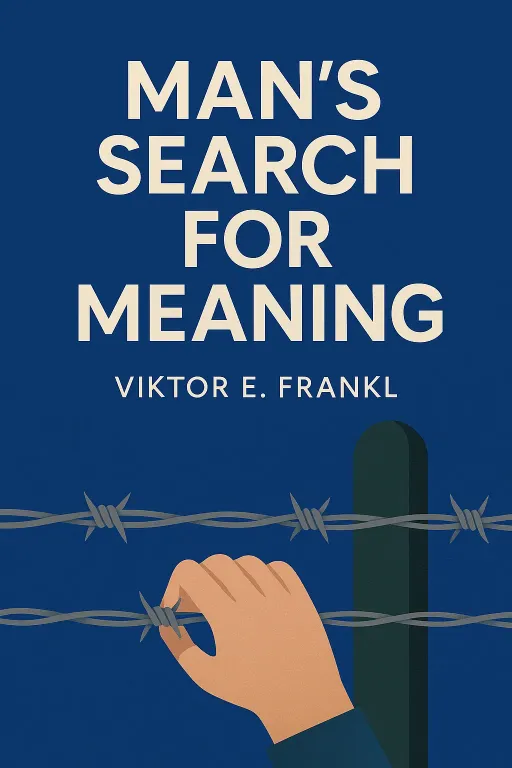
Nova: It is. But it’s a choice that defines our humanity. Think of Viktor Frankl, the psychiatrist and Holocaust survivor. In his book, "Man's Search for Meaning," which is widely acclaimed and has influenced millions, he didn't just survive Auschwitz; he observed. He developed logotherapy, a philosophy centered on finding meaning in suffering. He saw that even in the most horrific, dehumanizing conditions, where everything was stripped away, the one thing that could not be taken was the.
Atlas: That's incredible. To find meaning in kind of suffering... it almost feels impossible to grasp for someone who hasn't experienced it. Can you give an example of what that 'meaning' looked like in such a dire situation?
Nova: Absolutely. Frankl recounted observing prisoners who found meaning in remembering their loved ones, or in a future project they hoped to complete, or even in helping a fellow prisoner. Their suffering was immense, but their internal framework shifted. The struggle remained, but by choosing to attach meaning to it, they maintained an inner freedom, a purpose, that often contributed to their survival. It wasn't about denying the pain; it was about elevating it to something more.
Atlas: Wow, that gives me chills. That's such a hopeful way to look at it, even in the darkest places.
Nova: And this idea isn't exclusive to extreme situations. Ryan Holiday, drawing on Stoic philosophy in his book "The Obstacle Is the Way," argues that adversity isn't just something to overcome. It's a catalyst for growth. He offers practical ways to transform challenges into advantages. It's the idea that the very thing blocking our path the path.
Atlas: That's a great analogy. So, for our listeners who are, say, rebuilding their finances or learning a new skill after a setback – how does this 'obstacle as catalyst' idea actually play out for them? It still feels like a brick wall in the moment.
Nova: It's about seeing that brick wall not as an endpoint, but as material for building. A financial setback isn't just a loss; it's an enforced opportunity to deeply analyze spending habits, to learn new budgeting skills, to innovate income streams. The difficulty of learning a new skill isn't a sign to quit; it’s the resistance that builds the muscle. The fire and blows a blacksmith puts to metal aren't pleasant, but they create strength and shape. It’s active, purposeful engagement with the problem, rather than shrinking from it.
Synthesis & Takeaways
SECTION
Nova: So, the 'victim' narrative keeps us stuck in a cycle of blame and inaction, but radical agency, whether through finding meaning like Frankl or embracing obstacles like Holiday, empowers us to transform our circumstances. It’s about recognizing that our greatest power lies in our response.
Atlas: It's about re-framing, isn't it? Not just what happens, but what we with what happens. How can someone start doing that today, in their own challenges? Because it's easy to talk about, but putting it into practice...
Nova: That’s the deep question we want to leave our listeners with today: In what current challenge can you choose your attitude, and what new meaning can you find within it? It could be anything – a difficult project at work, a personal conflict, a health challenge. Just one area.
Atlas: I like that. It's not about ignoring the pain, but about finding the purpose it. That's actually really inspiring. It feels like a foundational step towards fortifying your inner world and charting that new course, which I know many of our listeners are striving for.
Nova: Exactly. It's about moving from 'why me?' to 'what now?' That's the essence of radical agency.
Atlas: A powerful shift. And that's something we can all start contemplating, even in the smallest moments. Thank you for joining us on this journey of insight, Nova.
Nova: And thank you, Atlas, for illuminating these profound ideas with your thoughtful questions.
Nova: This is Aibrary. Congratulations on your growth!