The Search for Existential Alignment
Golden Hook & Introduction
SECTION
Nova: Most career advice is a trap. We are told to chase passion, climb the ladder, and maximize output. We treat our time like a commodity to be traded for the highest possible return. But there is a massive gap between being productive and being fulfilled. We often find ourselves at the top of a mountain, looking out at a view, only to realize we built our house on the wrong peak.
Atlas: That is a harsh reality to face on a Tuesday morning. I have felt that exact friction. We spend our lives building these complex careers, and then we wonder why the structure feels hollow. It feels like we are optimizing for the wrong metrics. If our standard metrics like salary, title, and influence are not the ultimate indicators of a life well-lived, then what is?
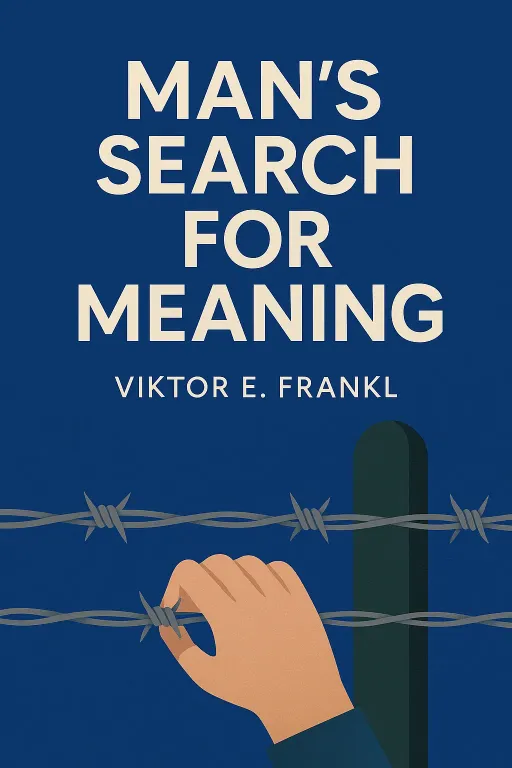
Nova: That is the question at the heart of our discussion today. We are going to explore the search for existential alignment by looking at two profound thinkers: Viktor Frankl and Kahlil Gibran. Frankl, a psychiatrist who survived the Holocaust, wrote Man’s Search for Meaning in just nine days. It remains one of the most significant psychological texts of the twentieth century, arguing that the primary human drive is not pleasure or power, but the pursuit of meaning. Then we have Kahlil Gibran, whose masterpiece The Prophet has never been out of print since its publication in 1923. Gibran offers a different, more poetic lens on how we integrate our daily labor with our inner purpose.
Atlas: I have always been struck by the fact that Frankl wrote his defining work under such extreme circumstances. It gives his words a weight that most modern self-help books simply cannot replicate. When we talk about finding meaning, we are talking about something that survived the most inhumane conditions imaginable. That is a high bar for anyone looking to find purpose in a corporate office or a design studio.
Nova: Exactly. Frankl’s work is not a theoretical exercise. It is a survival strategy. And when we pair that with Gibran’s vision of work as love made visible, we get a blueprint for something much more durable than just a career. We get a legacy.
The Drive for Meaning
SECTION
Atlas: Let’s start with Frankl. He flips the script on the standard psychological view of the time, which was largely focused on Freud’s pleasure principle or Adler’s will to power. Frankl argues that we are driven by something else entirely. What is the core of that argument?
Nova: The core is what he calls logotherapy. It suggests that human beings are fundamentally motivated by a will to meaning. Think of it this way. If you have a strong enough why, you can bear almost any how. Frankl observed that in the direst conditions of the concentration camps, the people who survived were often not the strongest physically, but the ones who had a reason to keep going. They had a future goal, a task to complete, or a loved one to return to. They held onto the belief that their life still had a purpose, even when their external world had been completely stripped away.
Atlas: That is powerful, but how does that translate to someone who is not in a survival situation? Most of our listeners are not facing life-or-death struggles. They are facing mid-career transitions, burnout, or the pressure to scale a business. How does the will to meaning apply when the stakes are just about hitting quarterly targets?
Nova: It applies because the lack of meaning is a different kind of survival threat. It is existential drift. When you work without a sense of purpose, you are essentially going through the motions. You are surviving, but you are not living. Frankl would argue that the frustration of the will to meaning is a primary cause of modern neurosis. If you feel like your daily work is just a series of tasks without a larger architecture, you are going to feel empty, regardless of how successful you are on paper.
Atlas: That resonates deeply. I imagine many of our listeners feel that disconnect. They are successful by every external measure, but they feel like they are just spinning wheels. They are architects of their own lives, but the blueprint seems to be missing the most important room.
Nova: Precisely. And the key, according to Frankl, is the freedom of attitude. Even when you cannot change your situation, you retain the ultimate freedom to choose your attitude toward that situation. If you are stuck in a job that feels unfulfilling, you have the agency to change how you perceive that work. You can find a way to make it an expression of your values, or you can use it as a stepping stone to a place where your values are more aligned. The choice is yours.
Atlas: I am curious about the practical application of that. If I am an architect or a strategist in a high-pressure environment, how do I apply this freedom of attitude without just quitting my job? How do I find meaning in the mundane, the paperwork, the endless meetings?
Nova: You start by reframing the task. Instead of seeing the paperwork as a chore, you see it as the necessary foundation for the creative work you want to do. You see the meetings not as interruptions, but as opportunities to connect with people and influence the direction of the project. You are not changing the task; you are changing the narrative you tell yourself about the task. You are moving from a mindset of obligation to a mindset of contribution.
Work as Love Made Visible
SECTION
Atlas: That leads perfectly into Gibran. I love the phrase work as love made visible. It sounds beautiful, but it also sounds like a high standard. If I am writing code, or managing a supply chain, or drafting a contract, how do I make that love made visible? It feels like we are moving from psychology into poetry here.
Nova: Gibran was a master at bridging that gap. He writes that work is love made visible, and if you cannot work with love but only with distaste, it is better that you should leave your work and sit at the gate of the temple. He is not saying that every moment of work should be blissful. He is saying that work should be an extension of your inner self. When you build a house, you should build it as if your beloved were to dwell in it.
Atlas: That is a stunning image. If I am building a structure, I am not just putting up walls. I am creating a space for human experience. If I am a strategist, I am not just moving numbers on a spreadsheet. I am creating stability for a team. I am providing clarity for a decision-maker.
Nova: Exactly. You are infusing your work with care. You are treating the output as a gift to the person who will receive it. That is the shift. When you approach your work as a gift, the quality of your output changes. You stop asking how little you can do to get by, and you start asking how much value you can provide.
Atlas: I am thinking about the people listening to this who are in roles that feel very disconnected from the final product. Maybe they are a small piece of a massive machine. How do they find that connection? How do they see the love in the data entry or the routine maintenance?
Nova: That is where the mindset of the architect comes in. Even if you are a small part of the machine, you are the architect of your own experience. You can choose to see the human impact of the work you do. Think about the person who will use the data you are entering. Think about the team that relies on your accuracy. When you expand your perspective to see the ripple effect of your actions, you start to see the love, or at least the service, in what you do.
Atlas: That makes sense. It is about zooming out. I often tell people that the most strategic thing you can do is to understand the full context of your work. If you only look at your own desk, you see a pile of tasks. If you look at the entire building you are part of, you see a structure that serves a purpose.
Nova: Right. And Gibran’s work also emphasizes the interconnectedness of joy and sorrow. He says that the deeper that sorrow carves into your being, the more joy you can contain. This is vital for anyone building a legacy. You are going to face challenges. You are going to face failure. You are going to have days where the work feels like a burden. But those experiences are part of the process. They are the friction that allows you to grow.
Atlas: That is a difficult pill to swallow for someone who wants to optimize their life for happiness. We are taught to avoid struggle, to seek the path of least resistance. Gibran is suggesting that the struggle is actually the point.
Nova: He is suggesting that the struggle is the crucible. You cannot have the joy of a finished project without the sorrow of the difficult drafting phase. You cannot have the satisfaction of a breakthrough without the frustration of the preceding obstacles. The two are intertwined. If you try to avoid the sorrow, you end up flattening the joy. You create a life that is comfortable but shallow.
Atlas: I have seen this in my own career. The projects that were the easiest were also the ones that I remember the least. The ones that were hard, the ones that made me sweat and doubt myself, those are the ones that define my professional identity. They are the ones that actually mattered.
Synthesis & Takeaways
SECTION
Nova: That is the essence of what we have been discussing. Whether it is Frankl’s will to meaning or Gibran’s love made visible, both perspectives point to the same truth. Your work is not just a way to pay the bills. It is a way to express your humanity. It is a way to leave a mark on the world.
Atlas: I am thinking about the user profile we started with today. The aspiring architect, the strategic connector. This person wants to build a legacy. If they take one thing from this conversation, what should it be?
Nova: It should be the realization that they are the architect of their own meaning. They do not have to wait for the perfect job or the perfect conditions. They can start today, right where they are, by choosing to see their work as an expression of their values. They can start by asking themselves: how can I make this task an act of service? How can I make this work love made visible?
Atlas: I love that. It turns the passive experience of working into an active pursuit of significance. It shifts the focus from what I get to what I give. And that, I suspect, is the secret to sustaining momentum through the inevitable challenges of any career.
Nova: Absolutely. Frankl would say that we have the freedom to choose our attitude, and Gibran would say we have the opportunity to weave our love into our labor. When you combine those two, you have a powerful engine for a life that is not just successful, but deeply meaningful.
Atlas: That is a perfect way to frame it. It is not about finding the perfect role. It is about bringing the perfect intention to the role you already have.
Nova: Exactly. And for our listeners, the challenge is to take that one core concept—the idea that your work is your legacy—and apply it to a single conversation or a single task tomorrow. Just one. See how it changes the dynamic. See how it changes the way you feel at the end of the day.
Atlas: I am definitely going to try that. I have a project meeting tomorrow, and I am going to walk into it with the intention of making my contribution love made visible. It is a small shift, but it feels like the kind of shift that could change everything.
Nova: That is the goal. We are building a foundation for something that lasts. We are building a life that matters. Thank you for joining us in this exploration. This is Aibrary. Congratulations on your growth!
Atlas: Until next time.