

The Power of Perspective: Shifting Your Lens on Reality
Golden Hook & Introduction
SECTION
Nova: Alright, Atlas, quick game for you. I’m going to give you a classic movie scenario, and you tell me the instant thought that pops into your head. Ready?
Atlas: Oh, I like this! Hit me.
Nova: You’re on a deserted island, shipwrecked. What’s the first thing you think?
Atlas: Survival. Shelter. Water. Definitely not “This is an opportunity for personal growth!”
Nova: Exactly! And yet, what if I told you that very thought—that immediate, almost instinctual interpretation of a dire situation—is precisely what determines not just your emotional response, but your actual chances of thriving?
Atlas: Oh, I see where you’re going with this. You’re talking about “The Power of Perspective,” aren’t you? That’s something I’ve been curious about, especially how it shapes our reality.
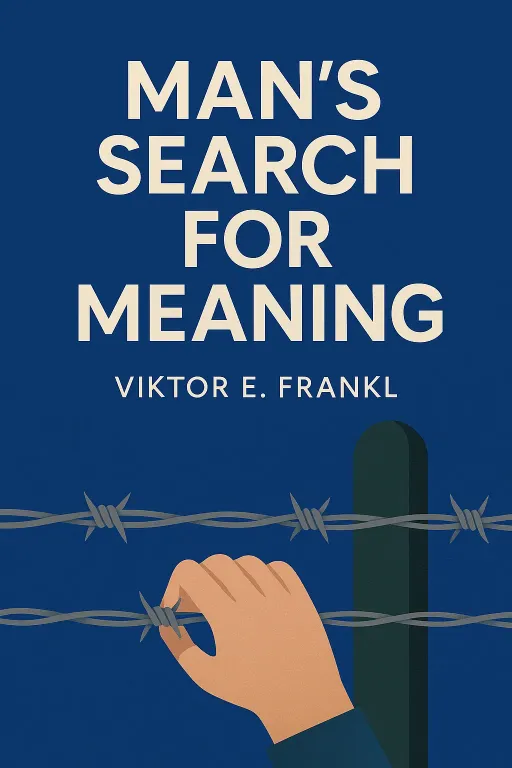
Nova: Absolutely. And today, we’re diving into that profound idea, largely inspired by two incredible works: Viktor Frankl’s seminal "Man's Search for Meaning" and Martin E. P. Seligman’s groundbreaking "Learned Optimism." Frankl, a psychiatrist, wrote his book after enduring the unimaginable horrors of Nazi concentration camps, a context that gives his insights an almost unparalleled weight and authority. It’s not just theory; it’s lived, agonizing truth.
Atlas: Wow. That context alone makes you lean in. It's not just some self-help guru; this is someone who truly faced the absolute worst.
Nova: Precisely. And it sets the stage for our entire discussion. We’re exploring how the way we interpret events, rather than the events themselves, is the ultimate determinant of our experience and emotional response. Cultivating a conscious perspective is arguably the most powerful tool for self-mastery we possess.
Reframing Your World with Frankl
SECTION
Nova: So, let's start with Frankl. His experiences in the concentration camps led him to a radical conclusion that many found both shocking and profoundly liberating: even in extreme suffering, humans can find meaning and, crucially, choose their attitude.
Atlas: That sounds almost impossible to grasp, especially considering the sheer brutality he faced. I mean, how do you even begin to choose your attitude when everything is stripped away—dignity, freedom, even the hope of survival?
Nova: A great question, and it's where his concept of "logotherapy" comes in. Frankl observed that prisoners who survived were often those who had a "why" to live for—a future task, a loved one, a piece of work unfinished. He famously said, "He who has a to live can bear almost any." It was about finding a purpose, even a tiny one, that transcended their immediate suffering.
Atlas: So, it wasn't about denying the suffering, but finding something it? I imagine a lot of our listeners, especially those in high-pressure environments, might feel like they're constantly battling external forces. This suggests the battle is more internal.
Nova: That’s a brilliant way to put it, Atlas. It's an internal battle for meaning. Frankl recounts how he would imagine lecturing about his experiences the war, turning his present agony into an object of future study. This mental act of stepping outside his immediate horror, of reframing it as a temporary, albeit horrific, challenge, was his way of exercising that ultimate freedom—the freedom to choose his response.
Atlas: That gives me chills. It’s like he was actively creating a future self, a future purpose, right there in the midst of absolute despair. It’s not about toxic positivity, but about a profound act of defiance through meaning-making.
Nova: Exactly. It's not about pretending things are good when they're not. It’s about recognizing that even when everything else is taken, the last freedom, as he called it, is the freedom to choose your attitude. This concept resonated deeply, making his book one of the most impactful of the 20th century, widely acclaimed for its raw honesty and profound philosophical depth. It's a testament to the enduring human spirit.
Seligman and the Explanatory Style
SECTION
Nova: Now, let's pivot from the extreme conditions Frankl described to something that, while less dramatic, impacts our daily lives just as profoundly: Martin Seligman’s work on "Learned Optimism." Seligman introduced the concept of "explanatory style."
Atlas: Explanatory style? That sounds a bit academic. What exactly does that mean in plain language?
Nova: It's how you explain why good or bad things happen to you. Think of it as your habitual way of interpreting events. Seligman discovered that people tend to have either a pessimistic or an optimistic explanatory style, and this style dramatically affects their resilience and well-being.
Atlas: So, if I spill coffee on myself, a pessimist blames themselves and thinks, "Of course, this always happens to me," while an optimist might think, "Well, that's annoying, but at least it's not red wine." Is that the gist?
Nova: You've got it. Seligman breaks it down into three dimensions: permanence, pervasiveness, and personalization. A pessimist sees bad events as permanent, pervasive, and personal. An optimist, conversely, views bad events as temporary, specific, and external.
Atlas: Okay, so a bad review at work for someone with a pessimistic style might become "I'm a failure, I'll never succeed here, and everyone knows it." Whereas an optimist might say, "That was a tough project, I learned a lot, and I'll do better next time."
Nova: Precisely. And Seligman’s research, backed by decades of studies, showed that this explanatory style isn't just about feeling good; it has tangible impacts on everything from academic performance and career success to physical health and longevity. It's a powerful framework for understanding why some people bounce back from setbacks while others get stuck. His book, "Learned Optimism," became a cornerstone in positive psychology, praised for its scientific rigor and practical applications. It really broke ground in showing that optimism isn't just a personality trait, but a skill you can cultivate.
Atlas: That's fascinating. So, it's not just about "looking on the bright side," but actively retraining your mind to interpret challenges in a way that empowers you. It sounds like a practical application of Frankl's "choice of attitude," but for everyday life.
Nova: Exactly. Frankl gave us the philosophical bedrock, the ultimate proof of perspective's power. Seligman then gave us the practical tools and the scientific validation for how we apply that principle in our daily lives, showing that our interpretations are not fixed, but learned, and therefore, can be unlearned and relearned.
Synthesis & Takeaways
SECTION
Nova: So, bringing these two incredible minds together, what we see is a powerful, undeniable truth: our interpretation of events, rather than the events themselves, largely determines our experience and emotional response. Cultivating a conscious perspective is not just a feel-good exercise; it's a fundamental tool for self-mastery and resilience.
Atlas: That’s a really profound insight. It suggests that even when we can't control what happens to us, we always have agency over how we respond. For someone driven by growth and self-mastery, that's incredibly empowering. It's about taking that "Tiny Step" you mentioned—listing three alternative interpretations of a setback.
Nova: Absolutely. And that "Tiny Step" isn't about ignoring the pain or the difficulty. It's about actively seeking out alternative narratives, training your brain to see possibilities, lessons, or even hidden opportunities, rather than just the immediate negative. It’s about shifting your lens.
Atlas: It’s almost like a superpower, isn't it? To be able to look at a challenge and consciously choose a frame that serves you, rather than one that defeats you. It's about moving from being a victim of circumstance to an active participant in shaping your own reality.
Nova: It truly is. And that's the enduring legacy of both Frankl and Seligman. They show us that perspective isn't just a passive view; it's an active, ongoing construction. The more we practice consciously choosing our interpretative lens, the more resilient, resourceful, and ultimately, free we become. It's a reminder that even in the face of the greatest adversities, the human spirit's capacity for meaning and choice remains.
Atlas: That's actually really inspiring. It means we're not just reacting to the world; we're actively creating our experience of it, moment by moment.
Nova: This is Aibrary. Congratulations on your growth!









