The Illusion of Control: Rethinking Resilience for Leaders.
Golden Hook & Introduction
SECTION
Nova: What if I told you that the very thing you're striving for as a leader – complete control – is actually sabotaging your success and leading you straight to burnout?
Atlas: Oh man, that's a gut punch, Nova! Because honestly, as a leader, especially in fast-paced environments, control feels like the ultimate goal. It's what we're to do, right? Ensure everything runs smoothly, hit targets, keep the ship steady.
Nova: Absolutely, Atlas. It's ingrained in our perception of leadership. But today, we're unpacking a powerful concept called "The Illusion of Control: Rethinking Resilience for Leaders." It challenges that core belief, suggesting that our relentless pursuit of controlling every outcome might be our biggest blind spot.
Atlas: The illusion of control. That's a pretty heavy statement. And you mentioned it draws wisdom from unexpected places? Are we talking ancient philosophers or something completely out there?
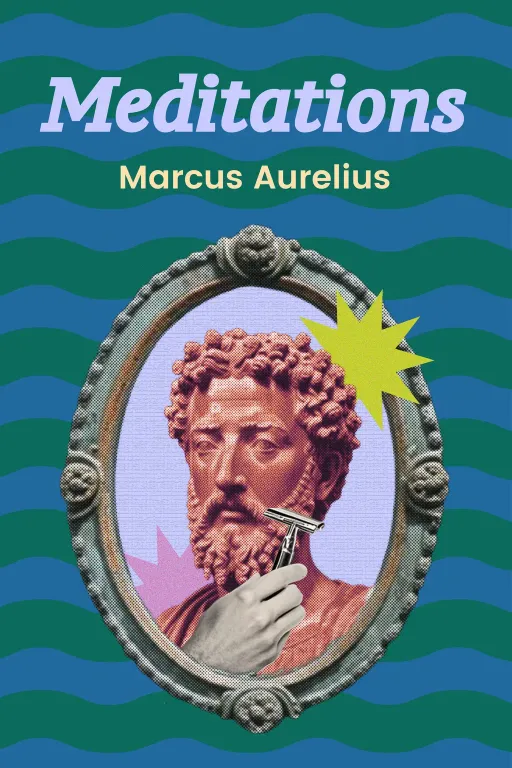
Nova: Precisely! We're talking about figures like Marcus Aurelius, a Roman Emperor who penned his timeless "Meditations" not for public view, but as a deeply personal guide to inner peace amidst the sheer chaos of ruling an empire. Imagine the daily pressures he faced, far beyond any modern corporate boardroom.
Atlas: Wow, an emperor writing a self-help guide for himself. That's a unique perspective.
Nova: And then there's Viktor Frankl, a psychiatrist who discovered profound meaning and the ultimate freedom of choice even while surviving the unimaginable horrors of the Holocaust. His insights came from the most extreme circumstances imaginable. These aren't abstract theories; they're forged in the crucible of real-world, high-stakes environments.
Atlas: Okay, so we have an emperor and a Holocaust survivor. How do their experiences, as profound as they are, translate to a modern leader trying to navigate team dynamics, project deadlines, and market shifts? I imagine a lot of our listeners are thinking, "My daily grind isn't quite 'running an empire' or 'surviving a concentration camp'."
Nova: That's the beauty of it, Atlas. Their wisdom transcends context because it speaks to a fundamental human truth: the difference between what we control and what we. And that distinction, when understood, is a game-changer for leadership. It’s about shifting focus from the unwinnable battle against external forces to mastering the only domain truly within our power.
The Leader's Blind Spot: The Cost of Chasing Control
SECTION
Nova: So, let's dive into "The Blind Spot." Many leaders believe that to succeed, they must meticulously control every single outcome. Think about a project manager who feels compelled to micromanage every line of code, every marketing message, every client interaction. The intention is good – to ensure quality, to prevent failure.
Atlas: I can definitely relate. It comes from a good place, right? This desire to build something strong and connected, to ensure sustainable growth. But then it spirals into checking every email, reviewing every draft. It feels like if I let go, things will inevitably fall apart.
Nova: Exactly. And the paradox is, this drive often leads directly to burnout and anxiety, not success. It’s like trying to stop the tide with a teacup. You expend immense energy, feel exhausted, and the tide still comes in. The true power isn't in stopping the tide, it's in understanding its rhythm. This constant need to control blinds leaders to a more potent form of influence: adapting to what truly within their sphere.
Atlas: So, you’re saying that micromanaging, that intense focus on every detail, isn't just inefficient, it’s actively detrimental to the leader's well-being and, by extension, the team's? Because I imagine a lot of our listeners, the 'Collaborative Architects' out there, are trying to build strong, connected teams, but this kind of control could actually push people away.
Nova: Absolutely. It creates a bottleneck, stifles initiative, and signals a lack of trust to your team. The real cost isn't just the leader's burnout; it's the missed opportunity for the team to step up, innovate, and develop their own resilience. When you try to control everything, you inadvertently disempower those around you. It's a lose-lose.
Atlas: That makes me wonder, what we control then? If not the external outcomes, the market, the team's individual decisions, the unexpected crises, then what’s left? Is it just our attitude? Because for a leader facing real P&L concerns, "just your attitude" might sound a little... airy-fairy.
Nova: That's a fair challenge, and it's precisely where the profound wisdom of figures like Marcus Aurelius and Viktor Frankl becomes incredibly practical, not airy-fairy. It’s not about passive acceptance; it’s about a radical re-allocation of your mental and emotional energy.
The Power of Internal Response: Wisdom from Aurelius & Frankl
SECTION
Nova: Let's start with Marcus Aurelius. This man was arguably the most powerful individual in the world at the time. He faced wars, plagues, political intrigue, and personal betrayals. Yet, his "Meditations" reveal a man constantly reminding himself that true power lies in controlling his and, not the external events themselves. He wrote, “You have power over your mind – not outside events. Realize this, and you will find strength.”
Atlas: So he wasn't saying, "Don't try to win the war," but rather, "Don't let the war win."
Nova: Exactly. He understood that while he couldn't control the barbarians at the gates, he control how he responded to the news, how he prepared his troops, and how he maintained his own equanimity. This isn't about being stoic in the sense of being emotionless; it's about inner fortitude, a deep well of resilience that allows you to act rationally and effectively even when the world is crumbling around you.
Atlas: That sounds incredibly disciplined. But for an 'Empathetic Leader,' how do you apply that when your team is struggling with external pressures they control? Say, a sudden market downturn or a supplier issue. Do you just tell them to "control their perceptions"? That might come across as dismissive.
Nova: That's where Frankl comes in, adding another crucial layer. Viktor Frankl, as we mentioned, endured the Holocaust. He witnessed unimaginable suffering, starvation, death. Yet, in that hellish environment, he observed that even when everything was stripped away—his family, his freedom, his dignity—one freedom remained: the freedom to choose his attitude, to choose his response. He found purpose even in suffering.
Atlas: That’s a profound example of resilience, truly. It gives me chills just thinking about it. But for a 'Resilient Innovator' trying to hit quarterly goals, how do we operationalize "choosing our attitude" beyond just positive thinking? It's not just about "looking on the bright side" when the numbers are red.
Nova: It's far more active than mere positive thinking. It's about recognizing the space between stimulus and response, and consciously inserting your choice there. It's about asking: "Given these unchangeable circumstances, what my most effective, purposeful, and aligned response?" It's not about denying reality, but about refusing to be defined by it. It’s about leveraging your internal resources.
Atlas: So, it’s about acknowledging the external, but then immediately pivoting to the internal. Not getting stuck in the victim mentality of "this happened to me," but moving to "what can I do this?"
Nova: Precisely. And this leads us to Nova's Take, which simplifies this ancient wisdom into a modern metaphor: "You cannot control the waves, but you can learn to surf."
Atlas: I love that. "You cannot control the waves, but you can learn to surf." That makes so much sense. It feels less like a philosophical abstract and more like a practical skill.
Nova: Exactly. As a leader, you can't control the market fluctuations, the competitor's moves, or the global economy. Those are the waves. But you control how you prepare your team, how you adjust your strategy, how you communicate, and how you maintain your own internal composure. You can learn to ride those waves, to use their energy, rather than being crushed by them. It's about agility, adaptability, and an unwavering focus on your internal response.
Atlas: So, for a team leader, instead of agonizing over an unexpected project delay, it's about quickly assessing the new landscape, communicating transparently, and empowering the team to find a new path forward, rather than dwelling on what went wrong. That sounds like a much more sustainable way to lead.
Synthesis & Takeaways
SECTION
Nova: It fundamentally shifts your energy from fighting the inevitable to empowering what's possible within yourself and your teams. Resilience, then, isn't about being unbreakable; it's about being adaptable. It's about understanding that your true power lies in that space between stimulus and response, a space that no external force can ever truly take from you.
Atlas: That resonates deeply with the need for sustainable growth and nurturing effective human connection within teams. If leaders are calmer and more focused on their response, it creates a ripple effect of stability and empowerment for everyone. It almost feels like a form of 'Mindfulness for Leaders,' doesn't it? Cultivating that inner calm amidst the storm.
Nova: Absolutely. It's the ultimate form of self-leadership, which then enables authentic team leadership. And this brings us to a deep question for all our listeners today: What is one external factor you worry about today that you could reframe by focusing on your internal response instead?
Atlas: That's a powerful question, Nova. Take a moment, listeners, to truly consider that. It could be anything—a difficult client, an uncertain market, or even personal pressures. How can you shift your focus from controlling the wave to mastering your surf?
Nova: It’s a practice, not a one-time fix. But the consistent application of this principle can fundamentally transform your leadership, your well-being, and the resilience of your entire team.
Atlas: We hope this episode sparked some fresh thinking for you.
Nova: This is Aibrary. Congratulations on your growth!