

Stop Chasing Happiness, Start Cultivating 'Meaning': The Guide to Lasting Fulfillment.
Golden Hook & Introduction
SECTION
Nova: We've all been there, right? Chasing that elusive butterfly called happiness, only for it to flit just out of reach, leaving us feeling… well, often more exhausted than happy.
Atlas: Oh man, I know that feeling. It's like trying to catch smoke. You think you have it, then it's gone, and you’re left wondering if you were even chasing the right thing to begin with. What's the real deal here, Nova? Is happiness just a myth?
Nova: It's not a myth, Atlas, but it might be the wrong target. Today, we're diving into a powerful idea, a guide if you will, called "Stop Chasing Happiness, Start Cultivating 'Meaning': The Guide to Lasting Fulfillment." This isn't just fluffy self-help; it's built on the bedrock of profound thinkers like Viktor Frankl, a Holocaust survivor whose insights into human resilience are frankly, astonishing, and Mihaly Csikszentmihalyi, the brilliant psychologist who decoded the secret of deep engagement.
Atlas: Wow, that's some serious intellectual firepower. I'm curious how these two giants connect. It sounds like we're moving from something that feels almost impossible to grasp, like happiness, to something more substantial.
Nova: Exactly! It’s about a fundamental shift in perspective. And that shift begins with understanding our collective blind spot when it comes to happiness.
The Blind Spot: Why Chasing Happiness Fails & Frankl's Revelation
SECTION
Nova: Think about it: we're constantly bombarded with messages to be happy, to optimize for joy. But the more directly we pursue happiness as an end goal, the more it seems to slip through our fingers. It’s like trying to force a laugh; it just feels hollow. True, lasting fulfillment doesn’t come from that direct pursuit. It arrives as a powerful byproduct of a life rich in meaning.
Atlas: But isn't happiness what everyone? I mean, who doesn't want to be happy? For someone striving to lead, to achieve, happiness often feels like the reward, the ultimate goal. What's wrong with that drive?
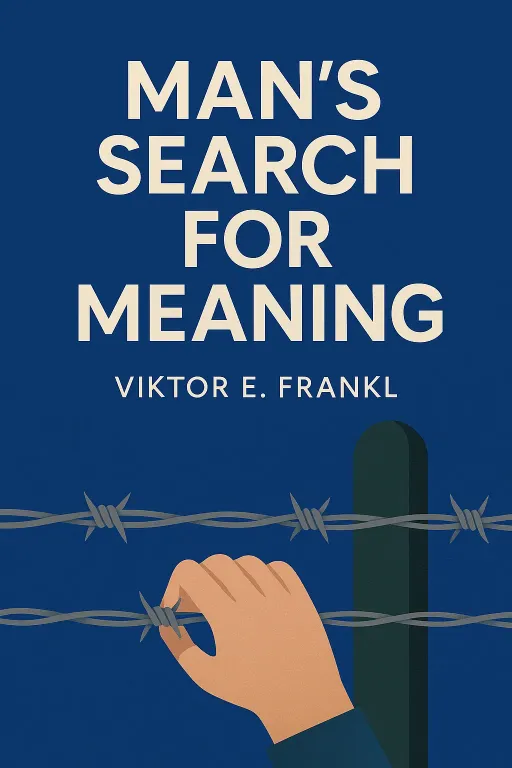
Nova: The drive itself isn't wrong, Atlas. The might be. To truly understand this, we have to look to one of the most harrowing human experiences imaginable, and the man who found purpose within it: Viktor Frankl, and his seminal work, "Man's Search for Meaning." Frankl was an Austrian neurologist and psychiatrist who endured the horrors of Auschwitz and other concentration camps during World War II. His experience wasn't just survival; it was a profound laboratory for the human spirit.
Atlas: That's an incredibly powerful context. To find anything positive in a place like that... it almost sounds impossible.
Nova: It does. But Frankl observed something extraordinary among the prisoners. Those who survived, who maintained some semblance of well-being even amidst unimaginable suffering, weren't necessarily the strongest or the healthiest. They were often those who had a to live, a meaning to fulfill.
Atlas: So he’s saying it wasn't about physical strength, but mental and spiritual fortitude?
Nova: Precisely. He spoke of prisoners who clung to the memory of a loved one, or who felt compelled to finish a scientific manuscript, or who believed they had a unique task awaiting them in the outside world. Their meaning gave them a "why." He recounts how some prisoners, perhaps a scientist, would try to reconstruct in their mind scientific books or lectures they had planned to give, holding onto that intellectual purpose. Others, thinking of their children, would find strength in the future reunion. This internal focus, a commitment to a purpose beyond their immediate suffering, provided a profound sense of direction and resilience.
Atlas: That's an incredibly powerful story. For someone in a high-pressure environment, facing daily challenges, how do you even begin to find 'meaning' when you're just trying to get through the day? It’s not exactly Auschwitz, but the pressures can feel overwhelming.
Nova: It's an excellent question, and Frankl's insights scale. He identified three main paths to discovering meaning: through purposeful work, through love, and through the way we choose to face unavoidable suffering. For leaders, for resilient seekers, purposeful work is key—finding a sense of contribution in what you do. Love extends beyond romantic relationships to deep connections with others, and even to a cause. And the third path, suffering, is about finding a stance towards life's inevitable hardships, recognizing that even in adversity, we can choose our attitude and find a deeper purpose through endurance.
Atlas: I see. So it's about perspective, then? Not about changing the external circumstance, but changing your internal relationship to it, finding what truly matters to you within it.
The Flow State: Actively Cultivating Meaning Through Engagement
SECTION
Nova: Exactly, Atlas. And that internal shift, that engagement, leads us perfectly to our second profound idea: the concept of 'Flow' by Mihaly Csikszentmihalyi. If Frankl gave us the "why" of meaning, Csikszentmihalyi gives us a powerful "how."
Atlas: Flow. I've heard that term. Is it just about being productive, or is there something deeper here? Because a lot of our listeners are already highly productive; they're looking for that spark, that renewed drive beyond just checking off tasks.
Nova: It's far more than just productivity. Flow is a state of deep immersion and enjoyment in an activity. It's that feeling when you're so completely absorbed in what you're doing that time seems to melt away, self-consciousness vanishes, and you're operating at your peak. Csikszentmihalyi, a Hungarian-American psychologist, spent decades researching what makes life worth living, interviewing thousands of people from artists and athletes to scientists and factory workers, trying to understand moments of optimal experience.
Atlas: So, what does that state actually like? What are the tell-tale signs?
Nova: It’s characterized by several things: clear goals, immediate feedback, a balance between the challenge and your skills, intense concentration, a loss of self-consciousness, and a distorted sense of time. What’s crucial is that this state is often found when engaged in challenging, meaningful tasks. It's not passive pleasure; it's active engagement.
Atlas: That's fascinating. Can you give an example? Like, how does this manifest in real life?
Nova: Absolutely. Think of a surgeon meticulously performing a complex operation – hours can pass like minutes, every move precise, every decision critical. Or a musician lost in improvisation, their fingers dancing across the keys, the music flowing effortlessly. Even a gardener deeply focused on tending their plants, completely absorbed in the soil and the rhythm of nature. These aren't just tasks; they're experiences where the individual feels alive, competent, and deeply connected to what they're doing.
Atlas: I imagine a lot of our listeners, especially those leading teams or building new things, can relate to that 'in the zone' feeling. They know what it's like to be deeply focused. But how do you that? How do you create more flow in a workday that's often filled with distractions and mundane tasks, especially when you're trying to inspire others?
Nova: That’s where the proactive cultivation comes in. It starts with intentionally structuring your work and environment. Set clear, challenging but achievable goals for your tasks. Seek immediate feedback so you can adjust and improve. Minimize distractions ruthlessly. And critically, find the inherent purpose or meaning in even the routine tasks. For an aspiring leader, this means connecting daily actions to the larger vision, to the contribution you're making, to the growth you're fostering in your team.
Atlas: So, it's not just about doing what you love, but loving what you do, and actively shaping your environment to allow for that deep engagement. That’s a powerful shift for anyone looking to build a richer perspective and integrate new habits.
Synthesis & Takeaways
SECTION
Nova: It truly is. When we synthesize Frankl's profound insights on meaning with Csikszentmihalyi's practical framework of flow, a clear path emerges. Lasting fulfillment isn't a destination you arrive at by direct pursuit of happiness. It's a byproduct of dedicating yourself to purposes that challenge you, engage you deeply, and induce those states of flow. Meaning provides the "why," and flow provides the "how" – the active, engaged experience of living that "why."
Atlas: This really shifts the perspective from a passive 'hope for happiness' to an active 'build your meaning.' For someone looking to reignite their personal drive and make a greater contribution, this is profound. It's about designing a life that inherently feels valuable, rather than waiting for happiness to strike.
Nova: It’s about building a resilient and deeply satisfying life experience, one purposeful moment at a time. It’s about understanding that even when things are tough, there's always a choice in how you respond, and an opportunity to find purpose.
Atlas: That makes me wonder, then, beyond immediate pleasure, what enduring purpose could you dedicate yourself to that would bring a deeper sense of fulfillment?
Nova: An excellent question to ponder. That's a journey each of us must embark on.
Nova: This is Aibrary. Congratulations on your growth!









