Beyond the Balance Sheet: Building a Legacy That Truly Endures.
Golden Hook & Introduction
SECTION
Nova: We often chase success, climb the ladder, build our fortunes, only to find a peculiar kind of emptiness at the top. The balance sheet looks great, but the soul feels… undernourished. Today, we're talking about that deeper yearning.
Atlas: Oh, I know that feeling. It’s like you hit all your financial targets, you’ve built something impressive, but there’s still this whisper, this question in the back of your mind: “Is this? Is this all there is?” For our listeners who are planning strategically, building towards that future, that whisper can sometimes feel like a distraction.
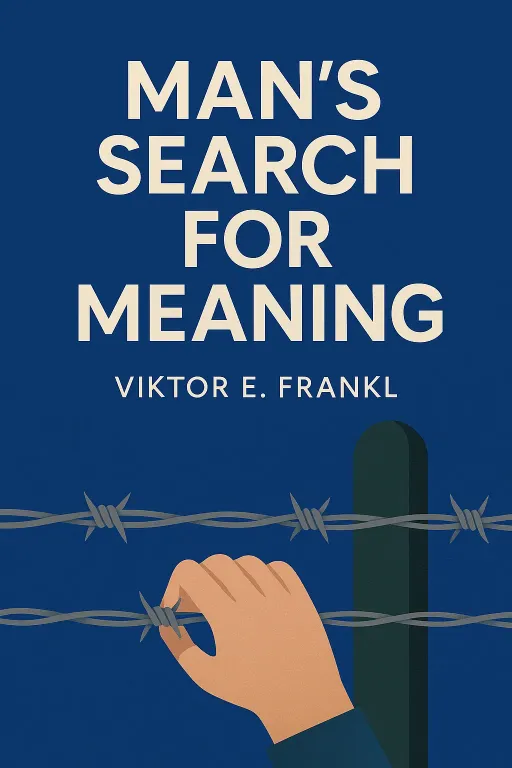
Nova: Exactly! And to guide us through this profound internal compass, we’re diving into an enduring classic, "Man's Search for Meaning" by the Austrian psychiatrist, Viktor Frankl. What's truly remarkable about this book, Atlas, is that Frankl wrote it after surviving Auschwitz and other concentration camps, offering a profound testament to finding purpose even in unimaginable suffering.
Atlas: Wow, so he literally wrote the book on meaning from the depths of human despair. That's a serious foundation for discussing legacy. I mean, we're talking about building a future, securing assets, making an impact. How does a book born from such extreme adversity speak to someone striving to build a lasting legacy in today's world, especially when their focus is on tangible results?
Nova: It speaks to the very core of it, because Frankl’s work reveals that the desire to build a legacy, to truly matter, isn't a distraction from financial goals; it's an expression of what he called the 'will to meaning.' It’s the feeling that a legacy should transcend numbers and truly endure.
The Deeper Yearning: Connecting Legacy to Meaning & Frankl's "Will to Meaning"
SECTION
Nova: Frankl observed that humans are primarily driven by this 'will to meaning,' a fundamental search for purpose, not just a 'will to pleasure' or 'will to power.' In the most horrific circumstances, those who survived often did so because they had a 'why' – a reason to live, a purpose beyond their immediate suffering. It wasn't about comfort or power; it was about meaning.
Atlas: That’s fascinating. But isn't financial success, building a business, accumulating wealth – isn’t that a form of meaning for many? For someone who has a visionary mindset and is strategically building their net worth, the pursuit of financial security often feels like a very real and tangible purpose. How do we reconcile Frankl's 'will to meaning' with the drive for financial prosperity?
Nova: It's an excellent question, Atlas, and it's not about choosing one over the other. Think of it this way: money and success can be incredibly powerful vehicles, but they are not the destination themselves. They are the fuel, the resources. The 'will to meaning' provides the GPS, the ultimate destination. For Frankl, meaning wasn't about what life you, but what you to life. It's about finding responsibility. So, that deeper yearning you described earlier? That's your inner compass trying to align your financial vehicles with your ultimate purpose.
Atlas: I can see that. So you’re saying that money, while crucial for security and impact, is a means to an end, and Frankl helps us define that end. But how does this 'will to meaning' show up in the daily lives of our listeners, those who are actively planning for their future, building businesses, and securing their families? It sounds so profound, almost philosophical, how does it guide their strategic decisions? Give me an example.
Nova: It guides them by informing their. Imagine a brilliant architect, driven by the numbers, by the profit margins of each project. They achieve immense financial success, but privately, there's that whisper. Then, they realize their deepest value is sustainable design, creating spaces that foster community and well-being. Their 'will to meaning' then shifts their strategic decisions. They might take on pro-bono projects for community centers, or invest in innovative, eco-friendly materials, even if the initial financial return is lower. The that their work truly matters, that it contributes to something enduring beyond the balance sheet, becomes the ultimate reward. It’s security for the soul.
Atlas: That’s a great analogy. So, it's about aligning our financial pursuits with that inner compass, making sure our 'why' is bigger than our 'what,' for a truly enduring legacy. It's not just about what you, but what you with what you have, and the impact that creates.
From Philosophy to Practice: The 'Healing Moment' as a Legacy Builder
SECTION
Nova: And that inner compass, that will to meaning, isn't just a philosophical concept. It's a call to action. Which brings us to a beautiful, actionable idea from our content today: the 'healing moment.' It's about reflecting on one act of service or creation you can undertake this week that aligns with your deepest values, regardless of financial gain.
Atlas: Hold on. For someone who sees a future, plans for it, and builds towards it strategically, 'an act regardless of financial gain' might sound counterintuitive. We're talking about tangible results, long-term financial planning, entrepreneurship. How does a single, non-monetary act contribute to a legacy or tangible impact? Isn't legacy about large-scale, long-term impact, not just a small, one-off action?
Nova: That’s a fair point, Atlas. But the 'healing moment' isn't about the of the act, but its and. It's a practice, a muscle you build. Think of it as planting a seed. One seed doesn’t make a forest, but it starts one. These small, purpose-aligned acts build what I call 'moral capital.' They clarify your purpose, they reinforce your values, and they create ripples you might not immediately see. Mentoring one young person, writing a heartfelt letter, dedicating an hour to a cause you believe in, creating a piece of art purely for the joy of it—these are micro-legacies. They compound.
Atlas: Okay, so it’s not about abandoning financial strategy, but about complementing it with something deeper. So for our listeners who are aspiring architects of their future, who plan strategically, what’s one small, specific thing they could do this week? How do they choose that 'act of service or creation' without it feeling like another item on an already packed to-do list?
Nova: That’s the key. It shouldn't feel like another chore. This is where reflection on your 'deepest values' comes in. What truly resonates with you? What problem breaks your heart? What beauty do you yearn to bring into the world? It could be as simple as spending an hour teaching a skill you love, helping a neighbor, or creating something beautiful just for the sake of creation. The act itself is a practice of purpose. It reinforces your identity, it reminds you of your 'why,' and it provides a kind of inner security that no balance sheet ever could. It’s not about; it's about.
Atlas: That’s actually really inspiring. So it’s about starting small, aligning with values, and letting those micro-actions build the foundation for a much larger, more meaningful legacy than just the numbers. It connects the inner compass to outer action.
Synthesis & Takeaways
SECTION
Nova: Precisely. The deeper yearning for purpose isn't a distraction; it's the very core of an enduring legacy. And Frankl, through his incredible journey, shows us that meaning isn't something you find; it's something you through responsibility. The 'healing moment' is your invitation to start creating that meaning, today, this week.
Atlas: So, for the visionary who builds strategically, understanding this 'will to meaning' and actively engaging in these 'healing moments' isn't a detour from building net worth; it's the very blueprint for building a legacy that truly, deeply matters and secures something beyond just assets. It’s about building a life that feels rich, not just a fortune that looks rich.
Nova: We challenge you, our listeners, to reflect on one act of service or creation you can undertake this week that aligns with your deepest values, regardless of financial gain. Let that be your first brick in a legacy that truly endures.
Atlas: Don't just plan for your wealth; plan for your meaning.
Nova: This is Aibrary. Congratulations on your growth!