The 'Mythos' Trap: Why Narrative Depth Heals the Soul
Golden Hook & Introduction
SECTION
Nova: Myths. Archetypes. Soul. What comes to mind, Atlas?
Atlas: Oh, I like that. Old books, definitely. Dusty museums, maybe a superhero movie? But honestly, not my Monday morning meeting.
Nova: Exactly! And that, right there, is our blind spot. Today, we're diving headfirst into something we're calling "The Mythos Trap." It's about why we often forget the ancient, profound power of stories, and how that oversight can lead to narratives that entertain but don't truly resonate.
Atlas: That sounds like a big claim. We're talking about stories, right? Like, animation, film, books? How can we 'forget' something so fundamental?
Nova: We do, surprisingly often. And the core ideas we're exploring today spring from a deep well of thought, particularly from the insights found in the kind of philosophical storytelling that truly enriches narratives. We're drawing heavily on the work of Carl Jung, whose concepts like the 'collective unconscious' and 'archetypes' have, despite their age, profoundly shaped our understanding of stories and the human psyche, influencing everything from therapy to blockbuster films. His work is surprisingly relevant to contemporary narrative creation, showing us why these ancient ideas are so vital today.
Atlas: Okay, so we're talking about more than just a good plot. We're talking about something deeper, almost foundational to how we connect with stories.
The Blind Spot – Losing Touch with Ancient Narrative Power
SECTION
Nova: Absolutely. Think about it: in our fast-paced, digital world, we're bombarded with content. But how much of it truly you? How much of it sticks with you, months or years later? The 'blind spot' is this: we've become so focused on novelty, trends, and surface-level entertainment that we've lost touch with the deep, shared symbols that connect us all. We forget that stories were once our primary technology for understanding the world, for healing, for passing on wisdom.
Atlas: I can definitely relate to that. It's like chasing likes instead of meaning for creators. I imagine a lot of our listeners, especially those trying to craft deeply resonant animation, might feel this pressure. It’s hard to ignore what's trending.
Nova: It is. Let's paint a picture. Imagine a highly successful animation studio, one that's a commercial powerhouse. Their films are technically brilliant, visually stunning, cutting-edge. They've got all the latest tech, the hottest voice actors. But year after year, their movies, while making billions, leave audiences feeling… empty. They're quickly forgotten, replaced by the next big thing.
Atlas: Hmm. I know that feeling. You walk out of the theater, and you've had a good time, but it doesn't stay with you.
Nova: Exactly. This studio has fallen squarely into the 'mythos trap.' Their cause? An obsessive focus on market trends, chasing algorithms, and a fear of delving into anything too 'heavy' or 'uncommercial.' The process is formulaic: focus-grouped plots, characters designed to appeal to the broadest demographic, jokes that land but don't resonate. The outcome? Commercial success, yes, but a spiritual emptiness for both the creators and the audience. They've missed the deeper, archetypal resonance that truly moves people, that gives stories their enduring power.
Atlas: Oh, I see. So it's not just about telling a story that makes money, but one that actually. But wait, looking at this from a production perspective, isn't it incredibly hard in today's market to chase trends? How do you balance commercial viability with this 'ancient power' you're talking about? How do you even begin to infuse that depth when the pressure is so high to just deliver quick hits?
The Shift – Reclaiming Depth Through Archetypes and Philosophical Practice
SECTION
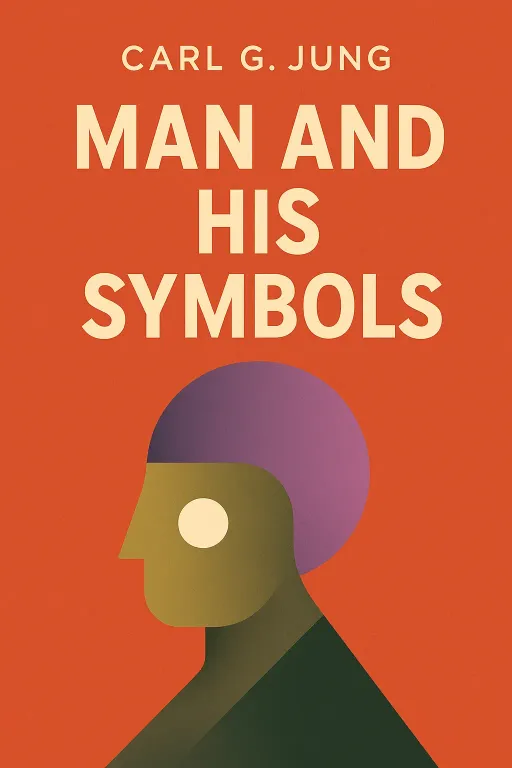
Nova: That's a fantastic question, Atlas, and it brings us directly to 'The Shift'—how we can reclaim that depth. This is where thinkers like Carl Jung and Pierre Hadot become invaluable. Jung, in his seminal work "Man and His Symbols," showed us that universal archetypes and myths shape our unconscious. Think of archetypes as fundamental patterns of human experience – the Hero, the Sage, the Trickster, the Mentor. They exist across all cultures, across all times.
Atlas: So, like, Luke Skywalker is the Hero archetype? Or Gandalf is the Sage?
Nova: Precisely. is a brilliant example of a story that taps into these archetypes, which is why it has such universal resonance, why it speaks to generations. It’s not just a space opera; it's a Hero's Journey, a tale as old as time, dressed in new clothes. Jung understood that these forms help you craft narratives that speak to everyone, because they tap into a shared, collective unconscious.
Atlas: I guess that makes sense. We recognize those patterns inherently. So, Jung gives us the universal patterns. What about Hadot?
Nova: Pierre Hadot, in "The Inner Citadel," reveals how ancient philosophical practices, often expressed through narrative, were meant to transform lives. For the ancients, philosophy wasn't just about abstract ideas; it was a 'way of life,' a practice that reshaped your soul, your character. Stories, like these philosophical exercises, were meant to be and, not just passively consumed.
Atlas: Wow. That’s a powerful idea. So stories aren't just entertainment, they’re meant to be a form of spiritual practice, almost? That’s going to resonate with anyone who’s trying to merge diverse subjects and find deeper connections in their work. But how does an animator or a storyteller actually that? What's the practical difference between just telling a story and telling an archetypal story that transforms?
Nova: It comes down to intentionality. Weaving an archetypal narrative means not just creating characters, but embodying universal human experiences within them – love, loss, courage, sacrifice, the quest for meaning. Hadot's insight pushes us to ask: what transformation are we inviting in the audience? Is this story just to pass the time, or is it designed to challenge them, to inspire introspection, to offer a path for understanding themselves and the world better? It's about moving beyond superficial plots to touch that 'collective unconscious,' to speak to the soul. It's about offering more than just entertainment; it's about offering true resonance and a lived experience.
Synthesis & Takeaways
SECTION
Nova: Ultimately, it's about remembering that stories are our oldest technology for making sense of the world and connecting us. These insights prove that powerful storytelling transcends mere plot; it touches the collective unconscious, offering profound meaning and connection.
Atlas: So, for our listeners, especially those conceptual storytellers and spiritual seekers creating new art, it's not just about what story you tell, but you tell it—with an eye towards these deep, ancient patterns that resonate with everyone. It's about infusing our digital narratives with ancient wisdom.
Nova: Exactly. The deep question for all of us is: How can your next animation project intentionally weave an archetypal narrative that addresses a universal human experience, moving beyond surface-level entertainment? How can you make it a story that isn't just seen, but and?
Atlas: That’s a powerful thought to leave with. It sounds like a call to infuse our digital age narratives with ancient wisdom, making them not just seen, but and, offering true spiritual depth.
Nova: A powerful thought to leave with indeed.
Nova: This is Aibrary. Congratulations on your growth!