Stop Passive Reading, Start Active Learning: The Guide to Deep Retention.
Golden Hook & Introduction
SECTION
Nova: Here's a thought that might feel a bit sacrilegious: The more you read, the less you might actually be learning. Sounds counterintuitive, right? But for many of us, our reading habits are a masterclass in forgetting.
Atlas: Oh man, that hits a little too close to home! I feel like I'm constantly consuming content, books, articles... but then someone asks me about it a week later, and it's just a blurry memory.
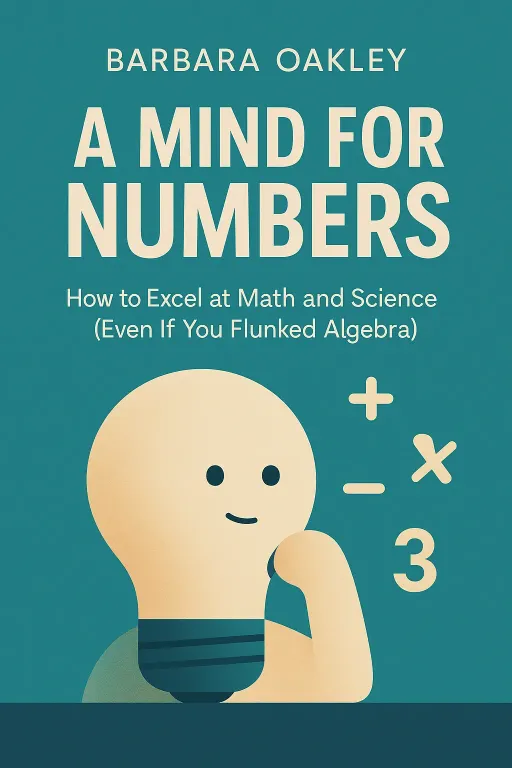
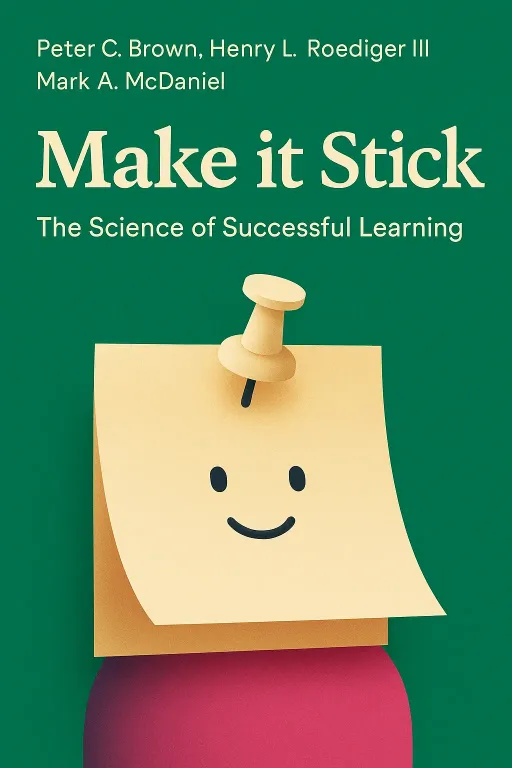
Nova: Exactly! And that's what we're dissecting today. We’re pulling insights from cognitive science giants like 'Make It Stick' by Peter C. Brown, Henry L. Roediger III, and Mark A. McDaniel, and 'A Mind for Numbers' by the brilliant Barbara Oakley.
Atlas: And these aren't just academic musings, are they? I mean, these are researchers and educators who spent decades unraveling the actual mechanics of how our brains learn and retain, often debunking common study myths along the way.
Nova: Absolutely. They're telling us that this isn't about reading more; it's about reading smarter. It's about turning consumption into true comprehension.
The Myth of Passive Reading: Why Effort Equals Insight
SECTION
Nova: So, let's dive into that cold, hard fact: Many of us read, but little truly sticks. We highlight passages, we re-read chapters, and we feel like we're absorbing it. But the science tells us that this passive consumption, this feeling of familiarity, is an illusion.
Atlas: Wait, are you saying that re-reading a chapter five times isn’t actually making me smarter? Because honestly, that's what I've been told since high school! It feels like I'm doing the work.
Nova: I know, it feels like it, right? But what 'Make It Stick' reveals is something called the 'illusion of fluency.' When you re-read material, it becomes familiar, and your brain mistakes that familiarity for actual understanding and retention. It's like tracing a map you've already seen a hundred times. You recognize the lines, but can you actually navigate that new city without the map? Probably not.
Atlas: So, if re-reading is like tracing a map, what's navigating a new city look like in terms of learning? Give me a concrete example of this 'effortful retrieval' in action.
Nova: The most powerful example is self-quizzing, or what they call 'retrieval practice.' It’s simple: close the book, and try to recall everything you just read. Force your brain to pull that information out. This act of retrieval is not just testing; it's a powerful learning event itself. It strengthens the neural pathways associated with that memory.
Atlas: That makes sense. But for someone like our 'Applied Thinker' listeners, trying to learn a new skill for their career, or even just remember key takeaways from a business book, how does that translate? Just quiz myself on facts?
Nova: It's broader than that. It means summarizing what you've read in your own words, explaining a concept aloud to an imaginary colleague, or trying to connect new information to something you already know. The key is that it has to be effortful. And this is where Nova's Take comes in: True learning is an effortful process. It feels harder, but it yields far greater, more durable results. The struggle is literally the learning happening.
Mastering Deep Retention: Tactical Strategies for Lasting Knowledge
SECTION
Nova: And speaking of making it stick, these books don't just tell us to do, but to optimize our brain's natural learning processes. Let's talk about interleaving and diffuse mode thinking.
Atlas: Interleaving? Diffuse mode? Sounds like something out of a sci-fi movie. Can we break that down into plain English for the rest of us?
Nova: Absolutely. Interleaving, from 'Make It Stick,' is about mixing up different subjects or different types of problems during your study sessions. Instead of spending two hours on just math, then two hours on just history, you might cycle between them. It feels less efficient in the moment, but it builds more versatile cognitive muscles.
Atlas: So it's like not just doing bicep curls every day, but also squats and cardio? You're building a more robust 'knowledge body,' so to speak? That’s a great analogy.
Nova: Exactly! It forces your brain to constantly adapt and differentiate between concepts, which strengthens your understanding. Then there's diffuse mode thinking, which Barbara Oakley highlights in 'A Mind for Numbers.' This is when you step away from a problem. You’re not actively focusing on it, but your subconscious mind is still making connections in the background. Think of focused mode as a flashlight beam, pinpointing one thing. Diffuse mode is like a floodlight, illuminating a wider area, allowing for creative breakthroughs.
Atlas: That's incredible. But for our 'Applied Thinker' listeners, the ones constantly pushing for productivity, stepping away feels almost counter-intuitive. Like, 'I should be working harder, not taking a break!'
Nova: It's a common trap, and Oakley even warns against 'overlearning' – continuing to practice a skill after you've already mastered it. It gives you a false sense of security and diminishing returns. Instead, we should embrace spaced repetition: revisiting material at increasing intervals. It’s like planting a seed, then giving it time to grow before checking on it again.
Atlas: So, it's not just about taking breaks, but strategically scheduling when you come back to something? That sounds like a whole different level of intentional learning, moving beyond just consuming information.
Synthesis & Takeaways
SECTION
Nova: That's precisely it, Atlas. The core message here is that true learning isn't about passive absorption; it's an active, often challenging, process of retrieval and connection. The journey might feel harder, yes, but the destination is true mastery and lasting insight. It really shifts your perspective from seeing effort as a barrier to seeing it as the very mechanism of growth.
Atlas: That's a powerful shift in perspective. For listeners who want to start right now, what's the smallest, easiest step they can take after this episode to begin applying these ideas? What's that 'Tiny Step'?
Nova: It's beautifully simple. After your next reading session, whatever it is – a book, an article, a report – close the book or the screen and just write down everything you remember for five minutes. Don't look back; just recall. It forces that effortful retrieval.
Atlas: That's something everyone can do immediately. And it really makes you wonder, doesn't it? What other 'easy' things are we doing that are actually holding us back from deeper understanding and real growth?
Nova: A question worth pondering.
Nova: This is Aibrary. Congratulations on your growth!