Stop Guessing, Start Designing: The Guide to Impactful Learning Programs.
Golden Hook & Introduction
SECTION
Nova: What if I told you that most of what we consider 'learning programs' are fundamentally flawed from the start? Not because the content is bad, but because of a single, critical misstep in their very design.
Atlas: Flawed? Nova, that's a bold claim! I mean, we pour so much effort and passion into crafting content, into finding the perfect activities. Where do we even go wrong?
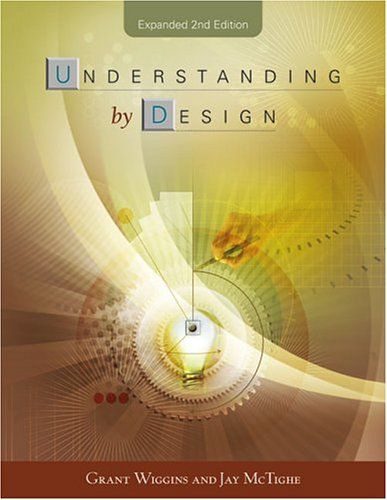
Nova: It’s a common trap, Atlas. We often start with the fun stuff, the engaging activities, before we've even clarified the real destination. Today, we're diving into how to fix that, drawing profound insights from two foundational texts: "Understanding by Design" by Grant Wiggins and Jay McTighe, and "Make It Stick" by Peter C. Brown, Henry L. Roediger III, and Mark A. McDaniel. "Understanding by Design," in particular, is a seminal work that has reshaped curriculum development globally, widely embraced for its practical, transformative approach to education. The cold, hard fact is, many programs fail because they start with activities, not desired results.
Atlas: Oh, I like that – "real destination." That's going to resonate with anyone who's ever felt like their learners are on a scenic route that never quite reaches the actual point. So, what you're saying is, we're building the car before we know where we're driving?
The Backward Design Revolution: Starting with the End in Mind
SECTION
Nova: Exactly! Wiggins and McTighe coined this "backward design," and it's deceptively simple yet profoundly powerful. Instead of asking, "What activities should I do?" you ask, "What should learners truly understand and be able to do at the very end?" That's Stage One: Identify desired results.
Atlas: Okay, but for an educator or a corporate trainer building a new program, this feels… well, backward! Isn't it faster, more intuitive, to just jump into what sounds fun or engaging? Let's get them doing, experiencing, collaborating!
Nova: I hear you, and that's the natural inclination. But that's precisely where we often create "busy work without real learning." Think of it this way: Imagine a company that invests millions in a new, gamified cybersecurity training program. It's flashy, interactive, employees are laughing, competing for high scores. But a month later, a phishing attack hits, and half the staff still clicks the suspicious link. Why? Because the games were entertaining, but they weren't explicitly designed to ensure employees could and a phishing attempt under pressure. The activities were the focus, not the measurable outcome.
Atlas: Wow, that’s kind of heartbreaking, actually. All that effort, all that investment, for what essentially amounts to an entertaining distraction. So, when you say "desired outcomes," for someone who wants to build truly impactful programs, what does that actually look like?
Nova: It's about precision. Not "learn about budgeting," but "create a personal budget with 90% accuracy." Not "attend a leadership workshop," but "effectively de-escalate a team conflict using three learned strategies." It’s about observable understanding and demonstrable skill. Once you have that crystal clear, you move to Stage Two: Determine acceptable evidence. How will you know they've achieved those outcomes? Quizzes, projects, simulations? And only then, Stage Three: Plan your learning experiences and instruction.
Atlas: So basically, you're saying we need to be ruthless with our 'why' before we even touch the 'how.' It's like planning a massive road trip: you don't just pack a bunch of cool gadgets; you decide your destination, figure out how you'll know you've arrived, and you pack what's essential for that specific journey. That makes me wonder, though, even if we define the destination perfectly, how do we ensure they actually the journey once they get back home?
Beyond Exposure: Designing for True Understanding and Lasting Retention
SECTION
Nova: That’s the perfect segue, Atlas, because defining the destination is crucial, but what about the journey itself? How do we ensure learners don't just visit the destination, but actually there, that the learning becomes an enduring part of them? This is where "Make It Stick" comes in, diving into the cognitive science of how we truly learn and retain information.
Atlas: I've been thinking about this a lot. We often equate 'exposure' with 'learning.' Like, if I read a book once, or sit through a lecture, I've 'learned' it. But then I try to recall it a week later, and it's just… gone.
Nova: Exactly! The authors of "Make It Stick" argue that real learning requires effortful retrieval and spaced practice. It’s not about how many times you re-read your notes, but how many times you the information without looking. That struggle, that effort, is what strengthens the neural pathways.
Atlas: So you’re saying that making learning actually makes it? That feels counter-intuitive to our desire to make things 'easy' and 'engaging' for learners. We want to remove friction, make it smooth!
Nova: It’s a common misconception that ease equals effective learning. Think of your brain like a muscle. If you just passively watch someone lift weights, your muscles don't get stronger. You have to yourself. The same is true for memory. When you struggle to recall something, your brain is actively working, rebuilding and strengthening the memory trace. A classic study showed that students who were frequently tested on material, even if they made mistakes, retained it far better than those who just re-studied. The 'aha!' moment comes not from effortlessly absorbing, but from the satisfying click of a memory retrieved through effort.
Atlas: That’s actually really inspiring. It reframes struggle not as a sign of failure, but as a sign of genuine learning happening. But for someone designing a curriculum, how do you actually effortful retrieval and spaced practice into a program without making it feel like constant, high-stakes testing?
Nova: It's about creative integration. Think low-stakes quizzes, concept mapping from memory, flashcards, peer teaching where learners have to explain concepts to each other, or even self-explanation techniques where they vocalize what they've just learned. And "spaced practice" means revisiting topics over increasing intervals. Don't just cram it all into one session. Interweave different subjects, come back to a concept a week later, then a month later. It feels less efficient in the short term, but the long-term retention is exponentially better. It’s designing for understanding and retention from the outset, not as an afterthought.
Synthesis & Takeaways
SECTION
Nova: So, when you bring these two powerful ideas together – backward design and effortful retrieval – you get a truly transformative approach to learning programs. It’s about intentional design, from the desired outcome all the way through to ensuring that understanding not only happens but also sticks.
Atlas: That makes sense. It's not just about what you teach, but you design the entire experience around what you want them to know, and then how you make sure it sticks for the long haul. It's about empowering others with knowledge that truly lasts.
Nova: Absolutely. And if you're feeling inspired to apply this, here's a tiny step: For your next program, define the top three desired learning outcomes planning any activity. Just three. See how that shifts your perspective.
Atlas: I can definitely relate to that. It’s a powerful challenge to our default settings. If we truly embraced these principles, Nova, what kind of learning transformations could we see in our schools, our workplaces, and even our personal development?
Nova: The possibilities are endless, Atlas. Imagine a world where every learning experience genuinely equips you for what's next, rather than just filling time. Where knowledge isn't fleeting, but a powerful, enduring tool.
Atlas: That’s a hopeful way to look at it.
Nova: It is. A library of lessons learned, indeed.
Atlas: This is Aibrary. Congratulations on your growth!