Science-Backed Strategies for Smarter Study
Golden Hook & Introduction
SECTION
Nova: Atlas, quick question. What’s the most “productive” study habit you swear by, but secretly suspect is totally useless? Be honest.
Atlas: Oh man, Nova. You’re really putting me on the spot. I think it has to be… the meticulous highlighting. You know, where you highlight until the page looks like a neon rainbow, and then you feel like you’ve "studied" it. But if someone asked you about it five minutes later, crickets.
Nova: Exactly! Crickets. And you, my friend, are not alone. That feeling of "I've done the work, why isn't it sticking?" is universal. Today, we're tearing down those 'feel-good' but ineffective study habits and replacing them with strategies that actually work, backed by some serious science.
Atlas: I love that. Because for anyone who values self-growth and wants to make informed choices, knowing to learn effectively is probably the most crucial skill. We don't just want information; we want wisdom.
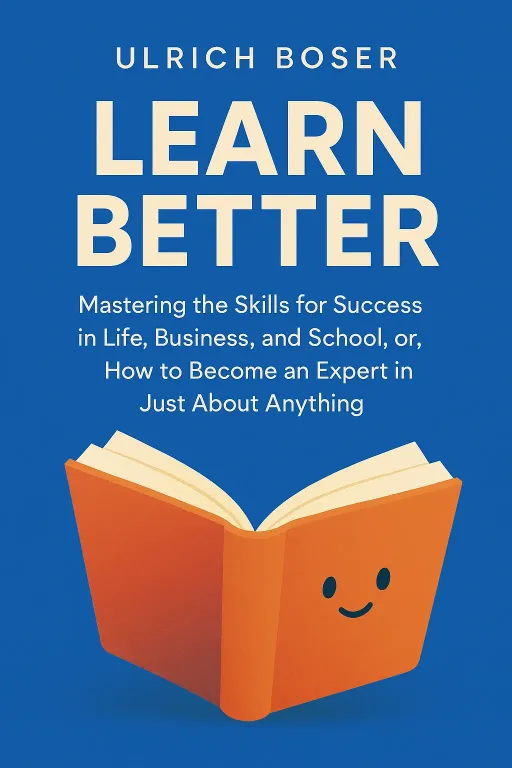
Nova: Absolutely. And our guides for this journey are two highly acclaimed books: "Learn Better" by education expert Ulrich Boser, and the groundbreaking "Make It Stick: The Science of Successful Learning" by cognitive scientists Peter C. Brown, Henry L. Roediger III, and Mark A. McDaniel. These aren't just opinions; these are researchers who've spent decades studying how our brains truly absorb and retain information.
Atlas: That’s a powerful combination. So, these authors are essentially saying that a lot of what we works for learning is actually hindering us?
Debunking Learning Myths & The Power of Retrieval Practice
SECTION
Nova: Precisely. They expose common learning myths. Take your rainbow-highlighting example. Or endlessly re-reading notes. While these feel comfortable and familiar, they create an of mastery. Our brains mistake familiarity for actual understanding. We think, "Oh, I recognize this," and assume we know it, when in reality, we haven't truly processed it.
Atlas: That makes sense. I’ve definitely felt that. It’s like when you reread a sentence and it feels familiar, but if someone asked you to explain it in your own words, you just… freeze.
Nova: Exactly! And this is where Ulrich Boser introduces a brilliant concept from "Learn Better": what he calls "desirable difficulties." It's counter-intuitive, but the most effective learning often involves a bit of a struggle. It’s hard, but that difficulty is productive.
Atlas: Wait, so studying actively, like just re-reading, is actually harder in the long run than studying actively, by forcing yourself to recall? That’s incredibly counter-intuitive. My brain usually tries to avoid difficulty at all costs!
Nova: It’s true. It's about embracing that temporary struggle. And the cornerstone of these desirable difficulties, championed by "Make It Stick," is something called.
Atlas: Retrieval practice. What exactly do you mean by that? Is it just… testing yourself?
Nova: It is, but it's more than just a final exam. Retrieval practice is the act of recalling information from memory,. Think of it as exercising your memory muscles. Every time you successfully retrieve a piece of information, you're not just proving you know it; you're actually strengthening the neural pathways that lead to that information. You're making it easier to find next time.
Atlas: So it's like building a path through a dense forest. The more you walk that path, the clearer and wider it becomes. If you just fly over it in a helicopter, you might know it's there, but you can't it.
Nova: That’s a perfect analogy, Atlas! Instead of passively consuming information, you're actively generating it from within. Imagine you're trying to learn about the causes of the French Revolution. Instead of re-reading your textbook chapter five times, you'd read it once, then close the book, and try to write down everything you remember. Or explain it out loud to an imaginary friend.
Atlas: I can see how that would be frustrating at first. You’d probably forget a lot. But the muscle grows, right? It’s going to resonate with anyone who's ever felt like they're hitting a wall in their learning.
Nova: Precisely. That initial forgetting, that struggle, is the 'desirable difficulty' at work. It's a signal that your brain is working harder, making deeper connections. "Make It Stick" has compelling case studies, like one with medical students who used self-quizzing compared to those who just re-read. The self-quizzers consistently outperformed their peers, not just on tests, but in long-term retention and application of knowledge.
Atlas: That’s amazing. So, the act of pulling information out of your brain is what truly cements it, not just putting it in. What about making sure that knowledge isn't just surface-level recall?
Beyond Rote: Elaboration, Interleaving, and Metacognition
SECTION
Nova: That naturally leads us to the next layer, Atlas. Once you've mastered retrieving, how do you ensure the knowledge isn't just a surface-level recall of facts, but a deep, interconnected understanding? This is where comes in.
Atlas: Elaboration. So it's not just you recall, but you understand it. It’s like building a mental web, not just a list.
Nova: Exactly. Elaboration means giving new material meaning by expressing it in your own words and connecting it with what you already know. Ask yourself: How does this relate to something else I've learned? How does this concept apply in real life? What's an example of this? Or, as the "Make It Stick" authors suggest, explain it to someone else.
Atlas: Ah, so that "explain it in your own words to someone else" tip from our takeaway is actually a powerful form of elaboration! Because if you can't explain it simply, you probably don't understand it well enough yourself.
Nova: Absolutely. It forces you to clarify your thoughts, identify gaps in your understanding, and articulate the material in a coherent way. It's a fantastic self-assessment tool. Now, building on elaboration, "Make It Stick" also champions.
Atlas: Interleaving? That sounds a bit academic. What does that mean for someone trying to learn, say, a new skill or a complex subject?
Nova: It means mixing different subjects or topics during your study sessions, rather than "massing" or "blocking" them. For instance, if you're studying for three different subjects – say, history, physics, and literature – instead of spending three hours on history, then three on physics, then three on literature, you'd spend an hour on each, then rotate. Or, within a single subject, you'd mix different types of problems or concepts.
Atlas: But wait, isn't that just chaotic? My brain likes neat little boxes! How does jumping from physics to history actually help, rather than just feeling scattered?
Nova: It feels scattered at first because it's another 'desirable difficulty.' But the benefit is immense. When you interleave, your brain learns to discriminate between different types of problems or concepts. It forces you to choose the right strategy for each problem, rather than just mindlessly applying the same method you just practiced. Think of it like a basketball player practicing different types of shots – free throws, jump shots, layups – all in one session, rather than just shooting free throws for an hour. It builds versatility and adaptability.
Atlas: That’s a great analogy. It’s about building a more robust, flexible understanding, not just rote memorization. And I imagine that helps with long-term retention, too.
Nova: It absolutely does. And this brings us back to Boser’s "Learn Better" and the crucial role of. This is "thinking about thinking" – being aware of your own learning process. It means asking yourself: Am I actually understanding this, or just memorizing? Is this strategy working for me? How can I adjust my approach?
Atlas: So this isn't just about to study, but to study, and then? It's like being your own learning coach. For our curious learners and focused achievers, this sounds like the ultimate self-improvement hack.
Synthesis & Takeaways
SECTION
Nova: Exactly. The profound insight here is that learning is not a passive absorption of information; it's an active, effortful, and skilled process. It's less about your innate intelligence and more about the strategies you employ. The authors of both books fundamentally redefine what "smart" learning looks like. It’s not about how quickly you grasp something, but how effectively you engage with the material and make it stick.
Atlas: That’s actually really inspiring. It means anyone can get better at learning; it's not some innate talent. It’s about strategy and embracing that productive struggle. For anyone navigating information overload or trying to build momentum in their learning journey, these aren't just academic theories. These are practical tools to make learning stick and make informed choices.
Nova: And the beauty is, you can start small. For your next study session, don't just re-read. Before you look at your notes again, try to retrieve as much as you can from memory. Write it down, say it aloud. And then, explain a core concept in your own words to someone else – or even to an empty chair.
Atlas: Those are such actionable tiny steps. They empower you to take control of your learning journey and truly master what you're trying to understand. It’s about being an active participant in your own growth.
Nova: It's about embracing the journey and knowing that every little effort, every 'desirable difficulty,' builds momentum.
Atlas: This is Aibrary. Congratulations on your growth!