How to Master Complex Medical Terms Without Overwhelm: Your Daily Practice Guide
Golden Hook & Introduction
SECTION
Nova: What if everything you thought you knew about 'studying hard' was actually making you effective, especially when faced with a mountain of complex medical terminology? We're about to flip that script.
Atlas: Oh, I know that feeling. That mountain of terms can feel insurmountable, like you're just drowning in flashcards and definitions. But wait, less effective? That's a bold claim right out of the gate.
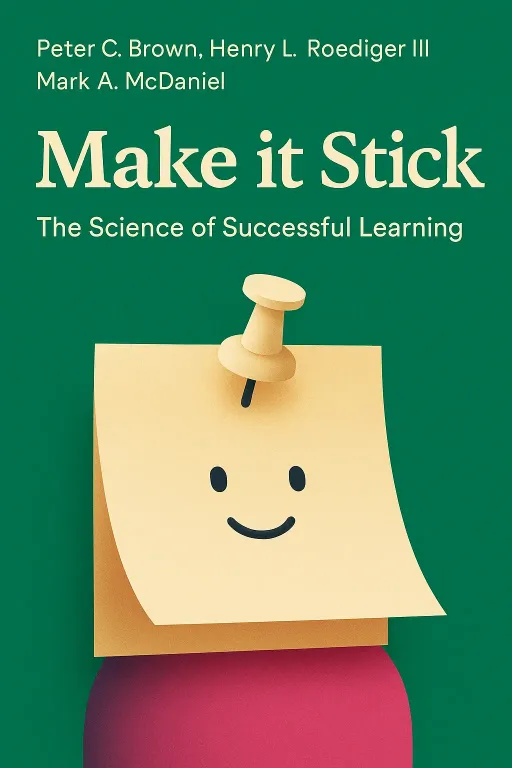
Nova: Absolutely, Atlas. And it’s not just my claim; it's backed by decades of cognitive science, beautifully synthesized in a book called "Make It Stick: The Science of Successful Learning" by Peter C. Brown, Henry L. Roediger III, and Mark A. McDaniel. This wasn't just a popular psychology book; it was a groundbreaking synthesis of academic research that genuinely shifted how we understand memory and learning.
Atlas: Right, so it's not just anecdotal. It's the real deal.
Nova: Exactly. And we're also pulling insights from Scott H. Young’s "Ultralearning," a book where Young, a self-taught prodigy, showcases how intense, self-directed learning can lead to rapid skill acquisition. He famously learned the MIT computer science curriculum in a single year. These aren't just theories; they're proven methods to genuinely master hard skills, which is exactly what our diligent listeners need for those intricate medical terms.
Atlas: That makes sense. So, we're talking about going beyond just a term to truly it, making it stick.
The Illusion of Mastery: Why Re-reading Fails
SECTION
Nova: Exactly, Atlas. And the first hurdle to true mastery is recognizing what work. Many of us fall into what "Make It Stick" calls the "illusion of mastery."
Atlas: Illusion of mastery? That sounds a bit out there. Isn’t that just when you think you know something but you really don't?
Nova: Precisely. Think about the classic study routine: you sit down with a textbook, highlight a bunch of passages, then re-read those passages, maybe even your notes, over and over. You feel a sense of familiarity, a comforting glow of recognition. You think, "I've got this."
Atlas: Yeah, I can definitely relate to that. It feels productive, like you’re putting in the hours. For our listeners who are meticulously building a strong foundation, this methodical approach feels right.
Nova: It does right. But here's the crucial part: familiarity is not the same as recall. When you re-read, the material is right there in front of you. Your brain doesn't have to work hard to retrieve it. It's like repeatedly looking at the answer key without ever trying to solve the problem yourself.
Atlas: So basically, you're tricking your brain into thinking it knows something, when all it's doing is recognizing it on the page.
Nova: Exactly! Let me give you a quick case study that illustrates this perfectly. Imagine Sarah, a dedicated nursing student. She spends hours re-reading her anatomy textbook, highlighting every bone, muscle, and nerve. She goes through her notes three times, feeling more confident with each pass. She can point to the highlighted terms, she recognizes them. But then, on the exam, when she has to recall the name of a specific cranial nerve or the origin of a particular muscle without any prompts, her mind goes blank.
Atlas: Oh man, I’ve been there! That's actually really frustrating. You put in all that effort, felt like you knew it, then suddenly it’s gone when it matters most. It's like you're building a bridge, but the foundation is just painted on.
Nova: That’s a perfect analogy, Atlas. And the cognitive scientists behind "Make It Stick" explain why. The very act of to remember something, of actively retrieving it from memory, is what strengthens the neural pathways. It's like a mental workout. If you never lift the weight, your muscles don't get stronger. If you never to retrieve, your memory doesn't get stronger.
Atlas: Wait, so struggling is good? That feels incredibly counterintuitive! Most of us try to make learning, not harder.
The Power Duo: Active Recall and Direct Practice for Lasting Mastery
SECTION
Nova: It’s a paradigm shift, isn’t it? And this idea of 'struggling being good' leads directly into the powerful solutions offered by both "Make It Stick" and "Ultralearning." This is where we introduce the power duo: active recall and direct practice.
Atlas: Okay, so if re-reading is out, what do we do instead? Give me the actionable stuff.
Nova: The cornerstone is. Instead of re-reading, you close the book, put away your notes, and try to retrieve the information from scratch. Ask yourself questions: "What did I just read about the cardiac cycle?" "What are the four types of tissue?" "Can I explain this concept to someone else?"
Atlas: So you're saying, essentially, self-quizzing? Like, constantly testing yourself?
Nova: Exactly! Flashcards are a classic example, but you can also summarize a chapter in your own words without looking, or teach the material to an imaginary student. The key is making your brain to pull the information out. This is also where comes in, a technique heavily advocated in "Make It Stick." Instead of cramming, you review material at increasing intervals over time.
Atlas: I’ve heard of spaced repetition. So, you don’t review everything every day, you spread it out?
Nova: Right. Your brain forgets things at a predictable rate. Spaced repetition algorithms, often found in digital flashcard apps like Anki, present you with information just as you're about to forget it. This optimizes the 'struggle' and makes the memory trace even stronger.
Atlas: That makes sense. It’s like a smart trainer that knows exactly when to challenge your mental muscles. For our listeners who are trying to manage a huge volume of information, that kind of efficiency is critical.
Nova: It truly is. And this brings us to "Ultralearning's" emphasis on. Scott Young argues that the most effective way to learn is by doing the thing you want to get good at, as directly as possible. For medical terms, this isn't just about defining them; it's about using them.
Atlas: So it's not just recalling a term, but recalling it? For medical terms, that would mean actively applying them in context, right? How does this apply to building a strong foundation, which is what our diligent bridge-builders are all about?
Nova: Precisely. Imagine another medical student, Ben. Instead of just memorizing a list of terms, Ben uses digital flashcards for active recall and spaced repetition. But he takes it further. He practices explaining complex conditions using the correct terminology to a study partner. He participates in mock patient scenarios where he has to articulate diagnoses and treatments using precise language. He gets immediate feedback from his professors or peers on his accuracy.
Atlas: So, he's basically simulating the real-world application of those terms, even before he's in a clinical setting. He's not just learning the bricks; he's learning how to lay them to build a wall.
Nova: That’s it! He’s getting that direct practice, that immediate feedback. He’s not waiting until a high-stakes situation to realize he can’t retrieve the information or use it correctly. This active engagement creates far deeper, more resilient connections in the brain.
Atlas: Okay, so what's the smallest, most impactful thing someone overwhelmed by a new medical textbook can do? Give me that tiny step.
Nova: The tiny step, straight from our insights today, is this: tomorrow, spend just 10 minutes actively recalling terms you learned today without looking at your notes. Just 10 minutes. It's a small shift, but it kickstarts that powerful process.
Synthesis & Takeaways
SECTION
Nova: So, what we're really talking about is transforming learning from a passive intake of information into an active, strategic event. It’s about building robust, accessible knowledge, not just a fragile familiarity.
Atlas: And how does truly mastering these terms, deeply understanding them rather than just recognizing them, translate into better patient care? It's not just about passing a test, right? There's a deeper impact for our empathetic strategists and resilient caregivers.
Nova: Absolutely. When you truly master medical terminology through active recall and direct practice, it significantly reduces your cognitive load during stressful situations. You're not fumbling for words, trying to remember what 'bradycardia' means. That instant, accurate recall allows you to focus more on the patient, on their holistic well-being, on connecting the symptoms to a diagnosis, and communicating clearly with your team.
Atlas: So it's about reducing errors, improving communication, and ultimately, enhancing the quality and empathy of care. It frees up mental bandwidth to be a better caregiver. That's a powerful benefit. That small, ten-minute step can genuinely start a journey of transformation.
Nova: It truly can. It empowers you to build that strong foundation, not just for passing exams, but for a lifetime of confident, compassionate practice. Mastering complex concepts shouldn't feel like an endless uphill battle; it should feel like building a reliable toolkit for your most important work.
Atlas: That's a great way to put it. It’s about working smarter, not just harder, to make that knowledge truly stick.
Nova: Precisely. Embrace the struggle, and your brain will thank you.
Atlas: This is Aibrary. Congratulations on your growth!