Unlocking Hidden Desires: The Psychology of Consumer Motivation
Golden Hook & Introduction
SECTION
Nova: What if I told you that trying to motivate people with bigger bonuses, more perks, or even a shiny new title is often the effective way to get them to do their best work?
Atlas: Wait, isn't that literally the foundation of every corporate incentive program ever? You're telling me everything I thought I knew about motivation is… wrong?
Nova: Not wrong, Atlas, but perhaps incomplete. We're diving into a fascinating blind spot today, one that can transform how we engage with consumers and teams. We’re talking about unlocking hidden desires, going beyond the obvious, and tapping into the psychology of true motivation.
Atlas: Oh, I love that. So, we're peeling back the layers on why people do what they do, beyond just chasing the next shiny object?
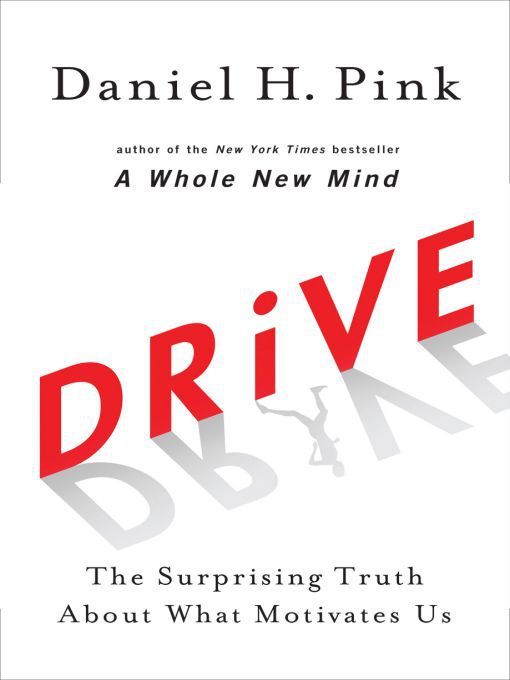
Nova: Exactly. And we're drawing insights from two phenomenal books. First, Daniel H. Pink’s groundbreaking work, "Drive: The Surprising Truth About What Motivates Us." Pink actually started his career as a speechwriter in Washington D. C. before becoming a best-selling author, driven by his own intense curiosity about what truly sparks human endeavor beyond traditional economic models.
Atlas: That’s a fascinating pivot. From policy to psychology.
Nova: Absolutely. And then we have Chip Heath and Dan Heath’s "Made to Stick: Why Some Ideas Survive and Others Die." The Heath brothers have this incredible knack for distilling vast amounts of research into actionable, memorable frameworks, showing us how to craft messages that genuinely resonate. They make complex communication feel intuitive.
Atlas: That makes perfect sense. Because if you understand the from Pink, you still need to know the to communicate it effectively, right?
Nova: Precisely. And that brings us to our first big idea.
The Intrinsic vs. Extrinsic Motivation Blind Spot
SECTION
Nova: We often operate with this unconscious "blind spot" when it comes to motivation. We assume external rewards – the big paycheck, the corner office, the discount code – are the ultimate drivers. But in consumer psychology, overlooking intrinsic drivers can lead to campaigns that are, frankly, ineffective in the long run.
Atlas: Okay, but for our listeners managing high-pressure teams or designing marketing campaigns, it’s almost ingrained to think, "What's the incentive? What's the reward?" How do we break free from that mindset?
Nova: It starts with understanding that those external motivators are often short-term fixes. Pink argues that for complex, creative, or knowledge-based tasks, they can actually performance and engagement.
Atlas: Really? That sounds a bit out there. My whole career has been built on the premise that people respond to incentives. Give me an example.
Nova: Think about open-source software projects. Linux, for instance. Thousands of developers contribute countless hours, not for paychecks, but for the love of coding, the challenge, the recognition within their community, and the feeling of contributing to something bigger. They're driven by autonomy, mastery, and purpose.
Atlas: So, you’re saying they’d be motivated if you started paying them to develop Linux? That feels counter-intuitive.
Nova: Pink’s research, and a lot of follow-up studies, suggest that for certain kinds of work, yes. Once you introduce a monetary reward for something people doing, it can shift their perception from an enjoyable activity to a chore. The intrinsic joy is "crowded out" by the extrinsic reward.
Atlas: Wow. So, the moment you put a price tag on passion, you risk diluting the passion itself. I imagine a lot of our listeners in creative industries or R&D are nodding along right now. What does that mean for loyalty programs or consumer engagement?
Nova: It means we need to redesign our entire approach. Instead of just "buy one, get one free," we should ask: "How can we make the of engaging with our brand intrinsically rewarding?" How can we give consumers a sense of control, a chance to improve, or an opportunity to contribute?
Atlas: That’s a great way to put it. Because I still struggle with loyalty programs that feel like a chore. You have to jump through hoops just to get a dollar off. It doesn't actually make me more loyal. It just makes me feel like a transaction.
Nova: Exactly. When you focus on autonomy, mastery, and purpose, you foster genuine connection.
Crafting 'Sticky' Experiences: Applying Drive and Made to Stick
SECTION
Nova: And that naturally leads us to the second key idea: how do we actually this? How do we build these intrinsically motivating experiences and communicate them so they stick? This is where Pink’s "Drive" meets the Heath brothers' "Made to Stick."
Atlas: Okay, so we've established intrinsic motivation is powerful. Now, how do we actually implement it, especially in a world saturated with messages? How do we cut through the noise and build genuine connection?
Nova: Pink gives us those three pillars: Autonomy, Mastery, and Purpose. Autonomy means the desire to direct our own lives. Mastery is the urge to get better at something that matters. And purpose is the yearning to do what we do in the service of something larger than ourselves.
Atlas: I can see how those would be powerful for employees. But how do you translate that to, say, a customer journey for a product? How do you give a customer autonomy, mastery, or purpose?
Nova: Imagine a brand that lets you customize every aspect of your product, giving you autonomy. Or a fitness app that tracks your progress and celebrates your small wins, fostering mastery. Or a sustainable clothing brand that actively contributes to environmental causes, letting you feel purpose through your purchase.
Atlas: Yeah, I can definitely relate to that. It’s like when I choose a coffee brand that supports fair trade. It's not just about the coffee; it's about feeling like my purchase aligns with a larger value.
Nova: Precisely. And to make those messages resonate, we turn to "Made to Stick." The Heath brothers identified six principles that make ideas "sticky": Simple, Unexpected, Concrete, Credible, Emotional, and Stories – or SUCCESs.
Atlas: That’s a great analogy. So, you're saying we need to infuse our brand experiences with Pink's intrinsic motivators, and then communicate those experiences using the SUCCESs framework? Can you give me an example of that in action?
Nova: Think about TOMS Shoes. Their "One for One" campaign. It was incredibly Simple: buy a pair, give a pair. Unexpected: a shoe company focused on giving. Concrete: you could visualize a child receiving shoes. Credible: it felt authentic. Emotional: it tugged at your heartstrings. And it was a Story: your purchase became part of a larger narrative of impact.
Atlas: That’s a perfect example. They weren't just selling shoes; they were selling purpose, and they communicated it in a way that was instantly understandable and deeply moving. It made you feel like you were part of something bigger, not just making a transaction.
Nova: Exactly. They leveraged purpose, and then made that purpose sticky. It's about crafting an experience that makes the consumer feel good, not just because of the product, but because of what the product them to do or be. That's how you build genuine connection and loyalty that goes beyond fleeting trends.
Synthesis & Takeaways
SECTION
Nova: So, what we're really talking about here is a fundamental shift in perspective. Moving beyond the superficial incentives to tap into the deeper, often hidden, drivers of human behavior. It's about designing experiences and messages that resonate with our innate desires for autonomy, mastery, and purpose, making them Simple, Unexpected, Concrete, Credible, Emotional, and told as compelling Stories.
Atlas: That’s actually really inspiring. Because it moves us away from just chasing the next hack or the next fleeting trend, and towards building something genuinely meaningful and lasting. It’s about building a connection that’s resilient.
Nova: Absolutely. The real long-term game is about building genuine connection and loyalty, not just transactions. It requires asking ourselves: how might we redesign a customer journey to better appeal to our audience's innate desire for autonomy, mastery, or purpose?
Atlas: That makes me wonder, for all our listeners out there, what’s one area in your work or your personal life where you've been relying too heavily on external rewards, and how could you shift your focus to intrinsic motivators instead? Think about it. The impact could be profound.
Nova: This is Aibrary. Congratulations on your growth!