The Strategic Analyst's Trap: Why You Need to Master Influence Beyond Logic.
Golden Hook & Introduction
SECTION
Nova: What if the most brilliant, data-driven insight you ever had... was completely ignored, not because it was wrong, but because you presented it?
Atlas: Oh man, that's a gut punch, Nova. I think every strategic analyst listening right now just felt that in their soul. All that meticulous work, the deep dives, the undeniable logic... just to have it slide off the table.
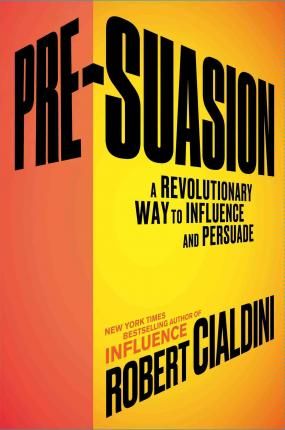
Nova: Exactly! It’s the ultimate frustration. We pour our intellectual best into understanding a problem, crafting an elegant solution, only to find our audience nodding politely, or worse, completely missing the point. And that's precisely what we're dissecting today, pulling insights from two foundational texts: Robert Cialdini's and Chip and Dan Heath's.
Atlas: Oh, Cialdini! I know his name. Isn't he the guy who basically wrote the bible on influence?
Nova: He absolutely is. What's truly fascinating about Cialdini is that he didn't just theorize from an ivory tower. He spent years undercover, infiltrating sales organizations, marketing firms, and fundraising groups to understand their influence tactics firsthand. That deep, real-world immersion gives his work unparalleled credibility. It's not just theory; it's battle-tested.
Atlas: Wow, so he was like an academic spy for persuasion. That's a commitment! And the Heath brothers,, that's about why some ideas just... take off, right?
Nova: Precisely. And for strategic analysts, for anyone who wants their insights to actually and drive impact, understanding both Cialdini's pre-suasion and the Heath brothers' stickiness is absolutely crucial. Today we'll dive deep into this from two perspectives. First, we'll explore the critical blind spot many strategic analysts face – the over-reliance on pure logic and the overlooked power of 'pre-suasion.' Then, we'll discuss how to make your brilliant insights not just heard, but truly 'sticky' and impactful, ensuring they resonate and endure.
The Analyst's Blind Spot & The Power of Pre-Suasion
SECTION
Atlas: Okay, so let's start with that gut punch you delivered, Nova. The "blind spot." I think many of us, especially those of us who pride ourselves on our analytical rigor, assume that if the data is sound, if the logic is impeccable, the argument will win. Why is that often not enough?
Nova: That's the trap, isn't it? We operate under the illusion that our insights are judged purely on their merit. But human beings aren't logic machines. Cialdini's core argument in is that the most effective persuaders don't just deliver a message; they arrange for their audience to be receptive to it beforehand. They "pre-suade" them.
Atlas: Pre-suade. So you're saying I need to manipulate my audience into agreeing with me before I even open my mouth? That sounds a bit... ethically dubious for a strategic analyst.
Nova: That's a great question, and it's a common misconception. Pre-suasion isn't about manipulation in a deceptive sense; it's about ethical preparation. It’s about creating the optimal mental state in your audience so they are to your message, rather than resistant or distracted. Think of it as setting the stage, not writing the play.
Atlas: Okay, I like that. Setting the stage. But how does that actually work? Give me an example of this "pre-suasion" in action.
Nova: Absolutely. Cialdini recounts a fascinating study where researchers called people asking for help with a survey. Before making the request, half the participants were asked, "Do you consider yourself an adventurous person?"
Atlas: Oh, I see where this is going.
Nova: Exactly! Those who were asked about being "adventurous" were significantly more likely to agree to help. The simple act of themselves adventurous made them more receptive to a request that implied stepping out of their comfort zone. They were pre-suaded. Their self-perception was activated, making them more likely to behave consistently with that perception.
Atlas: Wow. That gives me chills. So, it's not about the content of the request itself, but what happens the request. For a strategic analyst, how can I 'prime' a room full of executives or a team without them even realizing it? We're not usually asking them if they're "adventurous."
Nova: Right, it's about understanding the psychological triggers. For an analyst, this could mean strategically framing the problem you present your solution. If you want a bold, innovative solution to be accepted, you might start by highlighting the extreme urgency or the disruptive nature of the market, implicitly asking your audience to consider themselves "forward-thinking" or "courageous" leaders.
Atlas: So, instead of jumping straight into, "Here's our Q3 financial forecast and my recommendation," I might start by saying, "We're at a critical juncture where conventional approaches are failing, and we need courageous decisions to secure our future." That primes them for something bold.
Nova: Precisely! Or, if your recommendation involves a significant investment, you might begin by discussing the concept of "long-term value" or "strategic advantage," emphasizing patience and vision, rather than just immediate ROI. You are guiding their attention to the most favorable aspect of your message you deliver it.
Atlas: That's a profound shift. It means my influence begins not when I hit "present," but when I start thinking about the mental state of my audience. It's about designing the context. This really resonates with the idea of making a significant mark; it’s about being a leader who understands human behavior, not just numbers.
Nova: It absolutely is. It's about recognizing that even the most brilliant logic needs fertile ground to grow. And pre-suasion helps you prepare that ground.
Crafting 'Sticky' Ideas: Making Your Insights Resonate and Endure
SECTION
Nova: So, once you've pre-suaded your audience, once they're receptive, how do you make sure your message? Because receptivity is one thing, but memorability and long-term impact are another. This is where Chip and Dan Heath's comes in.
Atlas: Ah, the "sticky" ideas. I've always wondered about that. Why do some ideas, even silly ones, lodge in your brain, while others, even important ones, just vanish? Strategic reports, unfortunately, often fall into the latter category.
Nova: They often do! The Heath brothers identified six principles that make ideas sticky: Simplicity, Unexpectedness, Credibility, Concreteness, Emotions, and Stories. They call it the SUCCESs framework.
Atlas: Okay, let's unpack a couple of these, because some of them feel counter-intuitive for an analyst. "Unexpectedness," for example. Strategic reports are rarely "unexpected" – they're data-driven, methodical. How do I make my data?
Nova: That's a fantastic challenge, Atlas. Unexpectedness doesn't mean fabricating data. It means breaking a pattern, violating an expectation, or revealing a surprising insight the data. Think of it like a mystery. You grab attention by posing a puzzle.
Atlas: Can you give me an example? Like how would a company make something unexpected?
Nova: Consider the "popcorn contains a day's worth of saturated fat" campaign. Instead of just saying "popcorn is unhealthy," they delivered a shocking, unexpected comparison that broke people's expectations of a harmless snack. For an analyst, this could be presenting a key metric in a completely new comparison that reveals a hidden truth, or framing a trend in a way that directly contradicts a widely held belief within the company.
Atlas: Okay, so it’s about finding the surprising angle the truth. Not just presenting the truth, but presenting it in a way that disrupts their current understanding. I can see how that would grab attention. What about "Concreteness" and "Stories"? Strategic recommendations can be abstract. How do I turn a complex financial model or a market entry strategy into a 'story'?
Nova: This is where analysts can truly shine as leaders and communicators. Concreteness means making your ideas tangible, something people can see, hear, or feel. Instead of saying, "We need to improve customer satisfaction," you say, "We need to ensure that every customer feels like they've just had their problem solved by a trusted friend." That's concrete.
Atlas: That's a great way to put it. It paints a picture.
Nova: And for stories, humans are wired for narrative. Instead of just presenting a growth projection, tell the story of a customer journey that to that growth. Or a competitor's story of failure that highlights the wisdom of your strategy. The Heath brothers talk about the "Nordstrom tire" story – a customer wanted to return tires to Nordstrom, which doesn't sell tires, but they accepted the return anyway. It's a vivid, concrete story that immediately communicates Nordstrom's legendary customer service in a way a mission statement never could.
Atlas: That’s amazing. It’s hard to forget that story. So, if I combine Cialdini's pre-suasion—getting them ready to listen—with the Heath brothers' stickiness—making my message unforgettable—that's a powerful one-two punch for anyone wanting to drive impact and lead effectively. It moves beyond just having the right answers to actually getting those answers embraced.
Nova: Absolutely. It's about understanding that influence is a human endeavor, not just a logical one. You're not just delivering data; you're shaping perceptions and crafting narratives that move people to action.
Synthesis & Takeaways
SECTION
Nova: So, to bring it all together, the strategic analyst's trap isn't a lack of intelligence or diligence; it's often an over-reliance on pure logic, overlooking the psychological landscape of influence.
Atlas: That's the real blind spot. We spend so much time perfecting the "what" that we forget the "how" – how to get it into people's minds and hearts. It's like having a perfectly engineered car but no road to drive it on.
Nova: What a perfect analogy! Cialdini gives us the road-building tools with pre-suasion, ensuring our audience is mentally prepared and receptive. And the Heath brothers provide the blueprint for making our message itself a high-performance vehicle: simple, unexpected, credible, concrete, emotional, and story-driven.
Atlas: This isn't just about selling an idea; it's about leadership. It's about ensuring your brilliant insights don't just stay brilliant on paper, but actually translate into real-world change and the impact you're striving for. It’s the difference between being smart and being influential.
Nova: Exactly. It's the difference between being heard and being remembered, between presenting data and sparking action. So, before your next important presentation, ask yourself: how could you 'pre-suade' your audience to be more receptive to your core message?
Atlas: And once you've got them ready, how will you make that message so sticky, so compelling, that it can't be ignored? Think about those SUCCESs principles.
Nova: Because mastering influence beyond logic isn't just a soft skill; it's a strategic imperative for any analyst who wants to truly lead and innovate.
Atlas: This is Aibrary. Congratulations on your growth!