The 'Storytelling' Advantage: Why Data Alone Fails to Inspire Action.
Golden Hook & Introduction
SECTION
Nova: We're often told that data is king, that facts speak for themselves, and that logic should always prevail. But what if that very belief is precisely why your most brilliant ideas are falling flat, why your meticulously crafted strategies gather dust, and why your team isn't truly galvanized?
Atlas: Whoa, that's a bold claim, Nova. Are you saying all those meticulously crafted dashboards and quarterly reports aren't actually moving the needle? Because for our listeners, the strategic architects and resilient leaders out there, data is often the bedrock of their decisions.
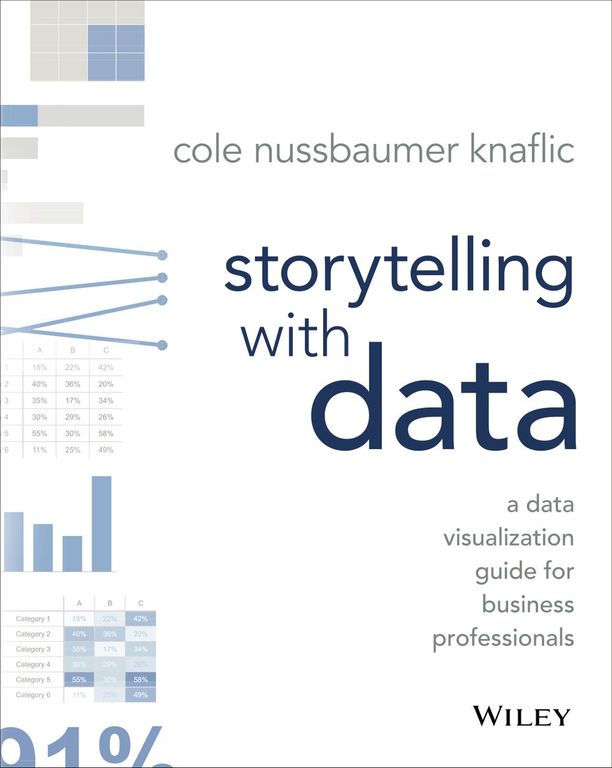
Nova: Absolutely, Atlas. And it's not about abandoning rigor; it's about elevating impact. Today, we're diving into the profound truth that data alone often fails to inspire action, and why mastering the art of storytelling is the strategic advantage leaders often overlook. We're drawing insights from the powerful concept of 'The Storytelling Advantage,' inspired by works like Cole Nussbaumer Knaflic's "Storytelling with Data," which really shows you how to transform raw numbers into compelling narratives, and Chip and Dan Heath's "Made to Stick," a book widely acclaimed for outlining the principles that make any idea unforgettable. Knaflic, with her deep background in data visualization, brings a unique perspective on bridging that gap between numbers and human understanding, a skill that's become indispensable.
Atlas: Okay, so it’s not about ignoring the data, but about giving it a voice, a human heartbeat. That’s an interesting reframing. For someone driven by impact and sustainable growth, this could be a game-changer. So, where do we even begin to unpack this 'data delusion'?
Beyond the Numbers: The Human Need for Storytelling
SECTION
Nova: We begin with the fundamental human truth: people remember stories, not just data points. Think of it like this, Atlas. You can show someone a highly detailed blueprint of a magnificent building, with every dimension, every material, every structural stress point perfectly laid out. It's accurate, it's logical, it's exhaustive.
Atlas: Right, and for an engineer or an architect, that blueprint is everything. It's the ultimate truth.
Nova: Exactly. But if you want to inspire someone to that building, to on its construction, or to their future within its walls, that blueprint often falls short. What moves them? It's the story of the families who will thrive there, the community it will uplift, the legacy it will create. It’s the vision, painted with emotion and narrative, not just logic. Our brains are wired for narrative. Stories activate more regions of the brain, they foster empathy, they create a shared experience. When you share data, you engage the analytical mind. When you share a story, you engage the whole person.
Atlas: That makes sense. I can definitely relate to that feeling of nodding along to a presentation, understanding the facts, but not really the urgency or the vision. But how does this apply in a high-stakes corporate environment where every decision needs to be backed by hard metrics? How do you convince a strategic leader to 'soften' their approach without it being perceived as less rigorous or even manipulative?
Nova: That's the crucial distinction, Atlas. It's not about being less rigorous; it's about being more effective. Let me give you an example. I recall a scenario where a company was trying to get buy-in for a new, data-backed sustainability initiative. They presented all the environmental impact data, the long-term cost savings, the regulatory compliance – a mountain of irrefutable facts. The team understood it, acknowledged its importance, but there was no real momentum, no genuine excitement.
Atlas: I know that feeling. Understanding something intellectually doesn't always translate into passion or proactive engagement.
Nova: Precisely. So, they reframed it. Instead of just showing the carbon footprint reduction, the CEO started by sharing a personal story about his daughter, who, after a school project on climate change, asked him what was doing to protect her future. He then connected the sustainability initiative to that very personal, emotional drive. He then showed the data, but it was anchored in a human narrative. Suddenly, the numbers weren't abstract; they were about protecting future generations, about a father's promise. The initiative gained incredible traction because it resonated on a human level.
Atlas: So basically you’re saying the story provides the 'why' that makes the data meaningful, not just factual. It’s about creating that emotional connection that bypasses the intellectual gatekeepers and goes straight to the heart of what motivates people. That's a great way to put it.
The Art and Science of Sticky Stories: Practical Frameworks for Impact
SECTION
Nova: Exactly. And it's not some nebulous magic; there's an art and a science to it. This naturally leads us to we actually craft these stories, making them not just heard, but sticky. Cole Nussbaumer Knaflic, in "Storytelling with Data," emphasizes understanding your audience and focusing your message. It's about identifying the 'ah-ha!' moment you want to create and building your visual and narrative around that.
Atlas: Okay, so for a leader trying to build legacies, what are the concrete, tiny steps they can take tomorrow? How do they begin to 'reframe a decision as a human story' without it feeling forced or inauthentic for their team? Because the fear is, it might come across as manipulative if it's not done genuinely.
Nova: That's a valid concern, and authenticity is key. This is where Chip and Dan Heath’s "Made to Stick" principles come in handy. They give us the SUCCESs framework: Simple, Unexpected, Concrete, Credible, Emotional, Stories. For a leader, one tiny step is to focus on and. Instead of announcing a new policy on 'streamlining operational efficiencies,' which sounds cold and abstract...
Atlas: Which, let's be honest, often translates to 'more work for you, less resources for me' in an employee's mind.
Nova: Right. Instead, think about the human impact. What concrete problem does this solve for an employee? What emotional relief does it bring? Perhaps you tell a story about a specific employee who struggled with a particular bottleneck, and how this new policy will free up their time to focus on more meaningful work. Or, for a difficult organizational change, instead of just presenting the 'why' with charts, you might tell a story about the company's past resilience, a personal anecdote of adapting, or a vision of the improved future for employees, embodying those SUCCESs principles.
Atlas: That’s actually really inspiring. So, it's about finding that one person, that one situation, that embodies the change you're trying to communicate. And then using that singular, concrete example to illustrate the broader data or strategy. It makes the abstract feel tangible.
Nova: Precisely. Knaflic would also add that you need to be ruthless about simplifying. Don't throw every piece of data at them. Identify the absolute core message, the one thing you want them to remember and act on. Then, craft a story around that single point, using visuals that support the message, not just display information. For instance, transforming a complex dataset on customer churn into a simple, emotional narrative about 'lost relationships' or 'unmet needs,' clearly highlighting the specific pain points and then showing how a new strategy addresses stories. This leads to a clear, actionable plan because the problem is humanized.
Atlas: I see. So it’s about making the data tell a story, rather than just being a collection of facts. This would be incredibly valuable for refining leadership influence and mastering organizational evolution, especially when trying to get buy-in for long-term visions.
Synthesis & Takeaways
SECTION
Nova: Absolutely. Storytelling isn't a 'soft skill' to be deployed occasionally; it's a strategic imperative. It's the bridge between raw data and human action, between a leader's vision and a team's collective legacy. It ensures that your brilliant strategies don't just sit on a spreadsheet, but actually come to life and inspire meaningful change.
Atlas: So, it's about being both the architect of the strategy the bard of the vision. It's about connecting the dots not just logically, but emotionally, to truly ignite that impact-driven mindset in ourselves and our teams. It transforms understanding into conviction.
Nova: Exactly. So, for our listeners, the tiny step we recommend is this: think of a recent decision you communicated to your team or stakeholders. How could you reframe it, not just with more data, but as a simple, human story? What's the central character? What's the challenge? What's the desired outcome, and who benefits?
Atlas: That makes me wonder, what's a story you’ve told recently that truly resonated? Share it with us! We'd love to hear how you're using narrative to inspire action.
Nova: Absolutely. This is Aibrary. Congratulations on your growth!