The 'Speak Like You Think' Law: Rethinking Articulation.
Golden Hook & Introduction
SECTION
Nova: We often assume if we just clearly enough, the words will follow. But what if that assumption is fundamentally flawed, and your brain is actually working against you?
Atlas: Wait, are you saying my brain is sabotaging my conversations? That's a bold claim, but honestly, it resonates with anyone who’s ever tried to explain a complex idea and felt completely misunderstood.
Nova: Exactly, Atlas. Today, we’re unpacking what we call 'The Speak Like You Think Law: Rethinking Articulation.' It’s about recognizing that gap between thought and speech, and learning how to bridge it. This isn't just about sounding smarter; it's about connecting deeply and being truly understood, which is crucial for anyone who wants to master communication and build confidence.
Atlas: So, what's happening in our brains that makes this so hard? Why isn't it like a simple download from my brain to my mouth?
The Articulation Blind Spot: Why Our Thoughts Don't Always Translate
SECTION
Nova: That's the core of the problem, the 'articulation blind spot.' We operate under this common, frustrating assumption that our thoughts will magically translate into clear, linear speech. But our brains don't work linearly. They process information in incredibly complex, multi-layered, and often chaotic ways. Think of your brain as a super-fast, multi-threaded processor, constantly making a million connections, pulling in memories, emotions, future predictions, context—all at once.
Atlas: Oh, I see. So, when I'm formulating a thought, it's not a neat, bullet-pointed list in my head. It's more like a swirling vortex of interconnected ideas.
Nova: Exactly! And then, when you try to articulate that swirling vortex, you feel this immense pressure to linearize it, to put it into words in a sequential order. But you're trying to translate a rich, multi-dimensional experience into a flat, one-dimensional stream of sound. It's like trying to describe a symphony using only a single note.
Atlas: That makes perfect sense. Can you give an example of how this plays out in a real-world conversation? Like, what does that frustration actually feel like?
Nova: Let's imagine our engineer again, trying to explain a groundbreaking new AI algorithm. In their mind, they see the intricate web of logic, the elegant code, the mathematical proofs, the potential applications—it's a beautiful, interconnected system. They see the whole picture, the entire complex landscape.
Atlas: And they assume everyone else sees that landscape too.
Nova: Precisely. So, when they open their mouth, they start at what feels like a logical point, often skipping intuitively obvious foundational steps, using highly specialized jargon, and assuming their listener has the same context, the same deep foundational knowledge. They’re speaking from the top of the mountain, assuming everyone else is already there with them.
Atlas: So basically, the expert’s internal map is so incredibly detailed and intuitive to them, they forget how to draw a simple, step-by-step route for someone who’s never even been to that country before. It's like trying to explain a gourmet meal without listing the basic ingredients or cooking steps.
Nova: That's a fantastic analogy! And the result? The listener is quickly lost, nodding politely but understanding nothing. The engineer they're being clear because it's clear. But clarity is not just about what's in your head; it's about what lands in the listener's head.
Atlas: That's why it's so frustrating! You know what you mean, you can see it perfectly in your mind, but the words just... don't cooperate. It’s like trying to catch smoke, or trying to describe a vivid dream that sounds completely nonsensical when you tell it to someone else.
Bridging the Gap: Systems Thinking and 'Sticky' Ideas for Clear Communication
SECTION
Nova: That frustration is absolutely universal, Atlas. And it’s not a personal failing; it’s a cognitive challenge. But the truly good news is, we're not doomed to this communication gap. This is where understanding how our minds work, and how ideas become 'sticky,' completely transforms our approach. We can consciously adapt our communication.
Atlas: Okay, so how do we fix it? What's the secret sauce for making our complex thoughts understandable to others? For someone who wants to master communication, this is critical.
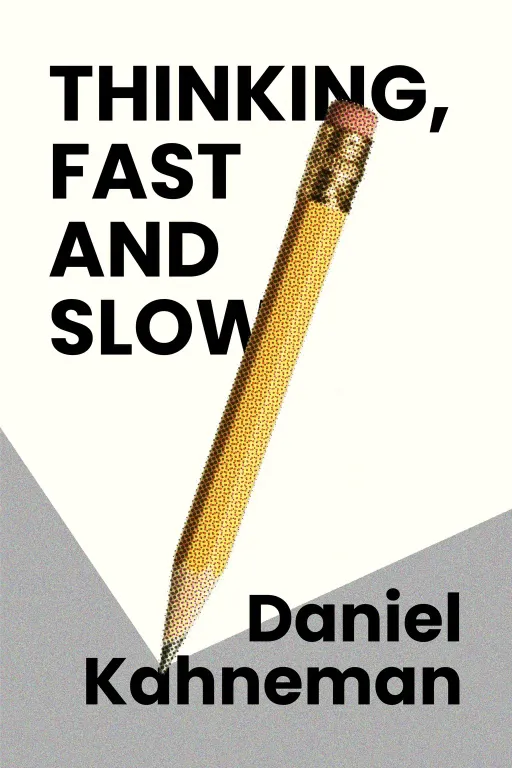
Nova: Well, one foundational piece comes from Nobel laureate Daniel Kahneman's groundbreaking work, particularly in his book "Thinking, Fast and Slow." He reveals our two distinct systems of thought: System 1, which is fast, intuitive, automatic, and emotional—it's what tells you a spider is scary you consciously process it. It's gut reactions, habits, quick judgments.
Atlas: So, like, my immediate emotional response to a situation, that's System 1?
Nova: Exactly. And then there's System 2, which is slow, deliberate, logical, and effortful—it's what you use to solve a complex math problem, plan your day, or analyze a dense report. It requires focus and energy.
Atlas: So, my brain's multi-threaded processor is actually two very different kinds of processors? How does knowing that help me speak better, especially when I'm trying to convey something really complex and logical, which sounds like System 2 territory?
Nova: It helps immensely! When you're trying to articulate a complex idea, often you're trying to convey something that primarily System 2 processed—deliberate analysis, data, intricate logic. But here's the kicker: your listener's System 1 is constantly active, looking for shortcuts, for familiarity, for something simple and intuitive to latch onto. If you don't give System 1 something accessible, it gets bored or overwhelmed, disengages, and then System 2 never even gets a chance to process your deliberate message.
Atlas: So, I need to appeal to both? Start with something intuitive, then build to the logical? It's like guiding them from a familiar path into new territory.
Nova: Precisely. And that's where Chip and Dan Heath's "Made to Stick" provides the perfect complement. They rigorously studied why some ideas resonate, spread, and are remembered, while others, no matter how brilliant, simply vanish. They found that 'sticky' ideas—those that are understood and remembered—share common traits.
Atlas: What are those traits? I imagine simplicity and concreteness are high on that list. For anyone trying to master their communication, especially with complex ideas, that's the holy grail.
Nova: Absolutely. Simplicity and concreteness are paramount. Others include unexpectedness, credibility, emotional appeal, and stories. The 'Deep Question' from the 'Speak Like You Think' Law asks: 'How can you simplify one complex idea you're currently working on, using only concrete examples?' That sounds incredibly challenging for someone trying to convey nuanced concepts, but the Heath brothers show us how.
Atlas: Give me an example of applying that. How does our engineer, with their complex AI algorithm, make it simple and concrete?
Nova: Instead of diving straight into the neural network architecture or the data processing pipeline, they might start by creating a vivid, concrete analogy that appeals to System 1. They could say: "This AI algorithm isn't just crunching numbers; it's like a highly efficient librarian who can read every book in the world, understand its meaning, and instantly pull out the exact passage you need, even if you don't know the book's title or the page number."
Atlas: In other words, they're turning the invisible, abstract process into something tangible and relatable. They're making the algorithm's function something you can almost see and understand, even if you don't know the technical details.
Nova: Exactly. That's simple, concrete, and uses an analogy System 1 can instantly grasp. Once you've hooked them with that concrete image, you can then gradually introduce the more complex System 2 explanations. You build understanding layer by layer, rather than overwhelming them upfront.
Atlas: That’s a huge shift from just dumping information. It’s not about diluting the idea; it’s about strategically packaging it so it can actually be received.
Synthesis & Takeaways
SECTION
Nova: Absolutely. The 'Speak Like You Think' Law isn't about dumbing down your ideas; it's about intelligent translation and strategic communication. It's about recognizing the cognitive heavy lifting required to make complex thoughts accessible. By understanding Kahneman's systems, you prepare your audience's mind for what's to come. By applying the Heath brothers' "sticky" principles, you craft your message for ultimate resonance and memorability.
Atlas: What I'm really hearing is that true articulation isn't just about knowing your stuff; it's about knowing. For anyone striving for confidence and competence in their communication, simplifying complex ideas with concrete examples isn't a fallback; it's a superpower. It's the difference between merely broadcasting information and truly connecting.
Nova: Precisely. It’s a foundational skill for anyone looking to build their communication mastery. So, our challenge to you this week: take one complex idea you're currently wrestling with and try to explain it using only one vivid, concrete example. See how much clearer and more impactful your message becomes.
Atlas: That’s fantastic. It’s about building that foundation, one simple, concrete sentence at a time.
Nova: This is Aibrary. Congratulations on your growth!