The Hidden Persuaders: Unlocking Consumer Decisions Beyond the Obvious
Golden Hook & Introduction
SECTION
Atlas: If you think people make decisions based on pure logic, data, or even their own best interests, you’re probably missing the biggest piece of the puzzle. And honestly, it’s costing you impact.
Nova: Oh, I love that opening, Atlas! Because it hits right at the core of what we're exploring today: the hidden persuaders. The invisible forces that truly steer purchasing decisions, leadership choices, and even how ideas spread.
Atlas: That’s a bold claim, Nova. Are you suggesting our carefully crafted strategies and meticulously planned campaigns are built on a faulty premise? That we’ve got a massive blind spot?
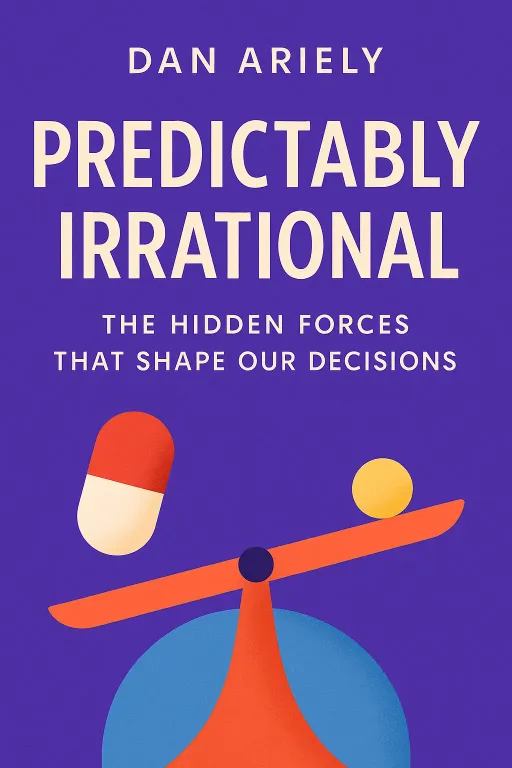
Nova: Absolutely! And it’s a blind spot that some brilliant minds have helped us uncover. Today we're diving into the fascinating world of human decision-making, drawing insights from giants like Dan Ariely and the Heath brothers. Ariely’s work, particularly his groundbreaking book, “Predictably Irrational,” absolutely rocked the academic world by showing just how consistently illogical we can be.
Atlas: I remember that book getting a lot of buzz. It was a real game-changer for many, wasn't it?
Nova: Indeed. It challenged the very foundation of classical economics, which often assumes rational actors. And then you have Chip and Dan Heath, whose book “Made to Stick” became a staple for anyone wanting their ideas to truly resonate, whether in business, education, or even just daily conversations. Both books have been widely acclaimed for their profound impact on understanding human behavior, offering frameworks that move beyond surface-level engagement. The common thread is this: once we understand the actual drivers, we can create messages that truly connect and influence.
The Blind Spot: Unmasking Irrational Consumer Decisions
SECTION
Nova: So, let’s start with that blind spot, Atlas. We often craft marketing messages, or even internal communications, based on what we think people do, not what they do. We assume rationality. But Dan Ariely, through his incredible experiments, proved that we are, in fact, predictably irrational.
Atlas: Predictably irrational. That sounds like an oxymoron. If it’s irrational, how can it be predictable? That feels like a contradiction for anyone trying to build a strategic plan.
Nova: Exactly! That’s the genius of it. It means our irrationality isn't random. It follows patterns. Let me give you a classic Ariely example. He once presented MIT students with a subscription offer for The Economist magazine. There were three options:
Nova: Option 1: Web-only subscription for $59.
Nova: Option 2: Print-only subscription for $125.
Nova: And Option 3: Print web subscription for $125.
Atlas: Wait. So, print-only for $125 and print-and-web for $125? That print-only option is completely useless! No one would choose that.
Nova: You would think so, right? And you’re correct, zero students chose the print-only option. But here’s the kicker: when all three options were presented, a significant majority—84%—chose the print-and-web subscription for $125. Only 16% went for the web-only at $59. The total revenue was around $11,444.
Atlas: Okay, so the print-and-web was clearly the best value proposition when the useless option was there.
Nova: Precisely. But then Ariely removed the "useless" print-only option and presented only two choices: web-only for $59, and print-and-web for $125. What do you think happened?
Atlas: My gut says more people would go for the cheaper web-only option without that decoy.
Nova: And your gut would be right! In the two-option scenario, 68% chose the web-only for $59, and only 32% chose print-and-web for $125. The total revenue plummeted to $8,012.
Atlas: Wow. That's a massive difference in revenue just by removing a seemingly irrelevant, "useless" option. So, the print-only option, which no one chose, wasn't useless at all. It was a decoy, making the print-and-web option look like an incredible deal by comparison.
Nova: Absolutely. It amplified the perceived value of the expensive option. Our brains love comparison, and when we have an easily inferior option, it makes a slightly superior, more expensive option seem like a steal. That’s predictable irrationality in action. We’re not making decisions in a vacuum; our choices are heavily influenced by the context and comparison points presented to us.
Atlas: That’s fascinating, and a little unsettling. It means that even when we think we're being logical, our decisions are being nudged by elements we’re not even conscious of. For someone leading a team or trying to innovate, this could completely derail their efforts if they’re not aware of these hidden nudges. How do you even begin to design for that?
The Shift: Harnessing Predictable Irrationality & Sticky Ideas
SECTION
Nova: Well, that’s where the shift happens. Once we accept this predictable irrationality, the next step is to design for it. That's where the Heath brothers come in with their work on "sticky ideas." Their book, "Made to Stick," offers a framework for crafting messages that don't just convey information, but actually resonate, influence behavior, and, well, stick in people's minds.
Atlas: So, if Ariely exposed the problem, the Heath brothers offer a solution for how to communicate effectively within that irrational landscape?
Nova: Exactly. They identified six principles for making ideas sticky: Simplicity, Unexpectedness, Concreteness, Credibility, Emotions, and Stories. Let's look at Unexpectedness and Emotion, for example. We’re predictably irrational because our emotions and biases play a huge role. If you can tap into those, you’re halfway there.
Nova: Think about the famous Nordstrom tire story. Nordstrom is known for exceptional customer service. The legend goes that a customer once tried to return a set of tires to a Nordstrom store. The problem? Nordstrom doesn't sell tires.
Atlas: Hold on. They don’t sell tires, but someone tried to return them there? That’s already pretty unexpected.
Nova: Right? But here’s the kicker: the employee, without hesitation, accepted the return and gave the customer a full refund.
Atlas: No way! That’s incredible.
Nova: It’s the ultimate unexpected service. It defies expectations. And because it’s so unexpected, it becomes a powerful story that people remember and retell, shaping the Nordstrom brand image far more effectively than any advertising campaign ever could. It taps into our emotions—surprise, delight, trust. That’s a sticky idea in action.
Atlas: I can see how that story would spread like wildfire. It’s simple, it’s unexpected, it’s concrete, and it evokes emotion. So, for someone trying to lead a team through a difficult change, or launch a truly innovative new product, how do they actually their message sticky? What's the first step beyond just telling a good story?
Nova: A great question for an impact driver! The first step is often Simplicity. It’s not about dumbing down, it’s about finding the core, essential message. Think of Southwest Airlines. For years, their internal and external message was simply "The LUV Airline." It was simple, emotional, and concrete. It communicated their focus on customer service, their fun culture, and even their stock ticker symbol.
Atlas: So, cutting through the noise and getting to the absolute essence, then figuring out how to deliver that essence in an unexpected or emotional way. It’s about leveraging those predictable human responses.
Nova: Precisely. It’s understanding that our brains are wired for stories, for emotion, for things that surprise us. Instead of fighting that, we should design our messages to work those inherent human tendencies. For a strategic analyst, this means deconstructing campaigns or communications, identifying the predictable irrational elements at play, and then consciously building in those sticky principles.
Synthesis & Takeaways
SECTION
Nova: So, to synthesize this, we’ve really explored two powerful truths today. First, our decisions are rarely purely rational; they’re influenced by a host of biases and emotions, making us predictably irrational. Second, once we understand this, we can intentionally craft messages and experiences that stick, using principles like simplicity, unexpectedness, and emotion.
Atlas: It’s a profound realization. It means that true influence and lasting connection aren't just about presenting the facts, but about understanding the human operating system. It's about empathy, really, knowing what makes people tick, even when they don’t know it themselves. For anyone looking to make a significant mark, this isn't just marketing advice; it's a fundamental shift in how you approach leadership and innovation.
Nova: Absolutely. It’s about moving beyond surface-level engagement to truly influence behavior and build lasting connections. Think about that deep question we posed earlier: How might a 'predictably irrational' element have impacted a recent campaign you saw, and how could you design for it next time? That kind of critical thinking, designing for human nature rather than against it, is what future-proof innovation is all about.
Atlas: And for those looking to deepen their understanding, keep embracing that journey. Not every step is perfect, but every step is progress. Network intentionally, seek out those who inspire you, and keep digging into fields like digital marketing analytics and consumer psychology. That’s how you truly master data’s story and inspire and guide teams.
Nova: That's a perfect way to put it, Atlas.
Nova: This is Aibrary. Congratulations on your growth!