Stop Guessing, Start Influencing: The Art of Data Storytelling for Impact.
Golden Hook & Introduction
SECTION
Nova: Atlas, quick thought experiment for you. What do you think is the single most powerful thing about a really solid piece of data? Like, you've got the numbers, they're undeniable. What's its superpower?
Atlas: Oh, I love that. Its superpower? Clarity, absolutely. The unassailable truth it represents. There’s no arguing with the numbers, right? They speak for themselves, illuminate the path forward, and cut through all the noise. For anyone trying to build a robust framework, that's gold.
Nova: Ah, clarity. The unassailable truth. I appreciate the confidence, my friend. But what if I told you that the unassailable truth, presented nakedly, often just… sits there? Like a perfectly sculpted marble statue in a dark, dusty attic. It's magnificent, but it moves no one. The real superpower, the thing that brings those numbers to life and actually, is the story you wrap around them.
Atlas: Hold on. You’re saying that all those hours I spend making sure my data is pristine, perfectly analyzed, and logically structured… isn't enough? That the numbers themselves are mute without some kind of narrative fairy dust sprinkled on top? That's a bit out there for someone who trusts in logic above all else.
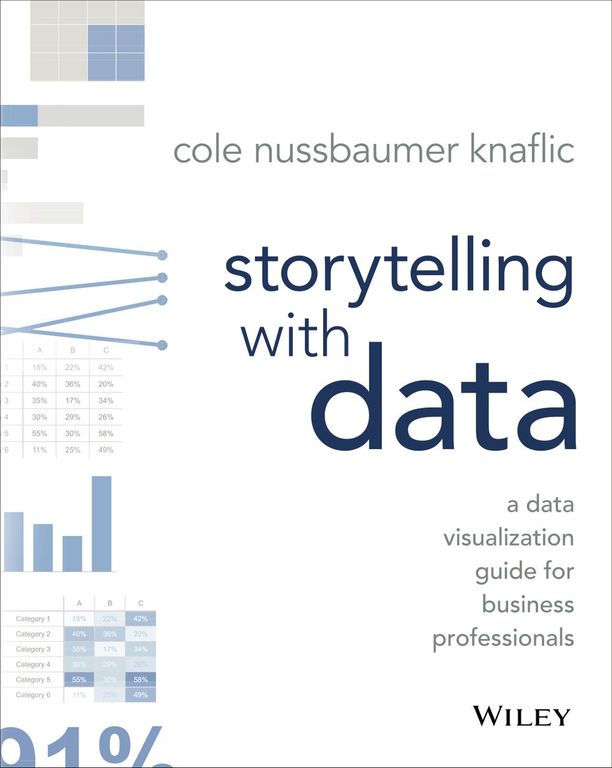
Nova: Not fairy dust, Atlas. It's the architecture of influence. Today, we're diving into the art of transforming raw data into a compelling story that resonates deeply, bridging that crucial gap between analysis and influence. Our guide for this journey is the impactful idea at the heart of "Stop Guessing, Start Influencing: The Art of Data Storytelling for Impact." And to truly understand this, we'll lean on two foundational works: Cole Nussbaumer Knaflic’s "Storytelling with Data" and Chip Heath and Dan Heath’s "Made to Stick." Knaflic, with her background as a former Google analytics manager, brought a truly practical, hands-on approach to making complex data accessible and vivid. And the Heath brothers? They're renowned for synthesizing dense academic research into incredibly actionable frameworks that stick in your mind.
Atlas: Okay, so we're talking about more than just pretty charts. We're talking about making data. That’s a whole different ballgame for someone who’s used to letting the facts do the talking.
From Raw Numbers to Resonant Narratives: Why Data Needs a Story
SECTION
Nova: Exactly. Because the cold, hard fact is, numbers alone rarely move people. To truly lead and create impact, your insights need a narrative. Knaflic emphasizes showing, not just telling. She provides these practical steps to design visuals that clarify the message, making complex data immediately understandable and actionable.
Atlas: But what if the data itself is so dry, so technical, so deeply embedded in a spreadsheet that finding a "story" feels like trying to extract poetry from a tax form? For our listeners who are knee-deep in quarterly reports or complex market analysis, how do you even begin to find the 'story' when all you see are rows and columns?
Nova: That’s a great way to put it, the poetry of a tax form. And the answer is, the story isn't invented; it's from the data's implications. Think about this: imagine a quarterly sales report. One slide shows a bar chart: "Sales Up 15%." Factual. Accurate. But what does it mean? Now, imagine another slide. Same 15% increase, but the headline reads: "New Product Launch Fuels Growth, Securing 50 Jobs."
Atlas: Whoa.
Nova: That’s a different experience, isn't it? The first is a statistic. The second is a narrative. You immediately understand the, the, the. It’s not just about a number; it’s about a new product, a successful strategy, and real people whose livelihoods were positively affected. That 15% increase suddenly has weight, meaning, and emotional resonance.
Atlas: I see what you mean. The second one, it doesn't just inform me, it makes me something. It connects to a bigger picture, a strategic vision, the well-being of the team. That's going to resonate with anyone who struggles with getting buy-in for their strategic initiatives. It’s not just about the data, but the of the data.
Nova: Precisely. Knaflic's brilliance is in showing us how to design visuals and structure our communication so that the is the star, not just the raw data point. It’s about asking: what’s the most important insight here? What action do I want people to take? And then, how do I build a visual and verbal narrative around? The data becomes the evidence for the story, not the story itself.
Atlas: So, it's like a detective novel. The raw data are the clues, but the story is the detective piecing it all together to reveal the truth and the culprit, or in our case, the opportunity and the solution. You’re not just presenting the evidence; you're building a case.
Nova: A perfect analogy. You're building a case that compels decision and action. And once you've found that compelling narrative, how do you make sure it doesn't just evaporate into the ether after the presentation? That's where our second core idea comes in.
The Science of Stickiness: Making Your Data Stories Unforgettable
SECTION
Nova: Once you’ve crafted that compelling narrative, the next challenge is making it. This is where Chip Heath and Dan Heath's "Made to Stick" comes in. They reveal how to craft ideas that endure. They teach principles like simplicity and unexpectedness, essential for making your data stories memorable and sticky in a busy world.
Atlas: That makes me wonder, for someone building complex frameworks or trying to master user acquisition where every detail matters, how do you balance the need for simplicity with the inherent complexity of strategic data? Doesn't oversimplification risk losing crucial nuance or credibility with a highly analytical audience?
Nova: That’s a really critical point, and it’s a common misconception. Simplicity, in the Heath brothers' framework, isn't about dumbing down the content. It’s about finding the message, the single most important idea you want to convey, and stripping away everything that isn't absolutely essential to that core. It's about clarity of message, not absence of detail.
Atlas: Okay, so it’s about focusing the laser rather than just dimming the light.
Nova: Exactly! Think of it this way: instead of a 50-page strategic report detailing every single market segment, every competitor, every potential risk... what if you distilled it to one simple, unexpected insight? Like, "Our biggest opportunity for growth isn't acquiring new customers; it's reactivating our customers."
Atlas: That's a powerful reframing. It’s simple, but it's also unexpected. Most people would immediately jump to new customer acquisition. That unexpected angle immediately grabs attention because it challenges a common assumption.
Nova: And that's the "unexpectedness" principle at play. It creates curiosity. It makes people lean in and ask, "Wait, why dormant customers? Tell me more." The unexpected element makes the simple message memorable. It’s like a plot twist in a story. You remember the twist, and because you remember the twist, you remember the whole narrative that led up to it.
Atlas: So, you're saying that for a strategic vision to truly gain traction, it needs that simple, unexpected core that functions like a hook, pulling people into the deeper, more complex data that supports it? It's almost like behavioral economics for founders, where you're nudging people towards a particular insight by making it intrinsically interesting.
Nova: Absolutely. And the Heath brothers provide other principles too, like concreteness, credibility, emotional appeal, and stories, all designed to make your message resonate and stick. When you combine Knaflic's visual clarity with the Heath brothers' principles of stickiness, you're not just presenting data; you're creating an experience. An experience that guides, persuades, and drives action.
Synthesis & Takeaways
SECTION
Nova: So, bringing it all together, Atlas. We've talked about transforming cold facts into resonant narratives and then making those narratives unforgettable. When you're facing your next data presentation, your next strategic proposal, it's not enough to just lay out the numbers.
Atlas: Right. It’s about understanding that the human brain isn't wired for raw data consumption; it's wired for stories. And if we want our insights to truly have impact, to persuade, to build those sustainable frameworks, we have to respect that. We have to become storytellers of data.
Nova: Precisely. Nova’s Take from the book content really hammers this home: these insights fundamentally equip you to build frameworks that don't just inform, but persuade, ensuring your strategic visions are adopted and acted upon. It's about moving from analysis to influence, from information to inspiration.
Atlas: That's actually really inspiring. It means our intellectual curiosity, our systematic approach to building frameworks, it all culminates in this: the ability to translate those profound insights into something that genuinely moves people.
Nova: And that brings us to our tiny step for you, our listeners. Take your next data presentation. Before you build a single slide, write a one-sentence story that captures the core insight and the desired action. Just one sentence. See how it reframes your entire approach. How might that single sentence change the impact of your work?
Nova: This is Aibrary. Congratulations on your growth!