Data Storytelling: Transforming Insights into Influence
Golden Hook & Introduction
SECTION
Nova: You think your data is objective? You think it speaks for itself? Well, I'm here to tell you, your data is probably lying to you... or at the very least, it's whispering when it should be shouting.
Atlas: Oh man, "lying to you"? That's a bold claim, Nova. I thought data was, you know, the ultimate truth-teller. The unbiased arbiter of reality.
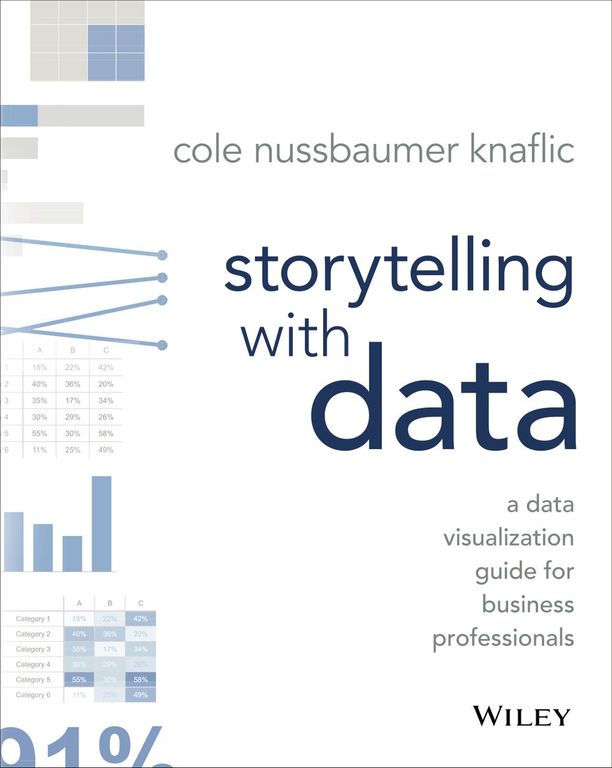
Nova: Exactly! That's the myth we're busting today. Raw data, in its pure form, is just a collection of facts. It doesn't inherently persuade, inspire, or even clarify. It needs a voice, a narrative. And that's why today, we're diving into the powerful world of data storytelling, drawing wisdom from two absolute titans: "Storytelling with Data" by Cole Nussbaumer Knaflic, which revolutionized how we think about visualizing information, and "Made to Stick" by Chip and Dan Heath, the brothers who cracked the code on why some ideas endure and others vanish.
Atlas: So you're saying it's not enough to just have the right numbers; you need to essentially become the data's publicist? The hype person?
Nova: Precisely! Think of it this way: a chef can lay out all the raw ingredients for a magnificent meal—the finest wagyu, organic vegetables, rare spices. But that's not a meal, is it? That's just potential. The magic happens when those ingredients are transformed, thoughtfully arranged, and presented as a dish designed to delight the diner. Data is no different. It's about transforming raw information into actionable insights, bridging that crucial gap between analysis and influence. And it all starts with understanding who you’re cooking for.
The Foundation of Effective Data Storytelling: Audience & Visual Design
SECTION
Atlas: So, understanding the diner, or in our case, the audience. That makes a lot of sense. But for someone constantly surrounded by complex spreadsheets and dashboards, how do you even begin to think about 'designing for the audience' when the data itself is so intricate?
Nova: That's where Cole Nussbaumer Knaflic really shines in "Storytelling with Data." Her core message is simple but profound: move beyond merely presenting data to truly communicating your message. It’s about shifting your mindset from "here's what I found" to "here's what you need to know and why."
Atlas: Okay, so it’s not just about picking a pretty chart type. It’s deeper.
Nova: Much deeper. Imagine you have a spreadsheet with a thousand rows of customer feedback. If you just show that spreadsheet, your audience's eyes will glaze over before they even hit row ten. But if you analyze that data, find the single most important message—say, "80% of our new users abandon the product during onboarding"—then you design a visual that highlights. A simple funnel chart, perhaps, with a clear, concise headline. That's communicating.
Atlas: That’s a great way to put it. I imagine a lot of our listeners, especially those in high-stakes roles, are constantly trying to distill massive amounts of information for stakeholders who are short on time and attention. But how do you know what your audience needs to know? What if they have diverse interests?
Nova: That's the art of it. Knaflic emphasizes asking yourself: "What do I want my audience to or after seeing this data?" Not just what data points do I have. It requires empathy. Put yourself in their shoes. If you're presenting to the head of sales, they care about revenue and leads. If it's the head of engineering, they care about system stability and development cycles. Your single most important message, and thus your visual design, should cater to objective.
Atlas: So it's like tailoring a suit rather than handing out a one-size-fits-all uniform. You identify that one critical insight that will resonate most powerfully with.
Nova: Exactly! It’s about clarity over complexity. Removing clutter, focusing attention, making sure every single element on your visual serves a purpose in telling that one crucial story. It's about making your data so clear, so compelling, that the insight becomes unavoidable.
Making Data 'Sticky': The Principles of Memorable Communication
SECTION
Nova: And that naturally leads us to the second key idea we need to talk about, which often acts as the turbocharged engine for what we just discussed: making those insights not just clear, but absolutely unforgettable. Because a clear message is great, but a clear, message? That’s where true influence lies.
Atlas: Unforgettable data. That sounds like a superpower for anyone trying to drive change or get buy-in. What's the magic behind that?
Nova: The magic, or rather, the science, is beautifully laid out in "Made to Stick" by Chip and Dan Heath. They identified six principles that make ideas 'sticky'—memorable, understandable, and capable of changing opinions or behavior. They call it SUCCESs: Simplicity, Unexpectedness, Concreteness, Credibility, Emotion, and Stories.
Atlas: SUCCESs. I love that acronym. Can you give us a quick rundown? Because for someone who lives in spreadsheets, turning numbers into 'stories' or 'emotion' sounds like a whole new skill set.
Nova: It’s more intuitive than you think. means finding the core idea, the single most important thing. is about grabbing attention by defying expectations. means making it tangible, something people can visualize or experience. is about giving people a reason to believe you. is about making them care. And are how we package all of this.
Atlas: Okay, so let’s take that onboarding abandonment example. "80% of new users abandon during onboarding." How do you make that using these principles?
Nova: Great question. First,: "We're losing four out of five new users." That’s simpler. Now,: Instead of just stating the number, start with a question: "What if I told you we're actively turning away 80% of our potential customers they sign up?" That's a shocker.: Instead of "onboarding friction," describe what's happening: "Imagine a customer downloads our app, creates an account, and then gets stuck on a confusing setup screen, frustrated, and just deletes it."
Atlas: That's powerful! I can actually that user's frustration. It’s no longer an abstract percentage. And you’re not dumbing down the data, you’re making it relatable.
Nova: Exactly. Then,: you can back it up with a small-scale user test video showing someone struggling, or a quote from a user.: Now, you're not just presenting a problem, you're evoking concern for the lost customers, the wasted marketing spend, the potential revenue. And finally, you wrap it all up in a: "Meet Sarah, a new user who was excited about our product. But her journey ended abruptly at step three of our onboarding. Here’s what happened..." Now that 80% isn't just a statistic; it's a call to action because it represents countless 'Sarahs'.
Atlas: Wow, that’s actually really inspiring. You’ve transformed a dry, complex data point into a compelling narrative that evokes understanding and emotion. It's not just "here's the problem," it's "here's why you should care and what we need to fix."
Nova: That's the whole point. Effective data storytelling isn't about manipulating the truth; it's about revealing the truth in a way that resonates, that compels action, and ultimately, creates influence. It’s the difference between merely informing and truly moving people.
Synthesis & Takeaways
SECTION
Nova: So, bringing it all together, whether you're designing your visuals with Knaflic's audience-centric approach or crafting your message with the Heath brothers' SUCCESs principles, the goal is the same: to make your data unforgettable. It’s about bridging that gap between cold, hard numbers and warm, human understanding.
Atlas: That gives me chills. Thinking about data as something that can evoke emotion, not just logic. It completely reframes how I'll approach communicating insights from now on. It’s not just about presenting facts; it’s about crafting an experience.
Nova: Absolutely. Your tiny step for this week? Before your next presentation, identify the single most important message you want your audience to remember. Just one. Then, build your visuals and narrative entirely around that. Ruthlessly cut anything that doesn't support it.
Atlas: That's a practical, actionable step. And it ties back to that deep question: "How can you simplify complex data points into a story that evokes both understanding and emotion in your stakeholders?" It's a challenge, but now it feels like we have the tools to meet it.
Nova: Precisely. It’s about treating your data not as an end in itself, but as the raw material for a story that needs to be told, understood, and felt.
Atlas: I love that. So, go forth, storytellers. Turn those numbers into narratives that move mountains.
Nova: This is Aibrary. Congratulations on your growth!