Beyond the Product: Crafting an Irresistible Brand Narrative for Niche Dominance
Golden Hook & Introduction
SECTION
Nova: What if I told you that your amazing product, the one you poured your heart and soul into, might be completely irrelevant to your customers? And it's not their fault.
Atlas: Hold on, irrelevant? After all that work? That's a tough pill to swallow for anyone who’s built something from the ground up.
Nova: It is, isn't it? But it's a cold, hard fact that even with a superior product, businesses often struggle to dominate a niche because their message is unclear or fails to connect with their audience's deepest needs. That ambiguity leaves potential customers confused and opportunities untapped. Today, we're dissecting the critical concept of 'Beyond the Product: Crafting an Irresistible Brand Narrative for Niche Dominance.' This framework distills decades of marketing and storytelling wisdom, born from observing countless brilliant innovations fail due to muddled messages.
Atlas: Wow. I imagine a lot of our listeners, the strategic builders and resilient visionaries, have felt that sting. They’ve got the vision, they’ve got the product, but the market isn't responding in the way they hoped. They're looking for that impact and market leadership.
Nova: Exactly. And that brings us to the clarity imperative.
The Clarity Imperative: Customer as Hero
SECTION
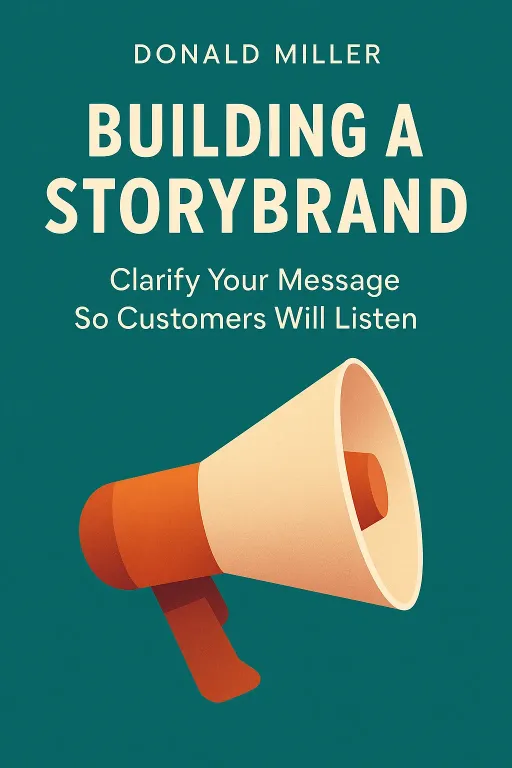
Nova: The first tactical insight comes from Donald Miller's 'Building a StoryBrand.' Miller introduces a seven-part framework that clarifies your message by positioning your customer as the hero and your brand as their guide. This clear narrative cuts through noise and fosters genuine connection.
Atlas: So you're saying instead of talking about how amazing product is, I need to talk about how amazing is once they use my product? That sounds like a subtle but powerful mind shift.
Nova: It's more than subtle; it's fundamental. Think of it like this: every great story has a hero who wants something, faces a problem, and then meets a guide who provides a plan and calls them to action, ultimately helping them succeed. Most brands mistakenly try to be the hero of their own story, constantly talking about themselves.
Atlas: Right, like, "We have the best features!" or "Our company is revolutionary!"
Nova: Precisely. But your customer isn't interested in your journey, they're interested in. They are Luke Skywalker; your brand is Yoda. Your role is to understand their specific challenge, articulate it back to them, and then present your product or service as the tool, the wisdom, the guiding hand that helps overcome that challenge and achieve their desired outcome.
Atlas: Can you give an example of how that reframing works in practice? For our listeners who are trying to apply this to their own niche?
Nova: Absolutely. Imagine a high-tech drone company. Their initial marketing message was all about proprietary sensor technology, carbon fiber frames, and GPS accuracy down to the millimeter. They were talking about the technical brilliance of their product. Crickets. Then, they reframed their narrative.
Atlas: Oh, I'm curious. What did they do?
Nova: They started asking: "Who is our customer's hero, and what's their biggest challenge?" They realized many of their potential clients were rescue workers struggling to locate survivors in dangerous, inaccessible terrain. So, their new message became: "Are you a rescue worker struggling to locate survivors in dangerous terrain? Our drone is your silent, tireless partner, guiding you to those in need, saving precious time and lives."
Atlas: Wow. That's a profound shift. It moved from tech-specs to human impact, from features to a deeply emotional benefit. The cause, the process, the outcome—it's all there, and it's so much more compelling.
Nova: Exactly. The product didn't change, but the narrative did. The shift in message transformed their engagement, moving from a cold, technical pitch to a story about heroism and life-saving impact.
Atlas: That's a great example. It's like, for our listeners in a niche market, they're probably already speaking to a specific pain point. But are they making the hero, or their? I imagine a lot of people fall into that trap without even realizing it.
Nova: It's incredibly common. The hero always has a problem, and they need a guide. Your brand isn't Luke Skywalker; it's Yoda.
Atlas: But wait, looking at this from a strategic builder's perspective, doesn't that feel a little... manipulative? Like you're just telling people what they want to hear instead of the truth about your product's capabilities?
Nova: Not at all. It's about empathy and clarity. It's about meeting your customer where they are, understanding their deepest needs, and then articulating how your solution helps them achieve their aspirations. It's authentic connection, not manipulation. When you clarify the story, you clarify the value.
Making Your Message Unforgettable: The SUCCESs Principles
SECTION
Nova: And once you've got that crystal-clear, hero-centric message, how do you make sure it actually sticks? That's where Chip and Dan Heath's 'Made to Stick' comes in. The Heath brothers reveal the six principles behind ideas that endure: simplicity, unexpectedness, concreteness, credibility, emotions, and stories. Applying these makes your brand message unforgettable and compelling.
Atlas: Okay, so we're moving from 'what to say' to 'how to say it' so it actually lands? That makes sense. Many of our listeners are trying to cut through a lot of noise in their respective industries.
Nova: Precisely. They call them the SUCCESs principles. Simplicity: find the core idea. Unexpectedness: grab attention by breaking a pattern. Concreteness: make it tangible. Credibility: help people believe it. Emotions: make them care. Stories: get them to act.
Atlas: So it's not enough just to have a good story; it has to be a story. Can you give an example of how these elements work together? Especially unexpectedness and concreteness, which sound particularly powerful.
Nova: Absolutely. Think about the early days of personal computers. Instead of saying "It's a powerful micro-processor with 64KB RAM and a high-resolution monochrome display," Apple famously said, "A computer for the rest of us."
Atlas: Oh, I see. That's incredibly simple, unexpected, and instantly relatable. It shifted the focus from technical jargon to accessibility and a broader purpose.
Nova: Exactly. Or later, their "Think Different" campaign wasn't about clock speeds or hard drive space; it was about connecting with a specific emotional identity—the rebels, the visionaries, the ones who challenge the status quo. That's hitting 'Emotion' and 'Story' big time. They transcended product features to become a symbol.
Atlas: So it's like how a complex financial product might be explained not with jargon, but with an analogy of 'building a secure fortress for your family's future'? That makes something abstract very concrete and emotional.
Nova: Exactly! That hits 'Concreteness' and 'Emotion.' It translates abstract benefits into tangible, relatable outcomes. The Heath brothers found that ideas stick when they are presented in ways that bypass intellectual filters and connect directly with our innate human understanding and emotions. They become embedded in our minds because they resonate with something deeper.
Atlas: But what if your product inherently complex? How do you maintain credibility while making it simple and concrete? That's a real challenge for many innovative companies.
Nova: That's where 'Credibility' comes in. It's not about dumbing down; it's about finding the underlying truth and presenting it in an accessible, verifiable way. It could be expert endorsement, anti-authority—like a regular person succeeding with your product—or even internal credibility, showing the data, but in an understandable story format. You don't sacrifice truth; you illuminate it in a way people can grasp and trust.
Synthesis & Takeaways
SECTION
Nova: Ultimately, it's about crafting a narrative that doesn't just sell, but truly serves. You clarify your message, making your customer the hero of their own story, and then you package that message using these sticky principles so it's not just heard, but remembered and acted upon. This clear, repeatable process for crafting a brand message not only attracts but also deeply engages your target niche.
Atlas: So for our strategic builders, this isn't just fluffy marketing. This is about ensuring their vision, their superior product, actually gets the traction it deserves for niche domination. It's about translating their hard work into real-world impact and lasting success.
Nova: Precisely. Your tiny step for today: Take your current marketing message. Rewrite it. Focus on how your customer is the hero, your brand is the guide, and how you help them overcome a specific challenge. Then, check it against the SUCCESs principles. Is it simple? Unexpected? Concrete? Does it evoke emotion and tell a story?
Atlas: And I wonder, how many brilliant products are out there right now, just waiting for someone to unlock their story, to give them the narrative they deserve?
Nova: Far too many. But with these insights, we hope our listeners can change that narrative, for themselves and for their customers.
Atlas: That's a powerful thought to leave with. It's about finding the voice that truly resonates.
Nova: This is Aibrary. Congratulations on your growth!