Rewiring Your Cognitive Limits
Golden Hook & Introduction
SECTION
Nova: Forget 'natural talent.' The latest science reveals your brain is a dynamic, rewiring machine, and the real limit is your belief.
Atlas: Whoa, okay, that's a bold opening, Nova. It immediately challenges that ingrained idea that some people are just born with it, while others are left behind. It feels like we're about to dismantle some fundamental assumptions today.
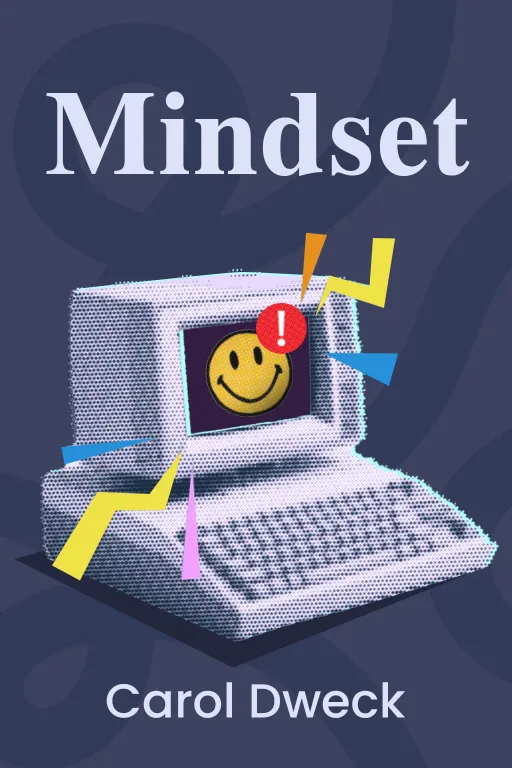
Nova: Precisely, Atlas. And we're doing it by diving into the groundbreaking work of two incredible minds. First, there's Carol S. Dweck, whose seminal book "Mindset" has fundamentally reshaped how we understand intelligence and potential, showing that our beliefs about our abilities are far more powerful than we realize. And on the science front, we have Jo Boaler in "Limitless Mind," who uses cutting-edge brain science to demonstrate that our capacity for growth and learning is not only lifelong but far more expansive than we typically imagine.
Atlas: So, the core message from both these brilliant thinkers is that those perceived ceilings on our abilities, the ones that whisper "you can't do that," might just be illusions we've been taught to believe, or perhaps, that we've built ourselves.
Nova: Exactly. And today, we're going to explore how we can actively dismantle those illusions.
The Myth of Fixed Ability & The Reality of Neuroplasticity
SECTION
Nova: Let's start with Jo Boaler and the sheer, exhilarating science of neuroplasticity. For decades, we operated under the assumption that the brain was largely fixed after a certain age, like a finished sculpture. But Boaler, drawing on extensive neuroscience, makes it abundantly clear: your brain is a dynamic, ever-changing landscape. It's constantly rewiring itself, forging new connections, and strengthening existing ones in response to your experiences, your learning, and even your thoughts.
Atlas: That's the concept of neuroplasticity, right? It sounds almost magical. But Nova, that sounds almost too good to be true. I mean, we all hear about 'math people' and 'art people,' the idea that some people are just inherently gifted in certain areas. How can we possibly believe that someone who struggled with calculus in high school, or who feels utterly uncreative, can suddenly become a whiz in that domain?
Nova: That's the beautiful myth we need to bust, Atlas. The idea of a 'math brain' or a 'business brain' is precisely what Boaler's research, and indeed much of modern neuroscience, debunks. Think of your brain not as a hard drive with a fixed amount of storage, but as a bustling city. When you learn something new, or practice a skill, it's like building new roads, expanding highways, or establishing new communication networks within that city. The more you use a particular pathway – whether it's for solving equations, learning a language, or mastering a musical instrument – the stronger and more efficient that pathway becomes.
Atlas: So it's not about the right pre-installed software, it's about actively building and training the infrastructure?
Nova: Exactly! Consider someone who decides, in their late 30s, to learn to code. They might feel clumsy, slow, and utterly out of their depth initially. They might think, "I'm just not a tech person." But with consistent practice – perhaps 30 minutes daily, as our listener profile suggests – they're not just memorizing syntax. They are literally forging new neural connections. They are building the 'coding district' in their brain's city. Over time, those initially weak connections strengthen, pathways become more efficient, and what felt impossible begins to feel intuitive. It's the brain demonstrating its inherent plasticity, its capacity to adapt and grow, regardless of age or prior experience.
Atlas: That’s a powerful image. It makes you wonder how many potential skills or talents we've left dormant simply because we accepted the initial difficulty as a permanent state. It's like having a vast, untapped network of roads but only ever using the one main street.
Nova: Precisely. And this inherent capacity for change is the fertile ground upon which our mindset then operates. Because while the brain change, it changes often depends on what we believe about our ability to change.
The Mindset Divide: Fixed vs. Growth
SECTION
Nova: And that brings us to Carol Dweck's revolutionary work on mindsets. Boaler tells us the brain change; Dweck explores how our beliefs about our abilities that change, or prevent it. She identified two fundamental mindsets: the Fixed Mindset and the Growth Mindset.
Atlas: Ah, the fixed versus growth mindset. I've heard this concept bandied about, but what's the real engine behind it? Is it just about positive thinking, or is there something deeper at play that dictates how we approach challenges?
Nova: It's far deeper than just positive thinking, Atlas. At its core, it's about our fundamental beliefs regarding intelligence, talent, and ability. In a, people believe their basic qualities, like intelligence or talent, are simply fixed traits. You're either born smart or not, talented or not. This leads to a desire to constantly prove yourself, to look smart, and to avoid challenges that might reveal perceived weaknesses. If you're in a fixed mindset, a setback isn't an opportunity to learn; it's evidence that you just don't have what it takes.
Atlas: That sounds exhausting! Constantly needing to prove yourself, and every failure feeling like a definitive judgment. It makes me think about how often we self-sabotage because we're afraid of looking 'not good enough.' For listeners who are focused achievers, how do they ensure they don't fall into the fixed trap when facing a genuine, significant challenge? It feels like the pressure to perform could easily push them towards a fixed view.
Nova: It's a critical point, Atlas, especially for high achievers. The, on the other hand, is the belief that abilities and intelligence can be developed through dedication and hard work. Brains and talent are just the starting point. This view creates a love of learning and a resilience that is essential for great accomplishment. People with a growth mindset understand that effort is the path to mastery. They embrace challenges, persist in the face of setbacks, see effort as the path to growth, learn from criticism, and find lessons and inspiration in the success of others.
Atlas: That's such a stark contrast. Can you paint a picture for us? What might this look like in practice, say, when two people face a major career setback?
Nova: Absolutely. Imagine two individuals, both highly competent, who are passed over for a significant promotion.
Atlas: Wow. The internal dialogue is so different, and the resulting actions are worlds apart. The growth mindset person is actively engaged in problem-solving and skill development, while the fixed mindset person is essentially shutting down and reinforcing their own perceived limitations. It’s like one is building, and the other is retreating.
Nova: Exactly! And this isn't just about career advancement. It impacts every area of life – learning new hobbies, managing relationships, even overcoming health challenges. The belief that you improve, that effort, is the engine that drives progress. It's the difference between saying, "I failed," and saying, "I learned."
The Actionable Takeaway: Reframing & Seeking Mastery
SECTION
Nova: So, we have this incredible, rewiring brain with its inherent capacity for change, and we have the power of mindset that dictates whether we actually that capacity. The natural question that arises is: how do we actively harness this? How do we move from understanding these concepts to actually living them?
Atlas: This is where it gets practical, Nova. This is where the 'Curious Strategist' in us wants to know: what's the tangible step? You mean that phrase, "I'm just not good at this," that so many of us use as a mental shorthand for our perceived limitations, needs a complete overhaul? How do we even begin to dismantle that internal narrative and find concrete proof, or at least a pathway, that we master something we currently feel incapable of?
Nova: That's precisely it. The core takeaway from both Dweck and Boaler, and the actionable step for our listeners, is this powerful act of reframing. Instead of saying, "I'm just not good at this," which is a declaration of a fixed trait, you reframe it to: "I haven't mastered this."
Atlas: "Haven't mastered this yet." That feels so different. It’s not a dead end; it’s a starting line. It shifts the focus from an inherent deficit to a process of learning and development. It's less about defining who you and more about defining what you're.
Nova: Exactly. It's a subtle linguistic shift, but it has profound psychological implications. It opens the door to curiosity, to experimentation, and to sustained effort. It aligns perfectly with the growth mindset and the reality of neuroplasticity. Now, the second part of this takeaway is to actively look for evidence of this reframing in action: find a case study of someone who started from zero in that specific domain you feel you can't conquer.
Atlas: Okay, "haven't mastered this yet." That feels empowering. But finding a case study... where do you even look for someone who started from zero in, say, public speaking, or complex data analysis, or even something as seemingly mundane as managing one's finances effectively? It feels like the people we admire have always been good at what they do.
Nova: That's where the narrative often gets simplified. We see the outcome, not the journey. But if you look closely, you'll find them. Think about prolific authors who faced countless rejections before their first book was published. Or entrepreneurs who experienced multiple failed ventures before achieving success. Even in areas like sports, you can find athletes who weren't natural prodigies but achieved greatness through sheer dedication and strategic training. The key is to look beyond the polished final product. Search for biographies, interviews, articles that detail their struggles, their learning curves, their moments of doubt, and how they pushed through. Online learning platforms often feature success stories of individuals who pivoted careers late in life. Even within your own professional network, there might be colleagues who transformed their skills.
Atlas: So, it's about finding those stories of grit and learning, and using them as a mirror to our own potential journey, rather than just an aspirational, perhaps intimidating, ideal? It’s about seeing the of mastery, not just the destination. This resonates with the 'Empathetic Builder' part of our profile too – looking for the human story behind the achievement.
Nova: Precisely. It's about seeing the journey of mastery, not just the destination. It’s about recognizing that every expert was once a beginner, and that the path from zero to mastery is paved with learning, persistence, and the unwavering belief that growth is possible. When you identify a struggle, instead of labeling yourself, reframe it as an opportunity for mastery, and then find a story that shows you it's possible.
Synthesis & Takeaways
SECTION
Nova: Ultimately, the most profound insight woven through both Dweck's and Boaler's work is that our cognitive limits are far more fluid and self-imposed than we often realize. Our brain's inherent capacity to change and adapt, coupled with the powerful lens of a growth mindset, means we are not defined by our current abilities, but by our willingness to learn, to persist, and to evolve.
Atlas: It's a powerful reminder that true mastery isn't about innate gifts bestowed upon a select few, but about consistent effort, strategic learning, and the foundational belief that growth is not only possible but inevitable with the right approach. For anyone feeling stuck, whether it's in their career, a hobby, or a personal skill, the invitation is clear: reframe that "can't" into a "haven't yet," and then go find your case study – your proof that the journey is achievable.
Nova: Indeed. The journey of rewiring your cognitive limits, of expanding your potential, begins with a single, powerful shift in perspective. It’s about recognizing the dynamic nature of your own mind and embracing the process of becoming.
Atlas: This has been incredibly illuminating, Nova. It’s like giving ourselves permission to be a beginner, over and over again, knowing that each iteration builds something new. It's permission to be a work in progress, which is, frankly, a relief.
Nova: Absolutely. And that's where true growth and lasting achievement lie. This is Aibrary. Congratulations on your growth!