The Quantum Leap in Knowledge Mastery
Golden Hook & Introduction
SECTION
Nova: Forget the endless degrees, the decade-long apprenticeships, and the exhausting grind of "lifelong learning" that often feels like an uphill battle against an avalanche of information. The future of mastering anything isn't about spending more time; it's about learning smarter, faster, and with surgical precision.
Atlas: Whoa, that's a bold claim, Nova. Faster? Smarter? I think a lot of our listeners, especially those deeply invested in their careers and trying to keep up with rapid tech changes, probably feel like they're already pushing the limits of 'smarter and faster.' How is this even possible? Is this some kind of secret hack?
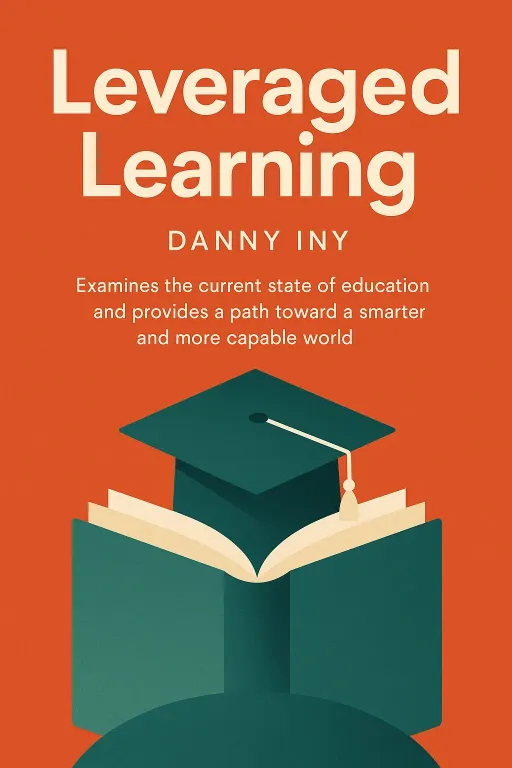
Nova: It's not a hack in the illicit sense, Atlas, but it absolutely is a fundamental shift in how we approach knowledge acquisition. Today, we're diving into a quantum leap in knowledge mastery, drawing insights from two pivotal thinkers. First, Danny Iny, a trailblazer in online education, who, after building a career challenging traditional educational models, gave us "Leveraged Learning." He argues that the old ways are crumbling. Then, we look at Jonathan A. Levi, a self-experimenter who cracked the code on accelerated learning, sharing his groundbreaking methods in "Become a SuperLearner."
Atlas: Okay, so we're talking about a complete paradigm shift, not just a few study tips. That's going to resonate with anyone feeling overwhelmed by the pace of change. So, what exactly are these thinkers proposing, and how do we even begin to unpack such a radical idea?
Nova: Today, we'll explore this from three crucial perspectives. First, we'll dive deep into why our traditional methods of learning are no longer cutting it in the digital age. Then, we'll peel back the curtain on cutting-edge techniques that leverage our brain's natural, incredible abilities. And finally, we'll focus on how to apply a "sprint learning" framework to master any high-value skill in record time. It's about empowering you to stay ahead, not just keep up.
The Great Unlearning: Why Traditional Education Isn't Enough Anymore
SECTION
Atlas: That first point really hits home, Nova. The idea that traditional education is "no longer cutting it." I imagine a lot of our listeners, especially those who've invested heavily in degrees and certifications, might be thinking, "But I the traditional thing! I went to school, I got the qualifications." What's Danny Iny's core argument there?
Nova: Iny argues that the traditional education bubble isn't just bursting; it's already popped. We've been operating under an industrial-age model where learning was about accumulating credentials over years, preparing for a static career. But the digital economy? It’s a completely different beast. The "new currency," as he puts it, isn't a four-year degree; it's the ability to rapidly acquire and apply.
Atlas: Specialized skills. So, it’s not about knowing a little bit about everything, but becoming deeply proficient in something very specific, very quickly. I can see how that applies to, say, a software developer who needs to master a new programming language or a marketer needing to understand a new AI-driven analytics platform.
Nova: Exactly. Think of it this way: a traditional university might offer a broad computer science degree. That's foundational, absolutely. But in the time it takes to complete that, five new, critical frameworks in AI or cybersecurity might have emerged, become industry standards, and then been replaced by even newer tech. The curriculum simply can't keep up. The demand isn't for generalists who know these things, but for specialists who can them, right now.
Atlas: Right, like trying to navigate a white-water rapid with a leisurely riverboat. It's just not built for the speed and agility required. But isn't there still value in deep, foundational knowledge? Are we just talking about shallow learning here? Because for someone trying to master their craft, that sounds a bit concerning.
Nova: That's a crucial distinction, Atlas. It's not about shallow learning; it's about deep learning. Iny isn't saying throw out all foundational knowledge. He's saying the and the need to change. The market is demanding people who can identify a high-value skill, dive deep into its core principles, and apply it effectively, often within weeks or months, not years. Imagine a company needing to implement a new, complex data privacy regulation. They don't have three years for their legal team to go back to law school for a specialized degree. They need someone who can rapidly understand the nuances, identify the core principles, and implement solutions.
Atlas: So, for our listeners, especially those looking at career trajectory and the future of tech, this isn't just theory. It's about adapting to survive and thrive. It's almost like the shelf-life of knowledge has dramatically shortened, and we need a new way to restock our mental pantry.
Nova: Precisely. The goal is to become an adaptive learner, not just a perpetual student. The digital economy rewards agility and immediate value creation, not just certificates of past effort. This urgent need for rapid, focused skill acquisition sets the stage for our next point: how do we actually that?
Hacking Your Brain: SuperLearning Through Neuroplasticity
SECTION
Atlas: That leads us perfectly into Jonathan Levi’s work. If the traditional model is broken, how do we acquire these specialized skills rapidly? My brain often feels like it's already at capacity just trying to remember where I put my keys.
Nova: Well, Atlas, that's where Levi steps in with "Become a SuperLearner." He introduces us to the incredible power of neuroplasticity. This isn't sci-fi; it's our brain's inherent ability to reorganize itself, form new neural connections, and adapt throughout our lives. It means your brain isn't a static hard drive; it's a dynamic, ever-evolving supercomputer, and you can absolutely 'hack' it.
Atlas: Neuroplasticity. That sounds a bit academic. Can ordinary people really 'hack' their brains to process technical information at three times the average speed? Because honestly, that sounds a bit out there for someone just trying to understand a new financial modeling technique or a complex engineering concept.
Nova: It's not about being a savant; it's about understanding how your brain learns best and then leveraging those mechanisms. Levi focuses on advanced mnemonic techniques and speed-reading frameworks. Mnemonics, for example, aren't just for remembering shopping lists. They're about taking abstract, technical information and turning it into vivid, memorable, and often absurd, mental imagery or stories.
Atlas: Can you give an example? Like, how would that work for something truly dry, like a series of network protocols or a complex legal definition?
Nova: Absolutely. Let's say you need to quickly grasp the core principles of a new cloud security framework, which might involve concepts like 'least privilege access,' 'data encryption at rest,' and 'multi-factor authentication.' Instead of just reading definitions, you'd create a mental "memory palace" – perhaps your own home. 'Least privilege access' could be a tiny, unassuming key for a massive door in your living room, symbolizing only giving minimal access. 'Data encryption at rest' could be a giant, locked, glowing treasure chest in your bedroom, representing data stored securely. 'Multi-factor authentication' could be you needing to show your ID, scan your thumbprint, and then shout a secret phrase just to get into your kitchen.
Atlas: Oh, I like that! You're turning abstract concepts into something visual, spatial, and even a little bit silly. That's a great way to put it. It’s like creating an internal Wikipedia of images for complex ideas.
Nova: Precisely. Our brains are hardwired for stories, images, and spatial navigation, not for rote memorization of bullet points. Speed-reading, on the other hand, isn't just about moving your eyes faster. It's about training your brain to absorb information in chunks, reduce subvocalization, and actively engage with the text to extract the core ideas, rather than passively scanning every word. It's like shifting from walking to driving through a book.
Atlas: So, it's not just about speed, but about at speed. That makes me wonder, if I have to learn a new software interface or understand a complex market trend by next week, what's one immediate trick I could try? Something beyond just "read faster."
Nova: A great starting point is active recall and pre-reading. Before you even dive into the main material, skim the headings, subheadings, and summaries. Ask yourself questions about what you expect to learn. Then, as you read, pause frequently and try to recall what you just learned without looking back at the text. This forces your brain to retrieve and consolidate information, making those neural connections stronger. It's like warming up before a workout—it makes the actual learning far more effective. It's about making your brain an active participant, not just a passive receptacle.
The 5-Hour Skill Sprint: Mastering Core Principles Rapidly
SECTION
Atlas: That makes sense. We're talking about really engaging the brain, not just bombarding it. And that leads us to the practical application, the "5-hour skill sprint." Five hours to master the core principles of a high-value technical skill? Nova, that sounds almost impossible. Are we talking about coding a simple 'hello world' or understanding, say, the fundamentals of quantum computing? Because those are wildly different.
Nova: You're right to challenge that, Atlas, because the definition of "mastery" here is key. It's not about becoming an expert in five hours; it's about mastering the. Think of it like learning to drive. In five hours, you're not a Formula 1 racer, but you can understand how to start the car, steer, brake, and navigate basic traffic. You've mastered the of operating a vehicle.
Atlas: Okay, so it’s about strategic deconstruction then? Breaking down a complex skill into its absolute foundational elements and then using these superlearning techniques to rapidly internalize those. Not just brute-force learning.
Nova: Exactly. It's about identifying the 20% of the skill that delivers 80% of the value. For example, if you want to understand blockchain architecture, you wouldn't try to code a full decentralized application in five hours. Instead, you'd focus on understanding what a distributed ledger is, how cryptographic hashing works, the concept of consensus mechanisms, and the difference between public and private chains. You'd use mnemonics for the terminology, active recall for the concepts, and maybe watch a few highly condensed, visual explanations.
Atlas: That's a crucial distinction for our listeners who are driven by progress and mastering their craft. It's not about superficial understanding but about getting to a functional level quickly, so you can then build upon it with practice. It empowers you to start much faster.
Nova: Precisely. The sprint learning framework encourages you to pick that one high-value technical skill you've been delaying—maybe it's learning a new data visualization tool, understanding the basics of a specific cybersecurity threat, or getting a handle on a new financial regulation. Then, you commit to a focused, uninterrupted block of time—say, five hours this week—to dive deep into its absolute core. You leverage what we discussed about active learning, mnemonic aids, and focused attention.
Atlas: That's powerful. It shifts the mindset from "I need to dedicate months to this" to "I can make significant progress in a focused burst." It's about gaining momentum and confidence early on.
Synthesis & Takeaways
SECTION
Nova: And that's the real quantum leap we're talking about, Atlas. It's recognizing that the world has changed, and our learning strategies must change with it. We need to be adaptive, efficient, and targeted. We have the cognitive tools within us, thanks to neuroplasticity, to achieve this accelerated mastery.
Atlas: It's less about "I can't learn that" and more about "how can I learn that?" This challenges the conventional wisdom that learning has to be slow and arduous. It's about empowering ourselves in a world where continuous skill acquisition isn't a luxury, but a necessity.
Nova: Absolutely. So, for every one of our listeners today, here's your challenge, your takeaway: identify one high-value technical skill you've been delaying. Just one. And this week, apply a "sprint" learning framework to master its core principles in under five hours. Break it down, use active recall, visualize, and then apply what you've learned.
Atlas: That’s incredibly actionable. Whether it's for career trajectory, understanding the future of tech, or even just building financial acumen, that five-hour sprint could be the catalyst for a much larger journey. It’s about building confidence and proving to yourself that rapid learning isn't just possible, it's potent.
Nova: And the impact can be profound. Imagine if you could do that consistently, tackling a new core skill every week or two. That's how you not only keep pace but truly lead in a rapidly evolving landscape. It's about taking control of your intellectual growth and making progress tangible.
Atlas: That gives me chills, Nova. The thought of that kind of empowered learning is truly inspiring.
Nova: This is Aibrary. Congratulations on your growth!