The Efficiency Frontier of Knowledge
Golden Hook & Introduction
SECTION
Nova: Atlas, quick: five words to describe your learning strategy.
Atlas: Hope, caffeine, and sheer panic.
Nova: Sounds familiar to a lot of our listeners! Today, we're diving into how to replace that panic with precision and build momentum, not just knowledge. We're exploring the "efficiency frontier of knowledge."
Atlas: Because let's be honest, Nova, the sheer volume of information out there can feel like standing at the bottom of Mount Everest in a blizzard, with a map written in invisible ink.
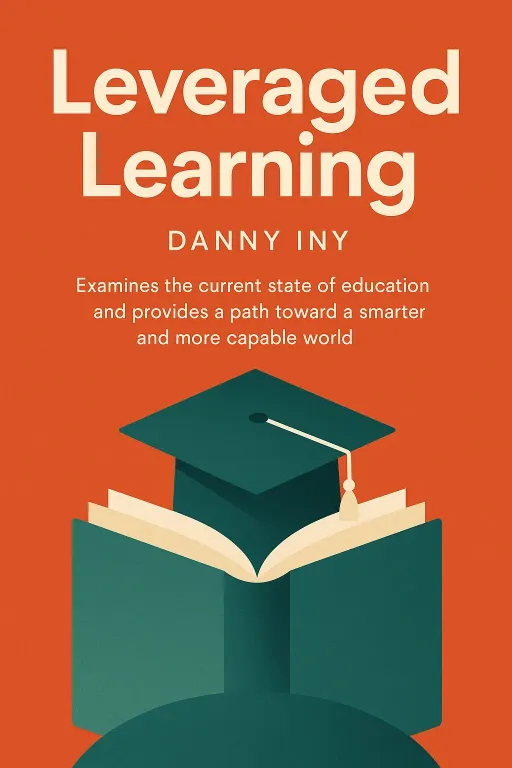
Nova: Exactly! And the traditional paths to learning often feel like being told to climb that mountain using only a compass and a prayer. Today, we're inspired by two thinkers who offer a different map. We're talking about Danny Iny and his book "Leveraged Learning," and Robert Twigger, author of "Micromastery."
Atlas: So, the core idea here is that our standard educational models, the ones we grew up with, are just too slow, too broad, and frankly, too disconnected from what we actually to know, right when we need to know it.
Nova: That's precisely the friction point. Iny argues that in our digital age, where skills and information become obsolete at lightning speed, this slow-burn, broad-stroke learning approach is becoming a liability rather than an asset. It’s like showing up to a Formula 1 race with a horse and buggy.
The Problem with Traditional Learning & The 'Just-in-Time' Solution
SECTION
Nova: So, let's unpack Danny Iny's "Leveraged Learning." The central thesis is that traditional education, with its long courses, degrees, and broad syllabi, is inherently inefficient for the modern world. It’s built on the assumption that you’ll need this knowledge years down the line, or that a broad foundation is the ultimate goal.
Atlas: But for many of us, especially those feeling a bit overwhelmed by options or constantly seeking that next bit of progress, that feels like an eternity away. It’s like being handed a massive encyclopedia and told, "Read this, and then maybe you'll know what to do next week."
Nova: Precisely! Iny's counter-proposal is "just-in-time" learning. Think of it as the opposite of "just-in-case" learning. Instead of accumulating a vast reservoir of knowledge you need someday, you acquire specific skills or information precisely when you need them for an immediate task or problem.
Atlas: Okay, I can see the appeal. It sounds incredibly practical. So, instead of enrolling in a six-month project management course, if I suddenly have to lead a small project, I learn the project management techniques relevant to project, right then and there?
Nova: Exactly! It's about utility. If you're about to give a presentation and need to create a specific type of chart in Excel, you learn how to make, not the entire Excel software suite. This approach is brilliant for cutting through information overload because you're not trying to absorb everything; you're filtering for immediate relevance. It’s about making time count, which I know resonates deeply with our 'Focused Learner' profile.
Atlas: But how do you even identifying what's "just-in-time" versus just more noise? The "overwhelmed navigator" in me is already picturing myself drowning in even micro-decisions about what to learn next. It feels like it could create a different kind of paralysis.
Nova: That's a fantastic point, Atlas. The key isn't to add to your plate, but to reframe how you approach learning. It’s about looking at your immediate tasks and asking, "What single piece of knowledge or skill would make significantly easier, faster, or more effective?" It's about targeted intervention. For example, if you're in a meeting and constantly struggling to articulate your point clearly, the "just-in-time" skill might be learning one concise way to frame your arguments.
Atlas: So, it's less about a formal curriculum and more about a responsive, adaptive learning process driven by the demands of the present moment. It sounds like it requires a certain amount of self-awareness about your current tasks and challenges.
Nova: Absolutely. And this is where the second idea, from Robert Twigger's "Micromastery," becomes incredibly powerful. Because if "just-in-time" learning is about to learn, "micromastery" is about to learn it in a way that builds momentum.
The Power of Micromastery and the Success Spiral
SECTION
Nova: Twigger’s book, "Micromastery," is fascinating because it takes this idea of discrete, useful skills and pushes it further. He argues that instead of aiming for grand, abstract mastery, we should focus on mastering small, specific, and often overlooked skills. Think of it as collecting tiny, potent superpowers.
Atlas: Tiny superpowers. I like that. But what kind of skills are we talking about? Are we talking about learning to juggle? Or is it more like, say, mastering the art of the perfect handshake?
Nova: It can be anything, really! Twigger's examples range from learning a specific type of knot, to mastering a particular culinary technique, to understanding a niche aspect of a sport or a craft. The crucial element is that these skills are discrete, achievable, and can be mastered relatively quickly. They are not broad competencies; they are sharp, focused abilities.
Atlas: And the magic happens when you master one of these, right? You mentioned a "success spiral." What does that look like?
Nova: It's a beautiful concept. When you successfully learn and apply a micromastery skill, you get an immediate hit of competence. You've achieved something tangible. This small victory boosts your confidence. That increased confidence then makes you more willing to tackle the small skill, or even a slightly larger challenge. Each success builds on the last, creating an upward spiral of capability and self-belief.
Atlas: Ah, so it’s like a positive feedback loop. For the 'Momentum Seeker' who might feel stuck, this sounds like the antidote. Instead of looking at the whole mountain, you focus on mastering one perfect climbing hold. And once you’ve got that, the next hold seems less daunting.
Nova: Exactly! And for the 'Overwhelmed Navigator,' it provides a clear, actionable path. Instead of feeling lost in a sea of possibilities, you can identify one small, concrete skill that would improve your current situation. For instance, if you’re constantly feeling unprepared for meetings, a micromastery skill might be learning to distill the key information from a pre-read document into three bullet points, or mastering a specific technique for asking clarifying questions that elicit more useful information.
Atlas: That's incredibly insightful. It directly addresses the user profile's pain points. The 'Overwhelmed Navigator' gets a clear, small step. The 'Momentum Seeker' gets a win that fuels more wins. And the 'Focused Learner' sees how to make their time count by mastering something immediately useful.
Nova: And here’s the beautiful synergy: "Just-in-time" learning tells you skill you might need right now, and "micromastery" gives you the framework for learning that skill effectively and efficiently, so you can actually it. It turns abstract knowledge into immediate, actionable power.
Atlas: I love that connection. It’s like Iny provides the map for the journey, and Twigger provides the efficient, high-performance vehicle for that specific leg of the journey. It's not about hoarding knowledge; it's about deploying it strategically, one micro-win at a time.
Nova: And the impact on influence is significant. When you can quickly acquire and apply a useful skill that others might be struggling with, you naturally gain influence. You become the person who can get things done, who has that specific bit of expertise. It’s not about being the loudest in the room; it’s about being the most effectively prepared and capable for the task at hand.
Synthesis & Takeaways
SECTION
Nova: So, let's bring these two powerful ideas together. The traditional model, with its slow, broad strokes, often leaves us feeling overwhelmed and behind. Danny Iny’s "Leveraged Learning" offers "just-in-time" acquisition – learning precisely what you need, when you need it, to combat obsolescence and information overload.
Atlas: And Robert Twigger's "Micromastery" provides the engine for that. It’s the method of breaking down those "just-in-time" needs into small, manageable skills that we can master quickly, creating that "success spiral" of confidence and momentum.
Nova: The combination is potent for anyone feeling like an "Overwhelmed Navigator." It provides clarity by focusing on immediate needs and a structured path forward through small, achievable wins. For the "Momentum Seeker," it’s the ultimate momentum builder. And for the "Focused Learner," it's the epitome of making time count by prioritizing utility and immediate impact.
Atlas: This brings us to that deep question: Which small, 'micromastery' skill could you learn this week that would immediately increase your influence in a meeting or project?
Nova: Think about your immediate work. What's one recurring task that feels clunky? What's one piece of information you always wish you had at your fingertips during discussions? What's one tool or technique that seems to make others more effective in meetings, but you haven't quite grasped?
Atlas: For example, if you’re often asked for quick data points in meetings, a micromastery skill could be learning one specific, rapid way to pull a common metric from your company’s dashboard. Or, if you find yourself always needing to ask for clarification on project status, a micromastery skill could be learning to ask a single, highly effective clarifying question that gets you the precise information you need.
Nova: It doesn't have to be monumental. It's about finding that one small, practical skill that, once learned, will make you demonstrably more effective in your very next relevant interaction. This is about forward motion, trusting that mastering one small thing is infinitely better than waiting for the 'perfect' time to learn everything.
Atlas: And remember that growth recommendation: Schedule your 45 minutes. Treat it like an important appointment. Dedicate that time to identifying and learning just one tiny, impactful skill this week. It’s about building that reading momentum, managing your time effectively, and filtering that signal from the noise of endless information.
Nova: The efficiency frontier isn't about knowing everything; it's about knowing the right thing, at the right time, and having the capability to use it. It’s about building a spiral of success, one small, mastered skill at a time.
Atlas: This has been incredibly practical. It feels like we’ve been given a much clearer, more actionable way to approach learning and skill development in a world that demands constant adaptation.
Nova: Absolutely. It’s about moving from overwhelmed to empowered, from stagnant to spiraling upwards.
Atlas: This is Aibrary. Congratulations on your growth!