The Super-Learning Toolkit for Entrepreneurs
Golden Hook & Introduction
SECTION
Nova: Entrepreneurs are taught to hustle, to grind, to always be 'on'. It's a badge of honor, isn't it? But what if the key to your next big breakthrough, to truly mastering that tough new skill, lies in... well, not hustling at all? What if it's about day-dreaming?
Atlas: Oh, I like that, Nova. Day-dreaming. Sounds like something I could get behind, especially when I'm staring at a complex spreadsheet feeling my brain turn to mush. But come on, for our listeners who are building companies and pushing boundaries, the idea of "not hustling" feels almost… heretical.
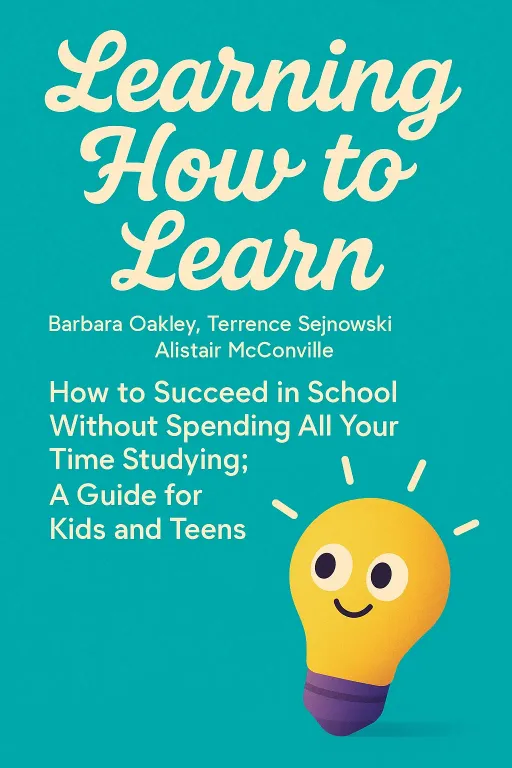
Nova: It does, doesn't it? That's exactly why we need to talk about it. Because today, we're diving into some truly illuminating insights from two brilliant minds who've cracked the code on how we learn and innovate. We're drawing wisdom from Barbara Oakley's widely acclaimed work, including her fantastic book "Learning How to Learn," and Jonathan A. Levi's incredibly practical "Become a SuperLearner."
Atlas: Those titles alone sound like they're speaking directly to the pragmatic visionary in me. I mean, who want to learn how to learn better, especially when you're constantly having to pick up new business skills, from AI integration to advanced marketing analytics?
Nova: Exactly! And what’s fascinating about Barbara Oakley, for example, is her own journey. She’s an engineering professor, but she famously struggled with math and science earlier in her life. She was essentially a language and humanities person who her brain to excel in highly technical fields. Her insights come from deeply understanding the mechanics of learning, not just from being a natural genius.
Atlas: Wow, that's actually really inspiring. It means these aren't just theories from someone who found things easy. This is hard-won wisdom. So, how do we start to unlock this super-learning toolkit?
Nova: Well, we start by understanding how our brain actually works, specifically, how it.
The Rhythms of the Entrepreneurial Brain: Focused vs. Diffuse Thinking
SECTION
Nova: Barbara Oakley introduces us to two fundamental modes of thinking: the focused mode and the diffuse mode. Think of the focused mode like a laser beam. When you're in focused mode, your attention is sharp, pinpointed. You're tackling a specific problem directly, like solving an equation, debugging code, or meticulously planning a marketing campaign. It’s deliberate, conscious effort.
Atlas: Right, that's where most entrepreneurs probably feel like they spend 90% of their time. Head down, problem-solving, trying to force solutions.
Nova: Exactly. And it’s absolutely essential. We need that laser focus for deep work. But here’s the often-overlooked secret: it’s only half the equation. The other half is the diffuse mode. This is where your mind relaxes, wanders. It’s like turning that laser beam into a floodlight, illuminating a much broader landscape. You're not actively trying to solve a problem; you might be taking a walk, doing dishes, playing a musical instrument, or just staring out the window.
Atlas: Hold on, so you're telling me that when I'm procrastinating with a creative hobby, I'm actually... being productive? That sounds a bit out there. My inner taskmaster is screaming right now.
Nova: Your inner taskmaster needs to understand the neuroscience! In diffuse mode, your brain is still working, but in the background. It's making new connections, synthesizing information, and seeing the big picture. It’s where creative breakthroughs, those "aha!" moments, often happen. Think of a time you were stuck on a problem, walked away, and then the solution just popped into your head in the shower. That was your diffuse mode at work.
Atlas: Oh, I’ve been there! Honestly, that sounds like my Monday mornings. I'll be wrestling with a new product feature, feeling completely blocked, then I'll go for a run, and suddenly, a completely different approach materializes. I always just thought it was the fresh air.
Nova: The fresh air helps, but it’s primarily allowing your brain to shift gears. In focused mode, your neural pathways are tightly engaged with what you’re learning, like a well-trodden path. But sometimes, you need to find a path, or connect two seemingly unrelated paths. The diffuse mode allows your brain to step back, roam freely across different neural networks, and make those novel connections that lead to true innovation. It’s not just about relaxing; it’s about allowing your subconscious to process and synthesize.
Atlas: So basically, for an entrepreneur trying to master a new skill, like say, understanding the intricacies of venture capital, simply grinding through dense articles and financial models for hours isn't enough. You need to hit pause.
Nova: Precisely. You need to alternate. Intense, focused study sessions, then step away. Engage in a creative hobby, go for a walk, listen to music. This allows your brain to consolidate what you’ve just learned and integrate it into your existing knowledge in a more flexible, creative way. It’s about building a robust understanding, not just memorizing facts. The "Resilient Achiever" in you might push for more hours, but the "Pragmatic Visionary" should realize that smart hours, alternating modes, are far more impactful.
Supercharging Skill Acquisition: The Power of Dual Coding
SECTION
Nova: And speaking of making learning more effective and impactful, what if we could actually the initial learning itself, making those focused study sessions even more potent? This brings us to Jonathan A. Levi's work and the incredible power of 'dual coding'.
Atlas: Dual coding? Sounds like something out of a sci-fi movie. How does that actually work to bypass learning plateaus? Because for anyone trying to master a new skill quickly, those plateaus are incredibly frustrating.
Nova: They are! Dual coding is deceptively simple but incredibly powerful. It's the process of combining visual and auditory information when you're learning something new. Instead of just reading text, you’re actively engaging multiple senses and creating multiple representations of the same information in your brain.
Atlas: So, you mean, like, drawing a diagram while someone explains it?
Nova: Exactly! Or, if you're reading about a complex business model, you could try to visualize it as a flow chart, then explain it out loud to yourself or even to an imaginary client. If you’re learning a new language, instead of just repeating words, you might visualize the object or action, and say the word aloud. The key is to create both a verbal and a non-verbal, visual representation.
Atlas: That makes sense. I can see how that would be... sticky. It's like building two pathways to the same memory. If one pathway gets a bit fuzzy, the other one's still there.
Nova: Precisely. You’re essentially giving your brain more hooks to hang onto the information. When you only read text, you're primarily engaging your verbal processing. When you add a visual component – a drawing, a mental image, a diagram – you activate your visual processing. These two systems work in parallel, reinforcing each other. This creates richer, more resilient memories, making the information easier to recall and apply, and helping you leap over those traditional learning plateaus that often come from a single-mode approach.
Atlas: So for someone trying to learn, say, advanced data analytics, instead of just reading a textbook, they should be creating visual metaphors for algorithms and explaining them out loud, maybe even recording themselves?
Nova: Absolutely! Imagine trying to understand a complex statistical concept. You could read the definition, but then what if you drew a simple picture representing the variables interacting? And then, you teach that concept to someone else, or even just narrate it to your phone. This active creation and multi-modal engagement solidify the learning in a way that passive reading simply can't. Jonathan Levi's methods really lean into this, showing how you can dramatically speed up skill acquisition by intentionally engaging more of your brain. For the "Pragmatic Visionary" who wants to learn efficiently and make an impact, this is a game-changer. It's about optimizing every learning minute.
Synthesis & Takeaways
SECTION
Nova: So, when we bring these two powerful ideas together – Barbara Oakley's understanding of our brain's focused and diffuse modes, and Jonathan Levi's dual coding technique – we get a truly formidable super-learning toolkit for any entrepreneur. It’s not just about spending more time; it’s about spending time more intelligently.
Atlas: That’s a great way to put it. The big takeaway for our listeners, the pragmatic visionaries out there who want to master new skills and drive impact, isn't just about 'grinding it out'. It’s about smart learning. It’s about recognizing that your brain needs both intense focus and creative wandering to truly synthesize and innovate.
Nova: Exactly. Learning is a dynamic process. It's a dance between digging deep and letting go. So, for anyone looking to master a new business skill, whether it’s a new software, a sales strategy, or a complex financial model, here’s a simple, actionable step you can commit to daily, as per our own growth recommendations.
Atlas: I'm ready. Lay it on me.
Nova: Commit to 15 minutes of intense, focused study on that new skill. Really dive in. Then, immediately after, switch to 15 minutes of a completely unrelated, creative, or relaxing hobby – a walk, doodling, playing an instrument. Let your diffuse mode do its magic. And while you're in that focused study, actively practice dual coding: draw out concepts, explain them aloud, create mental images.
Atlas: Wow. So, it's not just about the hours, it's about the conscious rhythm and the active engagement. That sounds incredibly empowering. It takes the pressure off the "always on" mentality and replaces it with a smarter, more sustainable way to grow. Small steps, but truly powerful ones, building great things.
Nova: Absolutely. This isn't just about learning faster; it’s about learning deeper, more creatively, and ultimately, more effectively. It's about working your brain, not against it.
Atlas: That’s actually really inspiring. I think a lot of us needed to hear that permission to step away and let our brains do the heavy lifting in the background.
Nova: It’s not permission to step away; it’s a strategy to step forward.
Atlas: Fantastic.
Nova: This is Aibrary. Congratulations on your growth!