Data-Driven Decisions: Analytics for Product & Growth
Golden Hook & Introduction
SECTION
Nova: Atlas, if you had to give "data-driven decisions" a five-word review, what would it be? Go!
Atlas: Oh, that's a challenge. Hmm… "Numbers, not hunches, build empires."
Nova: Ooh, I like that! Very strategic. Mine would be: "Your compass for serious growth." Because honestly, without a solid data strategy, your product is just… drifting.
Atlas: Drifting, or worse, sailing confidently in the wrong direction. Which brings us perfectly to today's deep dive. We're talking about taking those raw numbers and turning them into real, actionable insights for product and growth.
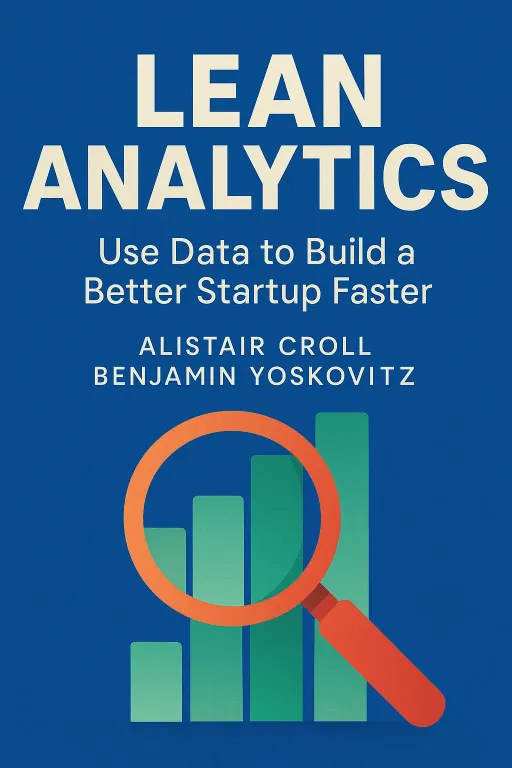
Nova: Exactly. We're pulling insights from two foundational texts that have shaped how many successful companies operate: "Lean Analytics" by Alistair Croll and Benjamin Yoskovitz, and "Trustworthy Online Controlled Experiments" by Ron Kohavi, Diane Tang, and Yu Xu. These aren't just academic tomes; they're the practical playbooks that have empowered countless teams to build things that actually matter, by really understanding their users.
Atlas: They're widely recognized authorities, aren't they? Giving people a real framework to go beyond gut feelings.
Nova: Absolutely. They provide that rigorous, practical backbone for anyone who wants to build something lasting. And today, we're exploring how to transform raw data into actionable insights that drive product and growth, ensuring every decision is not just "data-driven" but "data-wise."
Atlas: Today we'll dive deep into this from two perspectives. First, we'll explore how to find your true North with the right metrics, then we'll discuss how to test those assumptions rigorously, ensuring your data compass is always pointing towards real growth.
The Data Compass: Navigating Growth with the Right Metrics
SECTION
Nova: So, let's start with that compass analogy. Data can be your most powerful navigational tool, but only if you know how to read it. If you're looking at a map of the stars when you need a street map, you're just going to get lost, right?
Atlas: That makes perfect sense. But how many of us, or how many product teams out there, are actually looking at the wrong map? Or worse, staring at a dashboard with a thousand blinking lights, feeling completely overwhelmed?
Nova: Oh, too many. This is where "Lean Analytics" really shines. It guides you through identifying the metrics for your business stage. Think about a new social app. In its early days, the team might obsess over total downloads. "We have a million downloads!" they'd cheer. Sounds great, right?
Atlas: It sounds like a huge win! That's the kind of number you'd put in a press release.
Nova: Exactly. But what if those million people downloaded the app once, opened it, and never came back? That's what we call a "vanity metric." It inflates your ego but tells you nothing about actual product-market fit or sustained engagement.
Atlas: So you’re saying that big, flashy number is essentially meaningless if it doesn't translate into actual user behavior. How do you shift that focus? What are the metrics then?
Nova: The right metrics are the ones that reflect that lead to value. For that social app, instead of total downloads, they should be looking at daily active users, how many messages are sent per user, how many photos are shared, or user retention rates. These are what we call "actionable metrics" or "growth metrics." They tell you if people are actually getting value and coming back for more.
Atlas: That's a great distinction. It's like a doctor diagnosing a patient – you don't just look at their weight; you look at blood pressure, heart rate, cholesterol, specific vital signs relevant to their health.
Nova: Precisely. And what's fascinating is how a deeper understanding of a single, often overlooked data point can reveal a significant opportunity for user engagement. For instance, that social app might notice that users who within the first 24 hours are 50% more likely to still be active after a month.
Atlas: Whoa. That's a huge insight from what sounds like a tiny, specific action. So, then, the "right" metric isn't just about what's obvious; it’s about what unlocks understanding of deeper user behavior.
Nova: Exactly! It's about finding those trigger points, those moments of truth in the user journey. It allows you to focus your efforts. Instead of trying to optimize a hundred things, you might focus intensely on making it super easy and delightful for new users to upload a profile picture. Suddenly, your growth strategy becomes incredibly clear and impactful.
Atlas: So, for our listeners, especially those building new products or trying to cultivate a loyal user base, what's a tiny step they can take this week? To avoid getting overwhelmed by all the numbers?
Nova: Start small, focus on clarity. Choose one key user action, like "first login" or "completing onboarding," and identify the top three metrics you'll track to understand its performance this week. Just three. Not thirty. Let the numbers tell their story. Don't be overwhelmed by data; start small, focus on clarity, and let the numbers tell their story.
Trustworthy Experiments: Building Sound Decisions with A/B Testing
SECTION
Atlas: Okay, so we've got our compass, pointing us towards the right metrics. But wait, Nova, once we we have the right metrics, how do we know our changes are actually moving them in the right direction, and not just by chance or some external factor?
Nova: Excellent question, Atlas. This is where "Trustworthy Online Controlled Experiments" comes in, and it's absolutely crucial for any "Architect" or "Cultivator" who wants to build something with solid foundations. It's about ensuring your data-driven decisions are truly sound, not just based on assumptions.
Atlas: I imagine a lot of our listeners, especially those in high-stakes tech environments, might think they're doing A/B testing, but are they doing it?
Nova: That's the million-dollar question. Many teams run experiments, but without a rigorous framework, they can draw incorrect conclusions. Imagine a large e-commerce platform. They decide to change their checkout flow, hoping to increase conversions. They launch the new design, and sales go up for a week. "Eureka!" they think, "The new design is a success!"
Atlas: That sounds like a win. What's the problem?
Nova: The problem is, it might have been Black Friday week. Or maybe a competitor ran out of stock. Or maybe they just launched a huge marketing campaign. Without a properly designed A/B test, they can't isolate the impact of their new checkout flow. They might be attributing a temporary sales bump to the wrong cause, leading to costly strategic missteps down the line.
Atlas: So, basically, they're making decisions based on correlation, not causation. That's a classic mistake. How does this book help them avoid that?
Nova: It provides a rigorous framework. It emphasizes having a clear hypothesis, setting up control and treatment groups that are truly comparable, ensuring your sample size is large enough, and understanding statistical significance. It's like a chef testing a new recipe. You wouldn't just cook it once and declare it better. You'd make the old recipe, the new recipe, have a blind taste test with enough people, and ensure any preference isn't just random.
Atlas: That's a great analogy. It simplifies something that can sound incredibly complex. So, for someone building a new feature or optimizing an existing one, what's the core principle they should internalize from this?
Nova: The core principle is that every change you make is an experiment. Treat it as such. Don't just deploy and hope. Define what success looks like you launch, design a fair test, and then interpret the results with humility and rigor. This isn't about being slow; it's about being. It's about building verifiable evidence, not just making educated guesses.
Atlas: That's actually really inspiring. It means you're not just throwing things at the wall to see what sticks; you're intentionally cultivating growth based on solid ground. It helps you trust your vision because you know your decisions are backed by truth.
Nova: Exactly. It's the difference between building a house on sand versus bedrock. The "Architect" in you wants that bedrock. And the "Cultivator" wants to know the seeds they plant will actually grow.
Synthesis & Takeaways
SECTION
Nova: So, bringing it all together, we've talked about finding your data compass with the right metrics, and then making sure that compass is calibrated and trustworthy through rigorous experimentation. It’s a powerful combination.
Atlas: It really is. It moves product and growth discussions from subjective opinions to objective evidence. It’s how you navigate complexity and secure your foundation.
Nova: Absolutely. Data isn't just about numbers; it's the story of user behavior, the narrative of your product's journey. Learning to read that story effectively, and then testing your interpretations rigorously, is crucial for navigating towards sustained growth and avoiding costly assumptions. It makes every strategic decision framework you use so much more powerful.
Atlas: And it sounds like the antidote to that feeling of being overwhelmed by data. Start small, focus on clarity, and let the numbers tell their story.
Nova: Truly. Because a single, often overlooked data point, when properly identified and rigorously tested, can reveal a significant opportunity for user engagement and unlock immense growth.
Atlas: So, for everyone listening, here’s an actionable step for this week: Choose one key user action in your product or service – maybe it's the first login, or adopting a new feature – and identify the top three metrics you'll track to understand its performance. Commit to truly understanding those three metrics.
Nova: Just three. Focus. Clarity. Let those numbers guide your next move.
Atlas: This is Aibrary. Congratulations on your growth!