Micro-Steps for Interpersonal and Personal Flow
Golden Hook & Introduction
SECTION
Nova: We often treat our professional lives like a massive renovation project. We want to tear down the walls, replace the foundation, and install a brand new operating system all in one weekend. But the reality is that the most sustainable, high-impact systems are built on the smallest possible foundations.
Atlas: That hits home. We spend so much energy trying to overhaul our entire workflow or fix a toxic workplace dynamic in one go, only to burn out when the reality sets in. It feels like we are trying to sprint a marathon while wearing lead boots.
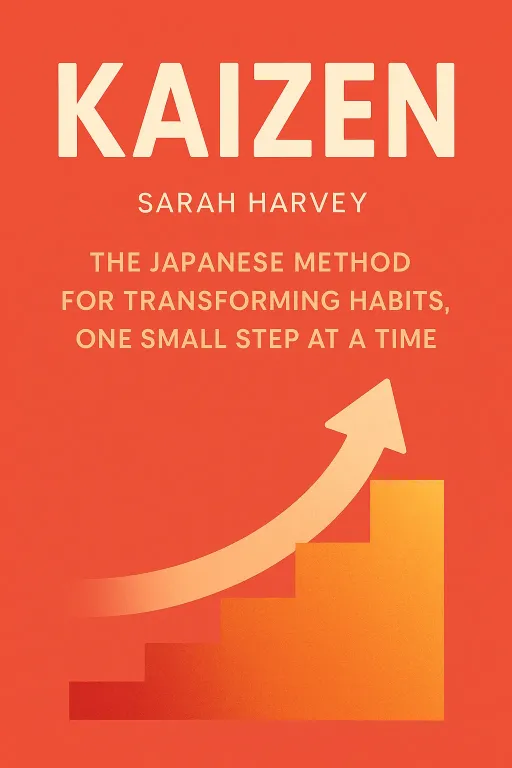
Nova: Exactly. Today we are looking at how to stop that cycle of exhaustion. We are diving into the philosophy of Kaizen as explored by Sarah Harvey, which is all about the power of tiny, non-threatening daily adjustments. And we are pairing that with the sharp, tactical behavioral frameworks from Tessa West in her book, Jerks at Work.
Atlas: I have read both of those. What I find fascinating is that Sarah Harvey really digs into the Japanese roots of Kaizen, moving it from a factory floor efficiency concept into a personal life philosophy. And Tessa West—she is a social psychologist—takes the emotion out of dealing with difficult people by turning those encounters into a diagnostic puzzle. It is essentially turning chaos into data.
Nova: That is the perfect way to frame it. The core of our podcast today is really an exploration of how we can use micro-steps to create massive flow in both our personal productivity and our interpersonal professional relationships.
The Power of Micro-Steps
SECTION
Atlas: Let us start with the Kaizen side of things. I encounter so many people in high-stakes environments who feel like if they are not making a massive, visible change, they are not actually growing. They want the dramatic pivot. Does the research actually support that, or is that just ego talking?
Nova: It is largely ego, and it is also a misunderstanding of how our brains function. Sarah Harvey’s work highlights that our brains are wired to resist large, sudden changes. When you tell yourself you are going to overhaul your entire career or fix your communication style by Monday, your amygdala triggers a fight-or-flight response. You perceive that change as a threat.
Atlas: That explains why I have started a dozen "new systems" that lasted exactly three days. The resistance is physical.
Nova: Precisely. Kaizen works because it bypasses that alarm system. It focuses on such a small, incremental improvement that your brain essentially ignores it. You are not trying to climb the mountain; you are just focusing on the next single step. Harvey talks about the five-minute rule. If you have a task that is causing you friction—maybe it is a messy inbox or a project plan you have been avoiding—you commit to doing it for just five minutes.
Atlas: I am curious about the psychology behind that five-minute commitment. Is it just a trick to get started, or is there a cumulative effect that actually matters?
Nova: It is both. The initial hurdle is almost always the friction of starting. Once you are five minutes in, the "Zeigarnik effect" kicks in—that is the psychological tendency to remember uncompleted tasks better than completed ones. Your brain wants to finish what you have started. But the deeper value is the compounding interest of tiny wins. If you improve your workflow by one percent every day, mathematically, you are significantly better off after a year. It is the opposite of the "all or nothing" mentality.
Atlas: That makes me wonder how that applies to the Strategic Architect mindset. We are obsessed with long-term systems. Does this mean the system should be designed to be small, or that the system should be designed to facilitate small changes?
Nova: It is the latter. A robust system is one that accounts for the fact that you will have low-energy days, high-stress weeks, and unexpected fires to put out. If your system requires you to be at 100 percent capacity to succeed, it is a fragile system. A Kaizen-infused system is designed for the 70 percent days. It builds in the capacity for failure or minor friction, so you never actually stop moving forward.
Atlas: I can see how that would be a relief for anyone in a fast-paced environment. It allows you to maintain momentum without the need for constant, heroic effort. It sounds like you are saying that consistency is actually a more valuable asset than intensity.
Nova: That is the fundamental truth. Intensity is a finite resource; consistency is a renewable one. When you focus on a micro-step—like identifying one recurring minor friction point in your workday, say, a poorly formatted recurring report that wastes ten minutes every Tuesday—and you fix just that one thing, you are not just saving time. You are reclaiming your agency. You are proving to yourself that you can influence your environment.
Managing Friction with Behavioral Frameworks
SECTION
Atlas: Speaking of influencing the environment, let us talk about the other side of the coin. It is one thing to fix a messy desk or a broken process. It is a completely different beast when the "friction point" is a person. That is where Tessa West’s work in Jerks at Work becomes really relevant.
Nova: That is a perfect transition. Because you can have the most efficient, Kaizen-optimized workflow in the world, and it can be completely derailed by a single difficult personality. Tessa West argues that we often make the mistake of personalizing the behavior of difficult colleagues. We try to figure out "why" they are like that, or we try to change them.
Atlas: I have definitely been guilty of that. I have spent hours analyzing why a colleague acts the way they do, thinking if I just understood their motivation, I could fix the dynamic. It sounds like you are saying that is a waste of time.
Nova: West’s approach is to stop trying to be an amateur therapist and start being a professional observer. She provides behavioral frameworks to diagnose the specific type of "jerk" you are dealing with. Is it the "Credit Stealer," the "Bulldozer," or the "Kiss-Up/Kick-Down" type? By labeling the behavior, you depersonalize it. You remove the emotional weight.
Atlas: That is a powerful distinction. It shifts the dynamic from "This person is attacking me" to "This person is exhibiting a specific, predictable behavior pattern." It makes it a strategic puzzle rather than a personal grievance.
Nova: Exactly. And this is where the two concepts—Kaizen and behavioral management—actually merge. When you are dealing with a difficult person, you do not need to "win" the relationship or force a total transformation. You just need to apply a micro-step to the interaction.
Atlas: Give me an example of what that looks like. If I am dealing with a "Credit Stealer," what is the micro-step?
Nova: A micro-step would be a small, non-confrontational adjustment to your communication flow. If you know they tend to jump in and claim your ideas in meetings, your micro-step is to document your ideas in writing before the meeting. Send an email to the team with your proposal, cc’ing the relevant stakeholders. You are not calling the person out; you are simply establishing a paper trail. It is a tiny, administrative action that changes the entire power dynamic of the meeting.
Atlas: That is brilliant because it is low-conflict. It doesn't invite a fight, but it makes it much harder for them to pull that move again. It is a defensive system, not an aggressive one.
Nova: Precisely. And it fits the Kaizen philosophy because it is a small, incremental adjustment to your professional habits. You are not going into the meeting and accusing them of theft; you are just changing your pre-meeting ritual.
Atlas: What about the more chaotic personalities? The "Bulldozer" who just steamrolls everyone? How do you apply a micro-step to someone who doesn't respect boundaries?
Nova: The micro-step there is about managing the medium of communication. If they are a bulldozer in live meetings, your micro-step is to shift the interaction to asynchronous channels whenever possible. You can say something like, "I want to make sure I capture all your feedback accurately, could you send me your thoughts on this via email?" You are not rejecting their input; you are forcing them into a format where they have to be more structured and less aggressive.
Atlas: It is about controlling the environment rather than trying to control the person. I love that. It feels very aligned with the Strategic Architect mindset. We aren't trying to change human nature; we are building systems that minimize the damage that nature can do to our productivity.
Nova: You hit the nail on the head. And notice that neither of these interventions requires a massive confrontation or a dramatic HR intervention. They are small, quiet, tactical moves that protect your mental peace and your output.
Synthesis & Takeaways
SECTION
Atlas: So, we have this two-pronged approach. We have the internal Kaizen, which is about making tiny, non-threatening improvements to our own systems so we don't succumb to the "all or nothing" trap. And we have the external behavioral management, which is about using small, tactical shifts to navigate the difficult personalities that cross our path.
Nova: And the beauty is that they reinforce each other. When you are less stressed because you have managed the difficult people around you using these small, diagnostic tools, you have more mental bandwidth to apply Kaizen to your own work. And when you are more efficient and organized because of your micro-steps, you are less vulnerable to the chaos that difficult people try to inject into your day.
Atlas: It makes me think about the long-term impact. If you do this for a year, you are not just a more productive person. You are a different kind of leader. You are the person who stays calm when everyone else is reacting.
Nova: That is the ultimate goal. It is about building a sustainable, high-impact career that doesn't cost you your sanity. The takeaway for our listeners today is to start right now. Don't try to change your whole life by Monday. Identify one recurring minor friction point in your workday—that one email exchange that always goes wrong, or that one desk clutter that bothers you—and apply a five-minute Kaizen tweak to address it today.
Atlas: I am going to apply this to my meeting prep. My micro-step is going to be sending that pre-meeting agenda and summary to head off the "Credit Stealers" before they even get a chance to speak. It is a simple, five-minute task that changes everything.
Nova: That is a perfect example. It is not a grand gesture. It is a small, surgical strike against friction. And that is how you build mastery. You don't build it through one giant leap; you build it through a thousand tiny, intentional steps.
Atlas: I love that. It takes the pressure off. You don't have to be perfect; you just have to be one percent better than you were yesterday.
Nova: And that is the true secret to flow. It is not about reaching a state of perfection; it is about maintaining a state of motion. When you are in motion, you are adaptable. When you are fixed, you are brittle. These tools—the Kaizen mindset and the behavioral diagnostics—are what keep you in motion.
Atlas: This has been incredibly grounding. It feels like we have moved from the abstract, overwhelming idea of "success" to something much more concrete and achievable.
Nova: That is exactly what we aimed for. Success is not a destination you arrive at; it is the quality of the systems you build to navigate your life. Whether you are dealing with your own productivity bottlenecks or the personalities of your colleagues, the answer is almost always to zoom in, not zoom out.
Atlas: Zoom in, fix the small thing, and keep moving. I think that is a philosophy I can live with.
Nova: It is a philosophy that builds empires, one five-minute task at a time. Thank you for joining us in this exploration today. Remember, the biggest changes often come from the smallest places.
Atlas: Until next time, keep optimizing, keep observing, and keep moving. This is Aibrary. Congratulations on your growth!