The Ancestral Echo: How Trauma Shapes Generations
Golden Hook & Introduction
SECTION
Nova: What if the biggest struggle you face isn't actually yours at all? What if it's an echo from generations past, a whisper of unresolved pain from someone you never even knew?
Atlas: Hold on, are you telling me my chronic procrastination might actually be my great-aunt Mildred's unresolved anxiety about starting new projects? That's quite a twist! I thought it was just my Netflix queue.
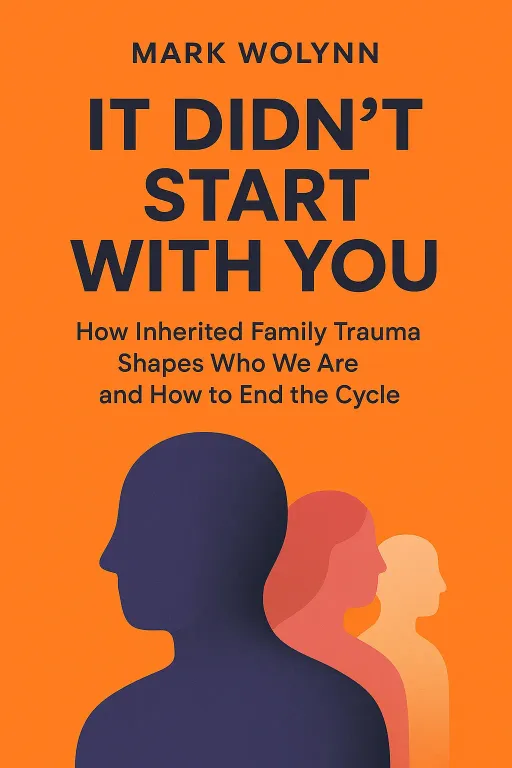
Nova: Exactly! It's a fascinating, and often profoundly liberating, idea. Today, we're diving into "The Ancestral Echo," exploring how trauma can quite literally shape generations. Our journey is inspired by two groundbreaking books: first, "It Didn't Start with You" by Mark Wolynn, and second, "My Grandmother's Hands" by Resmaa Menakem.
Atlas: Mark Wolynn, I've heard that name. Wasn't his work born from a very personal quest?
Nova: Absolutely. Wolynn's journey began with his own debilitating physical symptoms and depression that baffled doctors. He spent years trying to understand why he felt a grief that wasn't his own, why he had a fear of heights despite no personal trauma. His deep dive into family constellations and transgenerational epigenetics, born from that personal struggle, is what led to his revolutionary approach to inherited family trauma. It’s a powerful origin story for a powerful book.
Atlas: That’s a compelling starting point. And Resmaa Menakem’s work, "My Grandmother's Hands," that title alone suggests a different, more embodied approach, doesn't it?
Nova: It does. Menakem, a therapist and bodyworker, brings a crucial somatic perspective. While his book specifically addresses racialized trauma, his insights into how trauma lives in the body and can be transmitted across generations are universally applicable. He offers practical, body-based practices to heal these deep wounds, making the invisible felt and then released. It’s about more than just understanding; it's about doing.
The Invisible Inheritance: How Trauma Echoes Through Generations
SECTION
Nova: So, let's start with Wolynn's core premise: many of our deepest fears, anxieties, and even certain physical symptoms are not personal. They are inherited. They're patterns of trauma passed down through family lines, influencing our lives in invisible ways.
Atlas: That makes me wonder, it's not just about learned behaviors, like a child mimicking a parent's anxiety, but something deeper, almost coded into our very being? How does an inherited pattern actually manifest in daily life for someone who might be listening right now?
Nova: Think of it like this: imagine a recurring theme in your life that doesn't quite make sense. Maybe an inexplicable phobia, a pattern of attracting emotionally unavailable partners, or a constant feeling of not being safe, even when you logically are. Wolynn often cites examples of individuals with phobias that trace back directly to an ancestor's traumatic experience. For instance, a client with an intense, lifelong fear of drowning, despite never having a negative water experience themselves. Through exploration, it was discovered their grandfather had tragically drowned, and that unresolved terror had, in a sense, echoed down the family line.
Atlas: Wow, that's incredible. But also a bit daunting. How do we even begin to identify these invisible threads when they're so subtle? And how can something like a grandfather's drowning manifest as a grandchild's phobia? Is there a scientific basis for this, or is it more purely psychological?
Nova: It’s a brilliant question, and it's where the science is catching up to the lived experience. Without getting too technical, fields like neurobiology and transgenerational epigenetics are offering tantalizing clues. Epigenetics, for instance, suggests that environmental factors, like severe trauma, can actually alter gene expression without changing the underlying DNA. These 'epigenetic tags' can then be passed down, potentially influencing how future generations respond to stress or perceive threat. It doesn't mean you inherit a memory, but you might inherit a predisposition to anxiety or a heightened stress response that mirrors an ancestor's trauma. The body remembers, even if the mind doesn't consciously know why.
Atlas: So you're saying the body holds a memory, or at least a reaction, to something that didn't even happen to directly. That’s profound. It makes me think about those unexplained moments of panic or intense sadness that just seem to come out of nowhere. It could be an echo.
Healing the Echo: Somatic Wisdom and Generational Release
SECTION
Nova: Exactly. And that naturally leads us to the second key idea we need to talk about, which often acts as a powerful counterpoint to simply understanding the inheritance: healing. This is where Resmaa Menakem's work, "My Grandmother's Hands," becomes incredibly vital. He posits that trauma doesn't just reside in our minds; it lives in our bodies, in our nervous systems, even in our very bones.
Atlas: Ah, so it's not just about talking it out, or intellectually understanding the family tree. It's? That would explain why some people can talk about their trauma endlessly but still feel stuck.
Nova: Precisely. Menakem argues that while cognitive understanding is a piece of the puzzle, true release often requires engaging the body. He offers somatic practices – simple, mindful exercises that help us gently connect with and process the sensations of trauma stored within. Think of it like a coiled spring, holding tension from generations of unresolved stress or fear. We can't just wish it away; we need to gently allow it to unwind. While his book focuses on the specific context of racialized trauma, the physiological mechanisms of how trauma is stored and how it can be released through somatic work are universal.
Atlas: For our listeners who are deeply invested in being generational guardians, protecting their children's future, how does this somatic release actually break the cycle? What does it truly mean to 'release their hold' on these inherited burdens? Because I imagine a lot of parents feel a deep drive to ensure their children don't carry the same struggles they have.
Nova: That's a powerful question, and it speaks to the heart of this work. By engaging in these practices, by becoming truly present with and gently releasing the somatic imprints of ancestral trauma, we're not only healing ourselves. We're actively shifting the energetic and emotional legacy that we pass on. Imagine if your ancestors' unresolved anxiety created a subtle, yet constant, tension in your nervous system. By learning to calm and regulate that system through somatic practices, you're not just finding peace for yourself; you're essentially offering a new, calmer blueprint to your children. You're modeling resilience and embodied peace. It’s an act of profound compassion, both for those who came before you and those who will follow.
Atlas: So it's about conscious transformation. It’s about making visible what was invisible, and then using that awareness to physically, mentally, and emotionally create a new path. That’s incredibly empowering. It takes what could feel like a heavy burden and transforms it into an opportunity for profound healing across time.
Synthesis & Takeaways
SECTION
Nova: Absolutely. When we bring together Wolynn's insight into the invisible inheritance and Menakem's wisdom about embodied healing, we realize that true healing often requires looking beyond the individual. It's about acknowledging the burdens carried by our ancestors, feeling their echoes, and then gently releasing their hold.
Atlas: So, the deep question from the book – 'What unexamined family patterns might be influencing your present, and what would it mean to gently release their hold?' – it's not just philosophical, it's a call to embodied action. It's about personal growth that has generational ripple effects.
Nova: Precisely. It’s an invitation to become a conscious steward of your family line. To recognize that your healing isn't just for you; it's a gift to your children, and to their children. It’s about forging your own healthy path, not by ignoring the past, but by integrating it and transforming its echoes into strength.
Atlas: That’s actually really inspiring. It redefines what personal power truly means, extending it beyond the individual self.
Nova: Indeed. It's a journey of profound self-discovery, compassionate protection, and ultimately, liberation.
Atlas: What a powerful thought to leave our listeners with. Thank you, Nova.
Nova: Always a pleasure, Atlas. This is Aibrary. Congratulations on your growth!