Reclaiming Attention in the Digital Age
Golden Hook & Introduction
SECTION
Atlas: If you want to know exactly how much your attention is worth, just look at how much the world is willing to spend to steal it from you for five seconds.
Nova: That is the most terrifying way to start a conversation, but you are absolutely right. We are living in an era where the most valuable commodity on the planet isn't oil or gold anymore. It is the limited, flickering capacity of your own focus.
Atlas: It feels like a losing battle. I look at my screen time report every Sunday, and I swear the numbers are mocking me. It is like a digital tax I am paying on my own life.
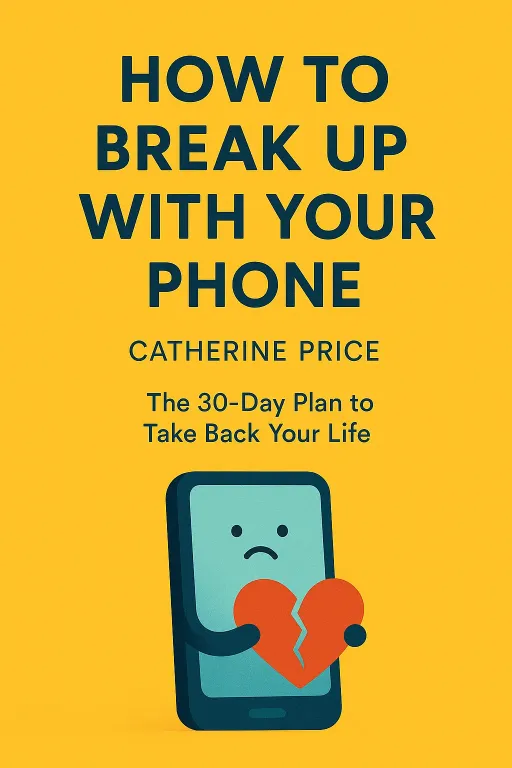
Nova: We are going to deconstruct that tax today. We are looking at two essential books that act as a survival guide for the digital age. First, there is Irresistible by Adam Alter, which pulls back the curtain on how tech platforms are engineered to create behavioral addictions. And then we have How to Break Up with Your Phone by Catherine Price, which explains the neurochemical price we pay for that constant stimulation and, more importantly, how to reclaim our brains.
Atlas: I have heard people talk about these books as if they are just about putting the phone down, but I suspect there is something deeper going on here. It is not just about willpower, is it?
Nova: That is the most important realization we can make. Both Alter and Price argue that the game is rigged. You are not failing because you lack discipline. You are failing because you are playing a game designed by thousands of engineers whose sole job is to keep you playing.
The Architecture of Addiction
SECTION
Atlas: Okay, let's start with Adam Alter and this idea of Irresistible. I have always thought of addiction as something related to substances, like drugs or alcohol. Are we seriously comparing a smartphone to a chemical dependency?
Nova: The science suggests we should. Alter points out that addiction is essentially a compulsive behavior that provides immediate pleasure or relief, despite negative consequences. When you look at platforms like Instagram, TikTok, or even your email inbox, they utilize something called variable reward schedules.
Atlas: Variable reward schedules. That sounds like something I would hear in a psychology lecture. Break that down for me.
Nova: Think of a slot machine. If you pull the lever and you win every single time, you get bored. If you pull it and you never win, you stop playing. But if you pull it and you win sometimes, at random intervals, you become obsessed. You cannot stop pulling the lever because the next one might be the big one.
Atlas: That is exactly what scrolling feels like. I open the feed, nothing interesting. I pull to refresh. Still nothing. I pull again, and suddenly there is a funny video, a friend's update, or a news headline that grabs me.
Nova: Exactly. That pull-to-refresh mechanism is a digital lever. You are gambling with your attention. You are betting that the next scroll will provide that hit of dopamine, that social validation, or that interesting piece of information. Alter argues that this is not an accidental feature of the design. It is the core business model.
Atlas: I can see that. But is it really a problem? I mean, I learn things from my phone. I stay connected. Is the addiction label a bit of an exaggeration?
Nova: That is where the negative consequence part of the definition comes in. Alter details how these loops create a state of constant, low-level anxiety. We are not just checking our phones because we want to; we are checking them because we are afraid of missing out, or because we are seeking the momentary relief that a notification provides. It fragments our experience. We stop being present in the room we are physically standing in because our minds are constantly elsewhere, waiting for the next digital ping.
Atlas: I have felt that. I will be at dinner, and even if my phone is in my pocket, I can feel it buzzing in my brain. It is like a phantom limb. But the tech companies would say they are just giving users what they want. They are providing content we enjoy.
Nova: They are providing content that triggers a biological response. The danger is that we mistake that biological response for genuine satisfaction. It is like eating junk food. Your brain is wired to crave the salt, sugar, and fat because, evolutionarily, those were scarce and vital for survival. Today, that same wiring makes you crave the infinite scroll. You are not enjoying the content; you are just satisfying a craving that the platform created in the first place.
Atlas: That makes me look at my notifications differently. It is not a tool serving me; it is a lure.
The Neurochemical Cost
SECTION
Nova: Precisely. And that leads us perfectly into the work of Catherine Price. If Alter explains the trap, Price explains what happens to the person inside the trap. She focuses on the neurochemistry of attention.
Atlas: I am curious about the biology here. Does constant screen time actually change the structure of our brains, or is it just a temporary distraction?
Nova: It is more than just distraction. Price discusses how our brains are not designed for the level of fragmentation we subject them to. Every time you switch tasks—like checking a text, then an email, then a notification—your brain has to pay a switching cost. It is a cognitive tax. You lose focus, and it takes time to regain that depth.
Atlas: I know that feeling of being "scatterbrained." I will sit down to write a report, and ten minutes later, I am browsing travel sites. I didn't consciously decide to stop working; I just drifted.
Nova: That is the fragmentation of working memory. Price highlights that when you are constantly interrupted, your working memory, which is the mental scratchpad you use to solve problems and hold complex thoughts, gets overloaded. It is like trying to run a high-performance software program on a computer with a broken fan and half the memory capacity. The system slows down, errors occur, and eventually, it crashes.
Atlas: So, when I feel like I am getting dumber or less capable of deep work, it is not just age or stress. It is literally because my brain is being conditioned to operate in these short, shallow bursts.
Nova: That is the reality. Price talks about how we are losing the ability to sustain attention on a single, complex task for extended periods. We are training our brains to be impatient. We are training them to seek the next stimulus before the current one is processed.
Atlas: That is a terrifying thought. If I am training my brain to be impatient, am I permanently losing the ability to focus? Is this reversible?
Nova: The good news is that the brain is neuroplastic. It changes based on how we use it. Price emphasizes that we can retrain our attention, but it requires an active, intentional effort. It is not something that happens by accident or by just hoping you will be more focused tomorrow.
Atlas: I imagine a lot of our listeners are thinking the same thing I am right now: "I want to focus, but my job requires me to be responsive." How do you reconcile the need for deep work with the reality of a connected, digital workplace?
Nova: That is the million-dollar question. Price suggests that we need to stop viewing our devices as neutral tools. They are not neutral. They are persuasive environments. You have to treat them like you would treat a junk food drawer if you were trying to diet. You don't just use willpower to resist the cookies; you remove the cookies from the house.
Atlas: I like that analogy. It moves the problem from "I am weak" to "My environment is poorly designed."
Nova: Exactly. Willpower is a finite resource. You might win the battle against your phone for an hour, but if the phone is sitting right there, buzzing and lighting up, you are eventually going to lose. You are fighting against a system that is designed to win. Instead of fighting, you have to change the terrain.
The Environmental Pivot
SECTION
Atlas: Okay, let's get tactical. If we accept that our environment is the problem, what does a "re-engineered" environment look like? I am not going to throw my phone in the river. I need it.
Nova: You don't need to throw it away. You just need to change your relationship with it. Price offers a very practical, almost clinical approach to this. Start with the notifications. How many of your apps actually need to be able to interrupt you?
Atlas: If I am being honest, almost none of them. Maybe my calendar or a direct message from my family. But the rest? News alerts, social media likes, game updates? That is just noise.
Nova: Turn them off. All of them. If it is not a human trying to reach you in real-time, it does not deserve an interruption. Price argues that most notifications are just bait. By turning them off, you take back control of your attention. You decide when to check the app, rather than the app deciding when to check you.
Atlas: That sounds simple, but I know it will feel like I am missing out on something.
Nova: That is the FOMO speaking. But ask yourself: what is the actual cost of missing that notification for two hours? Usually, it is zero. Nothing happens. The world keeps spinning.
Atlas: Okay, notifications off. That is step one. What is the next layer?
Nova: The bedroom. This is the classic, and perhaps the most effective, environmental change. Charge your phone outside the bedroom tonight.
Atlas: Outside the bedroom? But that is my alarm clock. That is my reading device. That is my wind-down tool.
Nova: That is exactly why it needs to go. If your phone is your alarm clock, it is the first thing you touch in the morning. Before you have even opened your eyes, you are flooding your brain with information, emails, and social media. You are starting your day in a reactive state, not a proactive one. And at night, it is the last thing you see, which disrupts your sleep quality and keeps your brain in a state of hyper-arousal.
Atlas: I see the logic. It is about creating a boundary between the tech world and the sanctuary of rest. If I have to walk to the kitchen to get my phone, I can't just roll over and start scrolling at 2:00 AM.
Nova: And you can't start your day by checking your inbox before you have even had coffee. It forces a pause. It gives your brain a chance to wake up on its own terms.
Atlas: I am thinking about the people who say, "I need to check my phone to make sure there are no emergencies."
Nova: That is a common objection. But let's be realistic. If there is a true emergency, people have ways of reaching you. They can call. The emails and the social media updates can wait until you are actually awake and ready to handle them. The emergency excuse is usually just a justification for the addiction.
Atlas: It sounds like we are talking about creating intentional friction. Right now, it is too easy to use the phone. We need to make it slightly harder to use, so we have to make a conscious choice every time we pick it up.
Nova: That is the core of it. You are adding "friction" to the bad habits and removing it from the good ones. If you want to read more, put a book on your nightstand. If you want to use your phone less, put it in a drawer or in another room. You are designing your life to support your goals, rather than letting the tech companies design your life to support their ad revenue.
Synthesis & Takeaways
SECTION
Atlas: It feels like we have come full circle. We started with the idea that we are being manipulated by these systems, and we are ending with the realization that we have the power to dismantle those systems in our own lives.
Nova: That is the most empowering part. We are not victims here. We are users, and we have the agency to change how we use these tools. It is not about hating technology; it is about respecting the power it has over us and setting boundaries accordingly.
Atlas: I think the biggest takeaway for me is that this is not a "one and done" fix. It is a practice. It is like training for a marathon. You don't just run once and say you are fit. You have to keep showing up, keep setting those boundaries, and keep being mindful of where your attention is going.
Nova: Absolutely. And it starts today. If you are listening to this, here is your challenge. Turn off those non-human notifications. Get them out of your sight. And tonight, charge your phone outside the bedroom. It is a small, quiet act of rebellion, but it is one that will reclaim your mind.
Atlas: I am going to do it. It sounds like a challenge, but honestly, it sounds like a relief. I am tired of the constant pull.
Nova: We all are. And that is the shared human experience of this digital age. We are all trying to figure out how to live in a world that is designed to distract us. But the more we talk about it, the more we realize we are not alone, and we can choose a different path.
Atlas: It has been a pleasure diving into this with you, Nova. This is exactly the kind of conversation I think we all need to have more often.
Nova: I agree. It is about reclaiming the most precious thing we have. Thank you for listening, and we will see you in the next one.
Atlas: This is Aibrary. Congratulations on your growth!