Unmasking Influence: The Hidden Levers of Human Behavior.
Golden Hook & Introduction
SECTION
Nova: What if I told you that most of what you think about influencing people is fundamentally wrong? That the real levers aren't about charisma or raw power, but about something far more subtle, and frankly, a bit sneaky?
Atlas: Oh, I like that. 'A bit sneaky.' You've got my attention, Nova. Because when I hear 'influence,' my brain immediately goes to slick sales tactics or political maneuvering. But you're saying there's a deeper game being played?
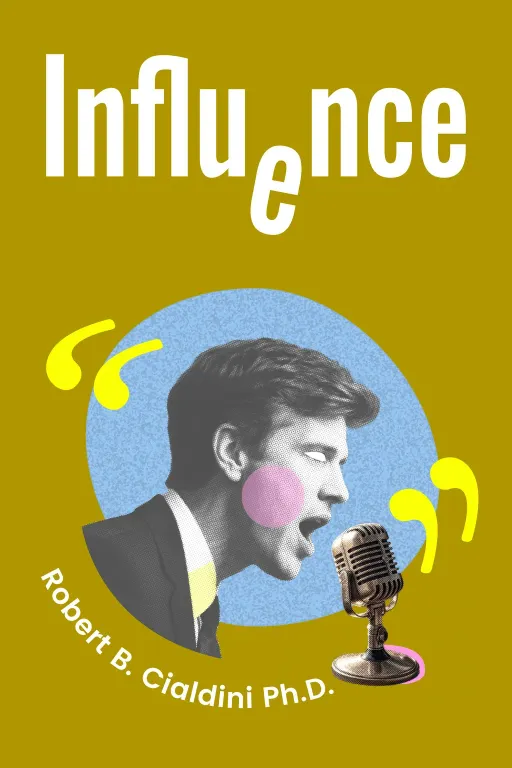
Nova: Absolutely. Today, we're cracking open two seminal works that peel back the layers on human decision-making. First, Robert Cialdini's game-changing book, "Influence: The Psychology of Persuasion." And then, we'll dive into Richard H. Thaler and Cass R. Sunstein's equally groundbreaking "Nudge." What's fascinating about Cialdini is that he didn't just theorize; he spent years going 'undercover' as a salesperson, a fundraiser, and an advertiser. He lived and breathed influence from the inside out to truly understand its mechanics before putting pen to paper.
Atlas: Wow, that’s actually really inspiring. So he wasn't just an academic observing from afar; he was in the trenches. That gives his insights a lot of weight.
Nova: Exactly. And his deep dive revealed universal principles that operate whether we realize it or not. So, let’s start there, by unmasking some of these hidden levers that shape our choices every single day.
The Six Pillars of Persuasion: Cialdini's Influence Principles
SECTION
Nova: Cialdini identified six universal principles of influence. Think of them as the fundamental psychological shortcuts our brains use to make decisions. The first, and perhaps most powerful, is Reciprocity. This is the ingrained human tendency to want to return a favor.
Atlas: So you're saying if someone does something nice for me, I feel compelled to do something nice back? That sounds almost too simple.
Nova: It is simple, but incredibly powerful and often unconscious. Think about it: Have you ever been given a free sample in a store? Or received a small, unsolicited gift from a charity, like address labels?
Atlas: Oh, I get those address labels every year! I never asked for them, but then I feel… a little bad if I don't donate. Even if I don't use the labels.
Nova: Exactly! That's reciprocity in action. The Hare Krishnas mastered this by giving people a flower before asking for a donation. You didn't ask for the flower, but now you feel a subtle, almost imperceptible social obligation. It’s hardwired into us. The cause is the unsolicited gift, the process is the feeling of obligation, and the outcome is often compliance.
Atlas: But wait, isn't that just manipulation? How does a strategist or an ethical leader use this without feeling like they're just tricking people?
Nova: That’s a crucial question, Atlas. It's about understanding the mechanism, not exploiting it. Ethical application means genuinely providing value first, not just a token to extract something later. It’s building goodwill, which fosters trust and collaboration. Now, another big one is Social Proof. We look to others to determine appropriate behavior, especially when we're uncertain.
Atlas: So it's like seeing a restaurant packed and assuming it's good, even if you don't know why, or if you've never eaten there before?
Nova: Precisely! Or think about canned laughter on TV shows. We hear others laughing, so we assume it’s funny, and we're more likely to laugh ourselves. It’s why testimonials are so powerful, or why we trust products with many positive reviews. The more people doing something, the more correct it feels. The cause is the observation of others, the process is internalizing their behavior as correct, and the outcome is often conformity.
Atlas: I can see that. That makes me wonder about the 'limited time offer' emails I get. Is that another one of these?
Nova: That's Scarcity. Things that are rare or difficult to obtain are perceived as more valuable. "Only a few left!" or "Limited-time deal!" creates a sense of urgency. We fear losing out on something, so we act faster. The cause is the perceived limited availability, the process is the heightened desire due to potential loss, and the outcome is a quicker decision.
Atlas: But how do these principles play out when you're trying to lead a team or make a long-term strategic decision, not just sell something quickly? Because stability and lasting impact are what really drive me.
Nova: That’s where the ethical application becomes paramount. These aren't just sales tricks; they are insights into human psychology. For a strategist, understanding scarcity means framing opportunities not just in terms of gain, but also in terms of potential loss if a strategic window closes. For leadership, social proof is about cultivating positive examples and shared successes to inspire collective action. It's about creating an environment where desired behaviors are visible and celebrated.
Nudging Choices: Behavioral Economics and Libertarian Paternalism
SECTION
Nova: And that naturally leads us to the second key idea we need to talk about, which often acts as a subtler, yet equally powerful, counterpoint to Cialdini's direct persuasion: the concept of 'Nudge' from Thaler and Sunstein. This isn't about direct persuasion; it's about architecture—designing choices.
Atlas: Okay, so it’s less about convincing someone, and more about setting up the environment so they naturally gravitate towards a certain choice? That’s interesting. You mentioned 'libertarian paternalism' earlier. That sounds like a contradiction in terms. What does that actually mean?
Nova: It really does sound like an oxymoron, doesn't it? But it's brilliant. 'Paternalism' implies guiding people towards what's good for them, while 'libertarianism' means preserving their freedom of choice. So, 'libertarian paternalism' means influencing choices in a way that makes people better off, as judged by themselves, without restricting their freedom to choose otherwise.
Atlas: Can you give an example? Because it still feels a bit theoretical.
Nova: Absolutely. Think about organ donation. In many countries, you have to actively opt-in to be an organ donor. Participation rates are often low. But in countries like Austria, the default is opt-out: you're automatically a donor unless you specifically say no. The result? Organ donation rates skyrocket. The cause is a simple change in the default, the process is people's natural tendency to stick with the default, and the outcome is a dramatic increase in life-saving donations, all while preserving the freedom to opt-out.
Atlas: Wow, that’s actually really compelling. That’s a huge impact from such a small change. But isn't that still a form of manipulation, even if it's for their 'own good'? Where’s the line for ethical leadership when you're essentially designing people’s choices?
Nova: That's the core ethical tension, and it's why this concept resonates so much with someone focused on ethical leadership. Thaler and Sunstein argue that choice architecture is unavoidable. Whether we realize it or not, every environment we create—a website, a cafeteria, a workplace—has a default, an order, a framing. The question isn't we influence, but we influence. Is it transparent? Is it easy to opt-out? Is it genuinely beneficial for the individual and society?
Atlas: That makes sense. So, for someone trying to influence long-term organizational behavior, how do you design a 'nudge' without feeling like you're tricking people? Like, how do you get people to save more for retirement without forcing them?
Nova: You make saving the default, for example, for new hires, with an easy, one-click opt-out. Or, for healthy eating, you place the fruits and vegetables at eye-level in the cafeteria, making them more salient and accessible than the less healthy options, which are still available, just less prominent. It's about making the desired choice the easiest, most frictionless path, rather than relying on willpower or active decision-making alone.
Synthesis & Takeaways
SECTION
Nova: So, bringing Cialdini and Nudge together, we see that effective, ethical influence isn't just about compelling arguments or charismatic speeches. It's a dual approach: understanding the direct psychological triggers that Cialdini illuminated, and then thoughtfully designing environments, as Thaler and Sunstein showed, to gently guide choices.
Atlas: So basically you're saying it's about understanding human nature deeply, to both speak to it directly and subtly shape the environment, all while respecting autonomy. It’s about building stability and lasting impact, not just short-term wins. That’s a powerful toolkit for a strategist.
Nova: Exactly. It's about leading with integrity, understanding the profound impact of both your direct communication and the structures you create. It’s about recognizing that every interaction, every system, is an act of influence, whether intentional or not.
Atlas: That gives me chills. Every decision, every interaction... it’s all a form of influence. It really makes you think about responsibility.
Nova: Right? It’s not about manipulation; it's about understanding the subtle forces that shape human choices. Without this insight, your attempts to lead or persuade might fall flat, or worse, be perceived as inauthentic. So, for our tiny step this week: Observe a recent decision you or someone else made. Can you identify one of Cialdini's principles or a 'nudge' that might have been at play?
Atlas: And as you observe, ask yourself: was it truly a free choice, or was something subtle guiding the hand? How does that change your perspective on influence and ethical leadership?
Nova: This is Aibrary. Congratulations on your growth!