Unlocking Persuasion: The Science of Influence
Golden Hook & Introduction
SECTION
Nova: Atlas, I'm going to give you two words, and I want you to tell me the first thing that comes to mind, a gut reaction. Ready?
Atlas: Oh, I love a good word association game! Lay it on me.
Nova: Persuade.
Atlas: Persuade... hmm. My first thought is actually 'salesperson,' but then immediately after that, it's 'manipulation.' Like, there's a fine line there, right?
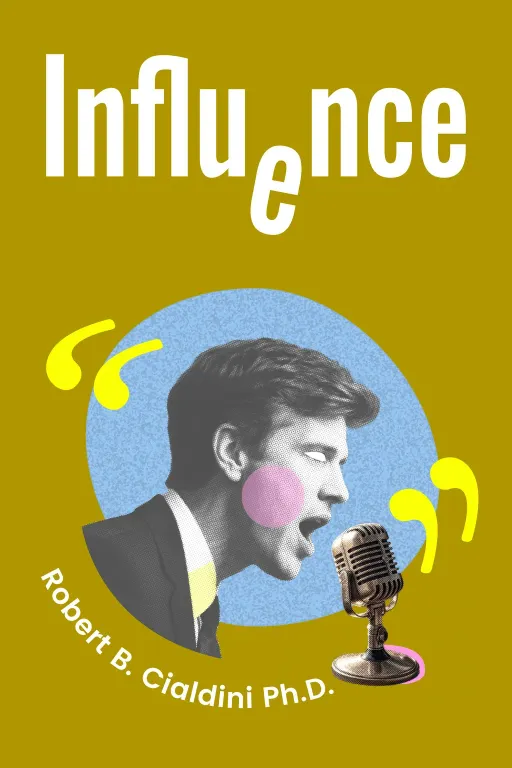
Nova: There absolutely is a fine line, and that's exactly what we're dissecting today, but from a deeply scientific perspective. We're diving into the brilliant mind of Robert Cialdini and his seminal works, and its powerful follow-up,.
Atlas: Ah, Cialdini! I've heard that name whispered in the halls of marketing and psychology. He's like the Gandalf of getting people to say 'yes,' isn't he?
Nova: He really is, but with a Ph. D. in psychology and decades of rigorous research. Cialdini actually spent years undercover, immersing himself in various influence professions—car sales, fundraising, marketing—to understand how persuasion truly works in the wild. His work isn't just theory; it's distilled wisdom from the trenches. It's been called one of the most important business books ever written, but its insights extend far beyond the boardroom.
Atlas: That's fascinating! So he wasn't just theorizing; he was actively observing and participating to figure out the real levers. I mean, who better to teach us about persuasion than someone who's seen it all firsthand?
Nova: Exactly. And what he uncovered isn't about being slick or aggressive; it's about understanding fundamental human psychology. Today, we're going to unpack his six universal principles of influence, which are essentially the hidden code behind why we say 'yes.' Then, we'll journey into the concept of 'pre-suasion' – the subtle art of setting the stage for influence you even open your mouth.
The Six Universal Principles of Influence
SECTION
Nova: So, let's jump straight into the heart of it: Cialdini's six universal principles. These are the psychological shortcuts our brains use to make decisions, and once you know them, you see them everywhere. The first is Reciprocity.
Atlas: Reciprocity. That sounds like 'I scratch your back, you scratch mine,' right?
Nova: Pretty much, but it's more powerful than just a tit-for-tat. It's an ingrained human tendency to feel obligated to return a favor. Think about those free samples at the grocery store. You take a little piece of cheese, and suddenly, you feel a subtle pressure to buy the whole block.
Atlas: Oh, I’ve definitely fallen for that! Or when someone sends you a holiday card, and you feel like you to send one back, even if you don't really know them that well. It's like an invisible contract.
Nova: It is! And it's incredibly powerful because it taps into our social programming. Another one is Commitment and Consistency. Once we've made a small commitment, even verbally, we feel a strong internal and external pressure to behave consistently with that initial commitment.
Atlas: So, if I say I'll help you move one box, I'm more likely to end up helping you move your entire apartment? That sounds dangerous.
Nova: Precisely! Or think about signing a petition for a cause you believe in. That small act of signing makes you more likely to donate money or volunteer later because you've publicly committed to that stance. Our desire to appear consistent to ourselves and others is a huge motivator.
Atlas: That makes sense. Nobody wants to look flaky or like they can't stick to their word. Okay, what's next?
Nova: Social Proof. This is simply the idea that we tend to do what we see other people doing, especially when we're uncertain. If everyone else is doing it, it must be the right thing to do, right?
Atlas: Like seeing a long line outside a restaurant and assuming it must be amazing, even if you've never heard of it. Or reading online reviews before buying anything.
Nova: Exactly! Or those 'best-seller' lists. We assume if a book is a best-seller, it must be good, because so many others have validated it. It's herd mentality, but it's a deeply ingrained part of our social learning. Then there's Authority. We tend to defer to experts or those in positions of power.
Atlas: This one feels pretty obvious. If a doctor tells me to take a certain medication, I'm probably going to take it, even if I don't fully understand the science behind it.
Nova: Right. Think about how many commercials feature actors in lab coats. They're borrowing that perceived authority. Cialdini found that even symbols of authority, like titles or uniforms, can trigger this response. It's why we're often more likely to follow instructions from someone in a uniform, even if they have no actual authority over us.
Atlas: That's kind of scary when you think about it. How easily we can be swayed by just the of expertise.
Nova: It is, which is why understanding these principles is so crucial for self-defense against unwanted manipulation. The fifth principle is Liking. We're more likely to be persuaded by people we like.
Atlas: This one seems pretty straightforward. I'm definitely more likely to buy something from a friend than a stranger.
Nova: Absolutely. But liking isn't just about friendship. Cialdini identified factors that increase liking: physical attractiveness, similarity, compliments, and cooperation. That salesperson who finds common ground with you, compliments your taste, or seems to be 'on your side' against the 'tough manager' is leveraging liking.
Atlas: So, when a recruiter subtly mentions they also went to my university, that's not just small talk; it's a deliberate influence tactic?
Nova: Potentially! It builds rapport, fostering that sense of similarity and liking. And finally, Scarcity. Things are perceived as more valuable when they are less available.
Atlas: 'Limited-time offer!' 'Only three left in stock!' That kind of thing?
Nova: Precisely. That sense of urgency, the fear of missing out, drives us to act. It's why collectors pay exorbitant prices for rare items, or why 'flash sales' are so effective. When something is scarce, we assign it higher value and are more motivated to acquire it. These six principles, Atlas, are not obscure psychological tricks; they are deeply woven into the fabric of human interaction.
Atlas: Wow, that’s actually really powerful. It makes me think about every interaction differently now. It’s like Cialdini handed us the decoder ring for human behavior.
Nova: He really did. And the beauty is, once you recognize them, you can use them ethically to communicate more effectively, or you can recognize when they're being used you, allowing you to make more informed decisions. It's about conscious influence.
Pre-Suasion: Setting the Stage for Receptivity
SECTION
Nova: But Cialdini didn't stop there. He realized there was an even more fundamental layer to influence, something that happens any of these six principles are even deployed. This led to his follow-up book,.
Atlas: Pre-suasion? So, it's like setting the mood before you ask for a favor? Like, making sure I'm in a good frame of mind before you hit me with the big request?
Nova: That's a great analogy, but it goes much deeper than just mood. Pre-suasion is about orchestrating attention. It's about what you do or say your message to make your audience unusually receptive to it. Cialdini calls it creating a 'privileged moment' for your message.
Atlas: Creating a 'privileged moment'? That sounds a bit mystical. Can you give me an example?
Nova: Absolutely. Imagine a furniture store that wants to sell expensive sofas. Before the salesperson even mentions the price or features of a particular sofa, they might ask you, 'When you're buying furniture, what's most important to you: comfort or price?'
Atlas: Okay, so if I say 'comfort,' then I'm primed to value comfort more, and the expensive, comfy sofa will seem more appealing?
Nova: Exactly! You've been pre-suaded. Your attention has been directed to comfort, making you more likely to notice and appreciate the comfort features of the high-end sofa, and less sensitive to its high price. The critical point is that the question itself shapes your receptivity the sales pitch even begins.
Atlas: That’s wild. So it's not about you say, but you say it, and what you make people think about you say it. It’s like a mental warm-up act.
Nova: Precisely. Another classic example Cialdini uses is from a study where people were asked a question in two different settings. In one setting, they were shown pictures of clouds right before being asked about their financial risk tolerance. In another, they were shown pictures of money. What do you think happened?
Atlas: Well, if they saw clouds, maybe they felt more 'up in the air' or uncertain, so they'd be less financially risky. And money would make them think about wealth, so they'd be more open to risk?
Nova: Almost! When shown clouds, people were more likely to choose an option related to 'security.' When shown money, they chose 'wealth.' The subtle visual cue, completely unrelated to the actual question, primed their minds and steered their responses. They weren't even aware it was happening.
Atlas: That’s actually really inspiring. It’s like the ultimate chess game for the mind. It makes me wonder about all the subtle cues we're exposed to every day that shape our decisions without us even knowing it.
Nova: That's the power of pre-suasion. It highlights how much of our decision-making happens beneath the surface of conscious thought. It’s not about tricking people, but about understanding the cognitive pathways that make someone more open to your message. If you want to persuade someone to be more adventurous, you might start by talking about exploration or novelty. If you want them to be more cautious, you might start by talking about safety.
Atlas: So, it's about congruence. You set the stage with a concept or an idea that aligns with the message you're about to deliver. It creates a mental runway for what's coming.
Nova: Beautifully put. It's about harnessing the power of focused attention. Whatever we focus on expands in our minds, becoming more prominent and influencing our subsequent judgments and actions. This means that the person who successfully pre-suades doesn't necessarily change minds; they change the in which the message is received.
Atlas: This is next-level insight. It moves beyond just the content of your argument and into the context. It’s a shift from 'what to say' to 'what to say you say it.'
Nova: Exactly. And it explains why two identical messages can have vastly different impacts depending on the setup. It's about creating that 'privileged moment' where your audience is already predisposed to agree with or be interested in what you're about to share.
Synthesis & Takeaways
SECTION
Nova: So, whether we're talking about the six principles of influence or the profound insights of pre-suasion, Cialdini's work really gives us a masterclass in human psychology. It’s not just about selling; it’s about understanding the very fabric of how we interact and decide.
Atlas: It really is. It makes me think about how much of our daily lives are shaped by these subtle forces, and how empowering it is to finally have a language for them. It helps you become a better communicator, but also a more critical receiver of information.
Nova: Absolutely. It’s about more authentic interactions, because once you understand these mechanisms, you can use them ethically to build connection, or you can defend yourself against manipulation. It shifts the power dynamic from being a passive recipient to an active, informed participant.
Atlas: So, the deep question Cialdini's work leaves us with is: how can we use this knowledge not just to get what we want, but to foster more genuine connections and create win-win situations? Because true influence, I think, isn't about getting someone to do something they don't want to do, but helping them see why doing it is in their best interest.
Nova: And that's the profound insight, Atlas. It's about recognizing that influence is a neutral tool. Its impact depends entirely on the intention behind its use. Knowing the code allows you to build, not just dismantle.
Atlas: That’s actually really inspiring. It frames persuasion not as a dark art, but as a deep understanding of human nature.
Nova: Indeed. And it encourages us to be more mindful, both in how we communicate and in how we interpret the messages we receive every day.
Atlas: This is Aibrary. Congratulations on your growth!