Unlocking Customer Behavior: The Science of Persuasion in Digital Marketing
Golden Hook & Introduction
SECTION
Nova: Atlas, I was reading something recently that said, if you want to influence someone, you don't actually need to change their mind. You just need to change their environment.
Atlas: Whoa. That’s a bit unsettling, isn't it? As if our decisions aren’t entirely our own. It’s like saying the chessboard is rigged, not the players.
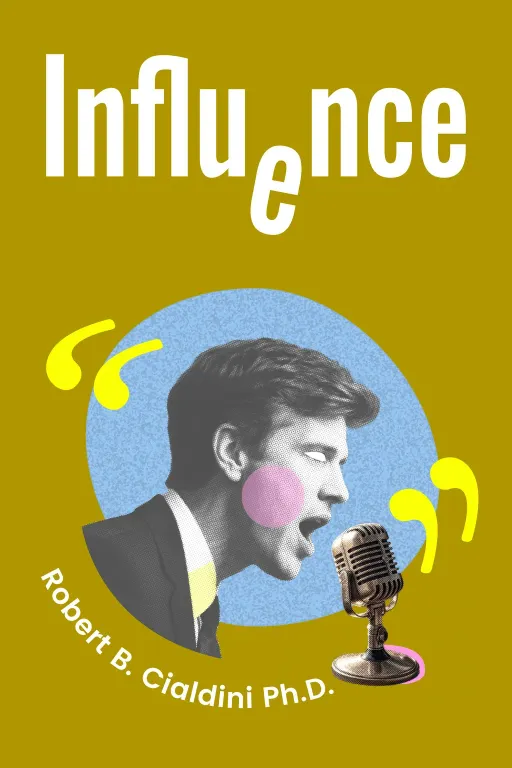
Nova: Exactly! And that's the fascinating, sometimes unsettling, truth at the heart of today's discussion. We’re diving into the science of persuasion, specifically how two seminal works, Robert Cialdini's "Influence: The Psychology of Persuasion" and Richard Thaler and Cass Sunstein's "Nudge: Improving Decisions About Health, Wealth, and Happiness," unlock the secrets of customer behavior in the digital age.
Atlas: Cialdini, of course, is a heavyweight in the field, a professor of psychology and marketing at Arizona State University for decades. His work isn't just academic; it's a culmination of years of undercover research, observing influence tactics in real-world settings, from sales organizations to fundraising groups. He literally embedded himself to understand how people are persuaded.
Nova: He did. And that deep, observational approach is precisely why "Influence" became such a groundbreaking book, widely acclaimed across business, psychology, and even pop culture for demystifying persuasion. It’s been translated into dozens of languages and is considered a foundational text for anyone looking to understand human decision-making.
Atlas: And then there's "Nudge," which took home the Nobel Prize for Economics for Thaler! That’s not just a book; it’s a paradigm shift.
Nova: Absolutely. These books, while distinct, converge on a powerful idea: that understanding the fundamental wiring of human psychology allows us to move beyond superficial marketing tactics to genuinely connect with and persuade customers. It’s about turning mere clicks into meaningful conversions by tapping into deep-seated human tendencies.
Cialdini's Six Principles of Influence
SECTION
Nova: So, let's start with Cialdini's six universal principles of influence. These aren't just theories; they're the psychological bedrock of why we say 'yes.' The first is reciprocity.
Atlas: Oh, I know this one! It’s the idea that if you do something for me, I feel obligated to do something back for you. Like when a charity sends you a small gift, even unsolicited, and suddenly you feel a pang of guilt if you don't donate.
Nova: Precisely. In digital marketing, it could be offering a free ebook, a valuable webinar, or a personalized consultation. The subconscious message is, "We've given you something of value; now, perhaps, you'll consider our offer."
Atlas: That makes sense. It’s a very human tendency, that unspoken rule of 'give and take.' But what about commitment and consistency? That sounds like something I struggle with on New Year's resolutions.
Nova: Ha! Well, Cialdini identifies that once we've made a commitment, especially publicly, we feel a strong pressure to behave consistently with that commitment. So, a tiny 'yes' can lead to a bigger 'yes.'
Atlas: So, getting someone to sign up for a free trial, even if it's just for a day, makes them more likely to subscribe for the long term? Because they've already committed to it?
Nova: Exactly. Or even asking someone to click a 'learn more' button. That small, initial action creates a psychological investment. The next is social proof. This is where we look to others for cues on how to behave.
Atlas: Like when you see a restaurant with a huge line, and you think, 'It must be good!' Even if you don't know what kind of food they serve.
Nova: That's the one! In digital marketing, it's testimonials, case studies, user reviews, the number of followers on social media. It tells potential customers, "Look, others trust us, others like us, you can too." It’s incredibly powerful because it leverages our innate desire to conform and be part of the group.
Atlas: I totally know that feeling. If I see a product with thousands of five-star reviews, even if I'm skeptical of reviews in general, it definitely sways me. It’s like, 'all these people can't be wrong, can they?'
Nova: It’s a very strong signal. Then we have authority. This principle highlights our tendency to trust and follow the lead of credible experts.
Atlas: So, doctors recommending a certain toothpaste, or a financial guru endorsing an investment strategy. We defer to those we perceive as having superior knowledge or position.
Nova: Think about certifications displayed on a website, expert endorsements, or even using academic language. It lends an air of legitimacy and trustworthiness. The next principle is liking. We’re simply more likely to be persuaded by people we like.
Atlas: This is why influencers are such a big deal. They build a personal connection, a sense of friendship with their audience, and then their recommendations feel more like advice from a friend than an advertisement.
Nova: Absolutely. It's about building rapport, showing empathy, and finding common ground. It's why brands use relatable spokespeople or engage in community building. And finally, scarcity. We value things more when they are perceived as limited or hard to get.
Atlas: "Limited time offer!" "Only 3 left in stock!" "Exclusive access!" That creates urgency, that fear of missing out.
Nova: Exactly that. Scarcity drives action because we inherently fear loss more than we desire gain. These six principles, when applied ethically, allow marketers to craft messages and experiences that resonate deeply, moving beyond superficial engagement to genuine conversion.
Atlas: It’s almost like Cialdini mapped out the fundamental operating system of human decision-making. But it makes me wonder, how do you use these ethically? Because it feels like a lot of these could be used for, well, not-so-great purposes.
Nova: That's the critical distinction, Atlas. Cialdini himself emphasizes ethical application. The goal isn't manipulation, but rather to facilitate a decision that genuinely benefits the customer, aligning their needs with your offering. It’s about understanding human psychology to better serve, not to trick.
Thaler and Sunstein's 'Nudge' Theory
SECTION
Nova: And that actually leads us perfectly into our second core idea, the concept of 'nudge,' or 'choice architecture,' from Thaler and Sunstein. While Cialdini focuses on influence, Thaler and Sunstein explore how subtle interventions can individuals toward better decisions.
Atlas: So, it's less about a direct push and more about arranging the environment so we naturally lean one way or another?
Nova: Exactly. Think about it this way: a traditional approach might try to you to eat healthier. A 'nudge' would be placing the fruit at eye-level in the cafeteria and putting the less healthy options in less accessible spots. No one is telling you what to do, but the environment is gently nudging you.
Atlas: That’s fascinating. So it's about designing choices. I’m curious, how does this apply to someone in a high-stakes tech environment, where user experience is everything?
Nova: In digital marketing, this is incredibly powerful for optimizing user experience and conversion paths. Imagine a sign-up form. A 'nudge' might be pre-selecting a checkbox for "Yes, I want to receive updates" because most users leave default options as they are. Or, if you're trying to encourage a subscription, presenting the annual plan as the default, with a slightly highlighted 'most popular' tag.
Atlas: Oh, I see that everywhere! When I'm signing up for software, the annual plan is often the one that's pre-selected, or it has a little badge saying "Save 20%!" It influences you without explicitly telling you what to do.
Nova: Right. Another classic example is organ donation. In some countries, you have to actively opt-in to be an organ donor. In others, you’re automatically opted-in unless you choose to opt-out. The default option, the 'choice architecture,' has a massive impact on donation rates, often increasing them significantly. It’s not about coercion; it’s about making the desired choice the easiest one.
Atlas: That’s a powerful illustration. It’s like the designers of the system are architects, and they’re building pathways for our decisions. So, for marketers, this means carefully considering the layout, the defaults, the framing of choices on their websites or in their apps.
Nova: Precisely. It’s about understanding that every design decision, every default setting, every way you present information, is a 'nudge.' It’s guiding behavior, whether you intend it to or not. The ethical leader, the strategic innovator, uses this knowledge to create choices that are beneficial for both the customer and the business, fostering trust and sustainable growth.
Atlas: So basically, you're not just selling a product; you're designing an experience that subtly guides the user towards making a decision that, ideally, they'll be happy with down the line. It's about making the 'right' choice the 'easy' choice.
Nova: You've got it. It's a powerful tool for optimizing conversion paths without feeling manipulative. It's about designing for human behavior, rather than against it.
Synthesis & Takeaways
SECTION
Nova: So, what we've explored today, from Cialdini's direct principles of influence to Thaler and Sunstein's subtle nudges, really highlights that customer behavior isn't just random. It’s governed by predictable psychological patterns.
Atlas: And for someone who seeks to master these skills and apply them practically, it means moving beyond just shouting your message louder. It’s about understanding the underlying psychology to craft marketing messages and experiences that genuinely resonate.
Nova: Absolutely. The tiny step we recommend for our listeners this week is to identify just one of Cialdini's principles—maybe reciprocity or social proof—and brainstorm how you could subtly incorporate it into your next marketing email or landing page to encourage a specific action.
Atlas: That’s a great, actionable challenge. It's not about overhauling everything, but finding one small way to ethically apply these profound insights. For those of us driven by impact and ethical practice, this isn't just about getting more clicks; it's about building trust and creating meaningful, sustainable growth.
Nova: Indeed. It’s about becoming a thoughtful architect of choice, understanding the profound responsibility that comes with influencing human behavior. Our goal is to make the experience better for everyone involved.
Atlas: That’s a really inspiring way to put it. It shifts the perspective from just 'getting the sale' to 'creating a better journey.'
Nova: Precisely. And that’s a journey we hope our listeners continue with us. This is Aibrary. Congratulations on your growth!