The Subtle Art of Influence: How Great Minds Shape History
Golden Hook & Introduction
SECTION
Nova: We often put our leaders on a pedestal, don't we? Assuming every decision they make is a chess move, a calculated act of pure, unadulterated genius.
Atlas: Oh, absolutely. We want to believe in the infallible strategist, the person whose every choice is perfectly rational, perfectly optimal. It's almost comforting, isn't it?
Nova: It is, until you realize that comfort might just be a blind spot. What if I told you some of history's most pivotal moments weren't born from pure, cold logic, but from a mental shortcut, a fleeting emotion, or even just a really good story that resonated at the right time?
Atlas: Whoa, that's a bold claim. So, you're saying the grand narratives of history might have been nudged along by something far more human, and perhaps less intentional, than we'd like to believe? Less Machiavelli, more... human psychology?
Nova: Exactly! And that's precisely what we're dissecting today, drawing heavily from two titans of psychological insight: Daniel Kahneman, the Nobel laureate who fundamentally reshaped our understanding of decision-making, and Robert Cialdini, whose work unveiled the universal triggers of persuasion. Their rigorous research moved beyond armchair philosophy, giving us a scientific lens to view the subtle art of influence.
Atlas: That’s fascinating. It sounds like they're giving us a decoder ring for history, showing us the hidden mechanisms at play. Which of those hidden mechanisms are we pulling back the curtain on first?
Nova: Let's start with what's happening inside the leader's own head – the internal landscape of decision-making.
The Blind Spot: How Our Minds Steer Leaders (and Us)
SECTION
Nova: So, Daniel Kahneman, along with Amos Tversky, introduced us to the groundbreaking idea of 'System 1' and 'System 2' thinking. System 1 is our intuitive, fast, emotional, often unconscious mode of thought. It's what helps you instantly recognize a friend's face or duck from a thrown ball. System 2 is the slow, deliberate, logical, effortful part of our brain – the one you use to solve a complex math problem or plan a detailed strategy.
Atlas: Okay, so System 1 is the gut reaction, and System 2 is the deep dive. I can see how that applies to everyday life, but for a leader, especially in a crisis, don't they always engage System 2? Aren't they trained for that?
Nova: That's the common assumption, isn't it? But here’s the rub: even the most brilliant leaders, under immense pressure, with limited time and imperfect information, often default to System 1. And when System 1 takes over, biases creep in. Think about confirmation bias – the tendency to seek out and interpret information in a way that confirms one's existing beliefs.
Atlas: Ah, so they see what they want to see. That sounds incredibly dangerous in a leadership role, especially when the stakes are global. Can you give us an example of that playing out in history?
Nova: Absolutely. Let's look at the Bay of Pigs invasion in 1961. President John F. Kennedy inherited a CIA plan to invade Cuba and overthrow Fidel Castro. The plan, from an objective standpoint, had numerous flaws and was based on highly optimistic assumptions about a popular uprising.
Atlas: Right, I remember that being a pretty spectacular failure. What happened?
Nova: The planning meetings were dominated by a small, highly cohesive group of advisors. Instead of robust debate, there was a strong pressure for conformity. Advisors who had doubts, like Arthur Schlesinger Jr., often kept quiet or downplayed their concerns because they didn't want to appear disloyal or weak.
Atlas: So, it was less about actively suppressing dissent and more about people self-censoring, or perhaps even genuinely convincing themselves everything would be fine because everyone else seemed to think so?
Nova: Exactly. That's groupthink in action – a dangerous cocktail of confirmation bias and the desire for harmony. There was an illusion of unanimity. The initial assessment, which favored the invasion, became an anchor, and subsequent discussions largely revolved around to execute it, not it was a good idea. They only sought out information that supported their initial belief.
Atlas: Wow. So, it's not just a lack of information, but a fundamental flaw in how that information was processed, even by incredibly intelligent people. It makes you wonder how many other historical decisions were shaped by these invisible psychological forces. It truly feels like a cautionary tale for anyone in a high-stakes leadership role today.
The Architect of Assent: Mastering the Art of Persuasion
SECTION
Nova: And while leaders wrestle with their own internal biases, they also master the art of influencing others, sometimes without us even realizing it. This is where Robert Cialdini's work on the six universal principles of persuasion becomes incredibly illuminating.
Atlas: Okay, so this is less about what's going on the leader's head, and more about how they subtly manipulate what's going on to get us to agree or act. It sounds a bit like psychological judo.
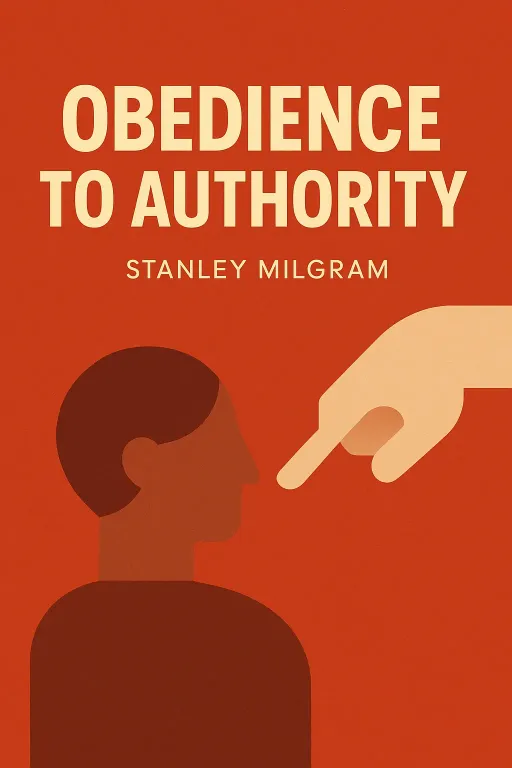
Nova: It can be. Cialdini spent years infiltrating sales organizations, cults, and fundraising groups to understand people say yes. One of his most powerful principles is 'Authority.' People are more likely to comply with requests from those perceived as legitimate authorities. This isn't just about formal power; it's about perceived expertise, trustworthiness, and status.
Atlas: So, it's not enough to in charge; you have to being in charge, and knowledge, and credibility. How does a leader leverage that in a way that isn't just, well, bossy?
Nova: Take Winston Churchill during World War II. Britain was facing immense challenges, often alone. His speeches weren't just policy statements; they were masterclasses in leveraging authority and other principles. He presented himself as the unwavering, knowledgeable leader who understood the gravity of the situation and possessed the resolve to see it through. His background as a seasoned politician, a military historian, and a powerful orator all contributed to this perception of authority.
Atlas: So, his words weren't just inspiring; they were imbued with a sense of 'who he was' that made them inherently more persuasive. He wasn't just talking; he was voice.
Nova: Exactly. He wasn't just stating facts; he was building trust and confidence through his perceived authority. He also masterfully used 'Unity' – though Cialdini later added this as a seventh principle – by constantly emphasizing shared identity and common struggle. "We shall fight on the beaches, we shall fight on the landing grounds..." It wasn't "I shall fight," but "we." He forged a collective identity that made people to follow.
Atlas: That's a perfect example. It's not about overt force, but about aligning people's internal motivations with the leader's vision, often through these subtle psychological triggers. It makes you realize how much of history isn't just about policies, but about the human element of getting people to believe and act together. It takes the abstract idea of 'leadership' and grounds it in something incredibly tangible.
Synthesis & Takeaways
SECTION
Nova: So, when we look at history through the lens of Kahneman and Cialdini, it truly changes everything. We move beyond simplistic narratives of good versus evil, or pure genius versus pure folly. Instead, we see the intricate dance of human psychology at play.
Atlas: It makes historical figures feel so much more relatable, doesn't it? Less like statues and more like complex individuals wrestling with their own minds, while simultaneously trying to shape the minds of millions. It adds a whole new layer of human drama to the decisions that shaped our world.
Nova: Precisely. Understanding System 1 biases helps us analyze why certain decisions were made, even if they seem irrational in hindsight. And understanding Cialdini's principles shows us how leaders gain support, build movements, and motivate entire populations, often through subtle, almost invisible means. History isn't just a chronicle of events, but a testament to the powerful, often invisible, interplay of human psychology. It’s a profound insight that reminds us that whether you're leading a nation or just making a daily decision, your mind, and the minds around you, are always at work, subtly shaping reality.
Atlas: It really does make you rethink every headline, every political speech, every major historical moment. So, for our listeners, how would you challenge them to apply this perspective?
Nova: I'd ask you to pick a historical statesman you admire, or perhaps one you find perplexing. Now, armed with these insights into cognitive biases and principles of persuasion, how might you reinterpret one of their key decisions? What unseen psychological currents might have been at play? It’s a powerful exercise in understanding the true subtle art of influence.
Nova: This is Aibrary. Congratulations on your growth!