The Silent Language of Influence: How to Lead Without Saying a Word.
Golden Hook & Introduction
SECTION
Nova: Alright, Atlas, quick game. Our topic today is "The Silent Language of Influence." Give me your five-word review of what that phrase conjures up for you. No overthinking, just gut reaction.
Atlas: Oh, I love this. Hmm… "Manipulation, secrets, power, whispers, subtle." Kind of dark, actually.
Nova: That’s a great start, and honestly, a lot of people go there. But what if I told you the true silent language of influence isn't about manipulation at all, but about understanding the fundamental human psychology that drives connection, trust, and action?
Atlas: Really? That flips my whole five-word review on its head! I’m curious, how do we get from "whispers and secrets" to "trust and connection" without saying a word?
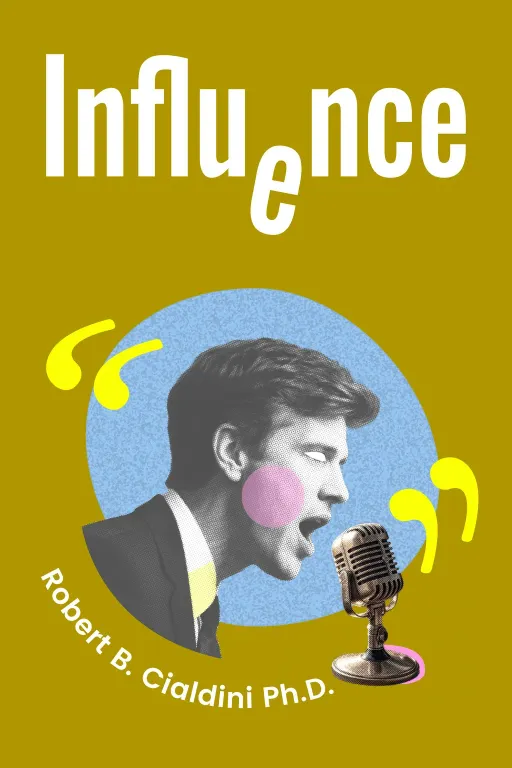
Nova: Well, today, we're diving deep into a classic that unpacks exactly that: "Influence: The Psychology of Persuasion" by the brilliant Robert Cialdini. And what makes Cialdini's work so compelling, so different, is how he researched it. He didn't just sit in an ivory tower. He actually spent years going undercover, immersing himself in the world of "compliance professionals"—think salespeople, fundraisers, recruiters—to see these tactics in action, in the wild.
Atlas: Wow, that’s dedication. So, he was literally embedded, learning the tricks of the trade from the inside? That sounds like something out of a spy novel, but for psychology.
Nova: Exactly! And what he uncovered were six universal principles that operate beneath the surface of almost every successful interaction. These aren't about grand speeches; they’re the subtle, almost invisible forces that shape our decisions, often without us even realizing it. They are the true silent language.
Atlas: Okay, so this isn't just about smooth talkers, then. This is about deep-seated human wiring. How does a strategic leader, someone who wants to empower their team and build systems, actually use something so… "silent"?
The Silent Principles of Persuasion: Reciprocity, Commitment & Consistency, Social Proof
SECTION
Nova: That's the core question, Atlas. Let's start with the first principle: Reciprocity. It's incredibly simple, yet profoundly powerful. It says that we feel a deep, often unconscious, obligation to return favors. Think about when you go to a restaurant, and the waiter brings the bill, and with it, a tiny, often unwanted, mint.
Atlas: Oh, I know that feeling! You almost instantly feel a little warmer towards them, right? Even if you don't like mints.
Nova: Precisely! That tiny, unasked-for gesture, that little gift, triggers a sense of obligation. Studies show tips go up significantly. It's not about the value of the mint; it's the act of giving. In leadership, this isn't about bribing your team. It's about genuinely giving first – your time, your trust, your support, a helpful resource – without immediate expectation. That silent gesture builds a powerful foundation for future collaboration.
Atlas: That makes sense. So, it’s not about manipulating someone into giving back, but about genuinely investing in relationships, knowing that it builds a natural sense of obligation and goodwill over time. It’s almost like building social capital, one mint at a time.
Nova: Exactly! It’s the silent promise of support. Moving on to the second principle: Commitment and Consistency. This one says we have a deep psychological need to be consistent with what we have already said or done.
Atlas: I can see how that plays out. Like, if I publicly declare I'm going to run a marathon, I'm way more likely to actually train for it. My reputation, my ego, is on the line.
Nova: And that's exactly it. For leaders, this means getting small, voluntary, public commitments. If you want a team to embrace a new, ambitious project, don't just assign it. Get them to verbally agree to a small, initial step, or better yet, have them articulate they think it's a good idea. Once they've made that small, public commitment, their internal drive for consistency will subtly push them towards the next step, and the next. It's a silent self-persuasion.
Atlas: So, if I want my team to really own a new initiative, it's not about telling them what to do, but getting them to voice their initial buy-in, even if it's just a small part. That makes them the authors of their own commitment, rather than just executors. That’s powerful for delegation, too.
Nova: Absolutely. And that leads us to Social Proof, the third principle. We are profoundly influenced by what others around us are doing, especially if those others are similar to us.
Atlas: The classic "monkey see, monkey do" effect, right? Like seeing a long line outside a restaurant and thinking it must be good.
Nova: Exactly! But it's often more subtle. Imagine a new team member joining. They don't know the unspoken rules, the culture. They'll look to their peers. If they see everyone staying late, or proactively offering help, or celebrating small wins, they'll silently absorb that behavior as the norm. It’s the silent signal of "this is how we do things here."
Atlas: So it's not just about explicit rules or onboarding documents. It’s about cultivating the right behaviors and attitudes within the team itself, knowing that those behaviors will silently propagate. How does that work without words, though? I mean, a line outside a restaurant is visible, but in a team meeting, how does social proof operate silently?
Nova: Great question. It’s in the non-verbal cues: the nods of agreement, the collective sigh of relief, the shared focus on a speaker, the way people dress, the energy they bring. A leader who consistently embodies the values they preach, who is seen working hard and supporting others, becomes a powerful source of social proof. Their actions, not just their words, define the acceptable and aspirational behaviors for the entire group. It’s leadership by visible example.
The Silent Principles of Persuasion: Authority, Liking, Scarcity
SECTION
Nova: And that naturally leads us to the next key idea we need to talk about, which often acts as a silent amplifier for all the others: Authority. We are predisposed to follow the lead of credible, knowledgeable experts. But here's the kicker: that authority doesn't always need to be explicitly stated.
Atlas: You mean like a doctor in a white coat or a CEO with a corner office? Those are pretty clear signals.
Nova: Those are the obvious ones. But think about the subtle cues: the confident posture, the calm demeanor in a crisis, the precise, insightful question that cuts through confusion, the way someone commands respect in a room without raising their voice. These are all silent signals of authority. Cialdini’s research highlights how even a slight difference in how a message is delivered can dramatically impact its reception, simply because of the perceived authority behind it.
Atlas: Okay, but for a leader who’s all about empowering others, how do you project authority without being authoritarian? That feels like a fine line, especially if you’re trying to build systems where people feel ownership, not just obedience.
Nova: That's a crucial point. Ethical authority isn't about demanding compliance; it's about earning respect through competence and integrity. A truly authoritative leader doesn't need to bark orders. They demonstrate their expertise through their actions, their clear vision, their sound judgment. They listen intently, synthesize information, and make decisive choices when necessary. These are all silent signals of earned authority that build trust, rather than fear. It’s about the silent demonstration of wisdom.
Atlas: That’s a powerful distinction. So, it's about embodying expertise and confidence, not just having a title. Which brings us to Liking. I imagine that's pretty straightforward, right? We're more likely to be influenced by people we like.
Nova: Absolutely, but the "silent" aspect is fascinating. Liking isn't just about charm. It's built on subtle cues like similarity – finding common ground, even small things. It's built on praise – genuine, specific compliments that show you've noticed someone's efforts. And it's built on cooperation – working together towards a shared goal.
Atlas: Right, like that car salesperson who suddenly discovers you both went to the same obscure college. It's disarming.
Nova: Exactly! In a leadership context, it's about genuinely connecting with your team members, finding those points of commonality, acknowledging their contributions, and framing challenges as "we're in this together." These are all silent ways to build rapport and make people receptive to your influence. It helps integrate diverse teams, not by forcing them, but by building genuine connection.
Atlas: So, to truly integrate diverse teams, it's not just about rules and mandates, but about fostering this "liking" in a genuine, almost unconscious way through those subtle connections. It's the human element, subtly woven in.
Nova: Precisely. And finally, Scarcity. This principle states that opportunities seem more valuable when their availability is limited.
Atlas: The classic "limited time offer!" or "only three left!"
Nova: Yes, those are the overt examples. But silently, it's about communicating the unique value of something. If an opportunity is truly rare, if a resource is truly limited, if a moment to act is fleeting, that inherent scarcity creates urgency and increases perceived value. For leaders, this isn't about creating artificial deadlines or fear. It's about highlighting genuine, time-sensitive opportunities or the unique value of a project that might not come around again.
Atlas: How do you use scarcity to motivate, not just create artificial panic, especially when you're trying to empower people to think strategically long-term? It feels like it could backfire.
Nova: That's where the ethical application comes in. It's about framing. Instead of "do this or else," it's "this is a unique window to innovate in this space before the market shifts." Or "we have a rare opportunity to shape this new initiative because of our current positioning; that window won't last forever." It’s about leveraging scarcity to highlight strategic importance and inspire focused, timely action, rather than just creating a rush. It’s the silent call to seize the moment, grounded in reality.
Synthesis & Takeaways
SECTION
Nova: So, bringing it all together, what Cialdini shows us, through his incredible undercover work, is that true influence isn't about a single grand gesture or a perfectly crafted speech. It's about understanding these six silent, fundamental psychological triggers that are constantly at play in human interaction.
Atlas: It’s fascinating how these principles operate almost like an invisible operating system for human behavior. So, the real takeaway for a leader isn't to action, but to create the conditions where people to act, almost unconsciously, because these principles are ethically at play?
Nova: Absolutely. It’s about designing the environment, the interactions, the very culture, so that trust, commitment, and action naturally emerge. It’s a shift from explicit command to subtle, ethical design. It’s how you embody your message, not just what you say. It’s the silent language of authentic leadership.
Atlas: That’s actually really inspiring. For our listeners who are strategic architects, building systems and empowering teams, it sounds like the "tiny step" then isn't to go out and try to manipulate. It's to simply observe.
Nova: Exactly. This week, observe your interactions. Look for where reciprocity is already happening, or where social proof is subtly guiding behavior. Notice how authority is perceived, not just declared. By simply becoming aware of these silent forces, you start to see the world of influence in a whole new light. It’s about tuning into the signals that are already there.
Atlas: And then, perhaps, intentionally and ethically using just one of those principles to empower your team or drive a strategic initiative. That’s a fantastic challenge. It's about leading without saying a word, by truly understanding the human element.
Nova: Indeed. It's a profound shift in how we think about impact.
Nova: This is Aibrary. Congratulations on your growth!