The Invisible Hand: Mastering Influence Through Advanced Persuasion
Golden Hook & Introduction
SECTION
Nova: Atlas, five words. Influence. Go.
Atlas: Subtle. Powerful. Ethical. Essential. Game-changer.
Nova: Ooh, I like "game-changer." Mine: Invisible. Human. Psychology. Mastered. Impact.
Atlas: Those are good. Really gets to the heart of it. Influence, for so many leaders, feels like this elusive, almost Machiavellian art. Like you either have it or you don't.
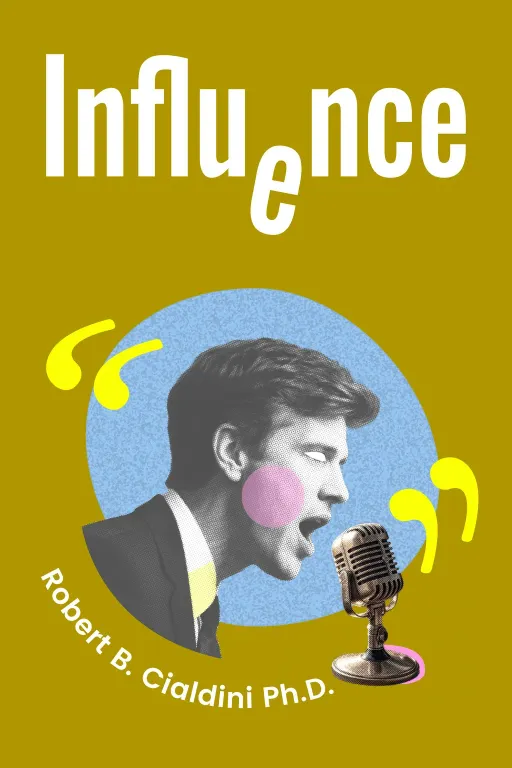
Nova: Well, that's precisely what we're dissecting today. We’re diving into the brilliant mind of Robert Cialdini, a social psychologist who didn't just theorize about persuasion. He spent years,, covertly immersing himself in the trenches of influence professions—from car sales to fundraising—to understand how real-world persuasion actually works. His approach wasn't just academic; it was an undercover operation into the human psyche.
Atlas: That’s fascinating. I can imagine that kind of deep dive gives his work a practical edge that pure theory often misses. It sounds like he wasn’t just observing, but truly experiencing the mechanics of persuasion. That's exactly what leaders need when they’re trying to motivate teams or navigate complex market dynamics, moving beyond just barking orders, you know?
The Six Principles of Influence: Cialdini's Ethical Persuasion Toolkit
SECTION
Nova: Exactly. And the result of that immersive field research was his seminal work,, which lays out six universal principles that guide human decision-making. Atlas, have you ever felt inexplicably compelled to say 'yes' to something, even when you weren't entirely sure why?
Atlas: Oh, absolutely! Happens all the time. Sometimes it's a gut feeling, other times it's like I'm already halfway to 'yes' before I even process the request. It’s almost unsettling how often that occurs.
Nova: That's Cialdini at play. The six principles are Reciprocity, Commitment and Consistency, Social Proof, Authority, Liking, and Scarcity. And they are powerful because they tap into our fundamental human wiring. Let's start with Reciprocity, because it's so elegantly simple yet incredibly effective.
Atlas: Reciprocity. I'm thinking about that old saying, "You scratch my back, I'll scratch yours." Is it just about quid pro quo?
Nova: It’s more subtle than that. It’s the deep-seated human tendency to feel obligated to return a favor. Even small, unexpected gestures can trigger this powerful feeling. Think about those little mints restaurants give you at the end of a meal.
Atlas: The after-dinner mints? What do those have to do with profound influence? They just taste good!
Nova: Well, studies have shown that if a server gives you a single mint with the check, tips go up by about 3%. Not bad. But if the server gives you two mints, tips go up by 14%! And here's the crucial part: if the server gives you one mint, then pauses, makes eye contact, smiles, and says, "For you nice people, here's an extra mint," tips skyrocket to 21%!
Atlas: Whoa. That's a massive jump for a few cents worth of candy. So the cause isn't just the mint, it's the and nature of the gift that creates the feeling of obligation?
Nova: Precisely. The unexpected generosity, the clear personal touch, triggers a feeling of indebtedness. The process is a subtle, almost unconscious obligation to return the favor, which in this case, is a larger tip. The outcome is a measurable increase in compliance.
Atlas: Alright, but wait, this sounds a bit like manipulation. When we're talking about leading teams or strategic partnerships, how do you use reciprocity ethically? Isn't there a fine line between genuine generosity and just trying to get something back?
Nova: That’s a critical question, Atlas, and it’s where Cialdini always emphasizes the ethical framework. It’s not about manipulation; it’s about understanding human psychology to foster genuine connection and trust. Ethical reciprocity means genuinely offering value first, without expectation, but knowing that humans are wired to respond in kind. It's about building goodwill, not setting a trap. For a leader, it could be offering mentorship, sharing valuable insights, or providing unexpected support to a team member without asking for anything in return. Over time, that builds a reservoir of trust and a willingness to reciprocate when you eventually do need their full effort or collaboration.
Atlas: I guess that makes sense. It’s about building social capital, not just transactional exchanges. That’s going to resonate with anyone who struggles with building a resilient business culture, where trust and mutual support are paramount.
Pre-Suasion: Orchestrating Receptivity Before the Message
SECTION
Nova: And that naturally leads us to the next layer of Cialdini's work, which often acts as a powerful enhancer to these principles. What if you could set the stage so perfectly that your audience is already inclined to agree before you've even spoken?
Atlas: That sounds like mind control! Are we talking about subliminal messages now?
Nova: Not at all, but it is incredibly subtle. This is the groundbreaking concept from his book. It's about arranging for recipients to be receptive to a message they encounter it. It's about the moment the moment of influence.
Atlas: Okay, so you're not just saying the right thing, you're creating the right for the right thing to land.
Nova: Exactly! Imagine a furniture store that wants to sell expensive, comfortable sofas. If a salesperson asks customers, "When you're looking for a sofa, what's most important to you?" and then immediately follows with, "Is it comfort?" people are more likely to prioritize comfort. That's a direct influence technique. But pre-suasion works upstream.
Atlas: So what would pre-suasion look like in that scenario? How do you prime them they even get to the sofa?
Nova: A subtle but powerful pre-suasive tactic would be to pipe in soft, relaxing music into the showroom, or have cloud imagery prominently displayed. The goal isn't to talk about comfort, but to a feeling associated with comfort, making customers unconsciously more receptive to the idea of comfort when they look at sofas. They then assign greater importance to comfort without realizing they were primed to do so.
Atlas: My goodness. So it's not even about the words, it's about the environment, the sensory input, the subtle cues that shape our priorities before we even articulate them. That's profound. For our listeners who are trying to dominate a niche market or expand globally, how does this translate? How do you pre-suade in a high-stakes business negotiation or a global marketing campaign?
Nova: A fantastic question. For a high-stakes negotiation, imagine a company pitching a complex, innovative solution. Instead of just launching into the details, they might start the meeting by sharing a compelling success story about another client who successfully embraced a bold, new approach, overcoming significant challenges. This isn't about the solution itself, but about priming the decision-makers to be open to and before the actual pitch even begins. It makes them more receptive to the novel solution.
Atlas: So it's like warming up the audience's mental landscape. You’re not just presenting facts; you’re cultivating a fertile ground for those facts to grow. But isn't there a risk that people will feel manipulated if they realize they're being pre-suaded? How do you keep it subtle enough that it feels natural and not coercive?
Nova: The power lies in its subtlety and its alignment with genuine value. Ethical pre-suasion isn't about tricking people into buying something they don't need; it's about helping them recognize the true value of something that genuinely benefits them by aligning their mental state with that value. If the furniture store sells truly comfortable sofas, the pre-suasion simply helps the customer prioritize that inherent comfort. It’s not invisible to analytical minds, but it's often experienced as a natural inclination rather than a forced decision. It's about guiding attention, not controlling thought.
Synthesis & Takeaways
SECTION
Nova: So, when we combine Cialdini's six principles of influence with the strategic timing of pre-suasion, we're talking about an entirely different level of impact. It’s not about overpowering arguments or relying on sheer authority.
Atlas: It's about understanding the fundamental human operating system. It's about moving from a blunt instrument approach to influence to something far more elegant, more effective, and, crucially, more ethical. It’s like having an invisible hand gently guiding decisions, rather than forcing them.
Nova: Precisely. This shift from brute force to subtle psychological alignment is a game-changer for anyone looking to make a lasting impact, motivate a sales force, or build a resilient business culture. It's knowing that a small, unexpected gesture of generosity, or a carefully curated environment, can profoundly shape outcomes.
Atlas: And the tiny step for anyone listening right now, preparing for their next big discussion or presentation, is to identify just one of Cialdini's principles. Maybe it's reciprocity, maybe it's social proof, or maybe it's thinking about how you can pre-suade the room. Just one.
Nova: Activate it subtly. Not to manipulate, but to create a more receptive, aligned environment. That small shift can have exponential returns in your ability to influence genuinely and ethically.
Atlas: It’s about building trust and understanding the human element at a deeper level.
Nova: Absolutely.
Atlas: This is Aibrary. Congratulations on your growth!