The 'Influence' Trap: Why Pure Logic Isn't Enough for Effective Social Interaction.
Golden Hook & Introduction
SECTION
Nova: Atlas, quick question, what do you know about 'influence'?
Atlas: Oh, Nova, I know it’s what happens when my perfectly logical email gets ignored, and then a casual coffee chat gets the deal done. So, clearly, I know nothing.
Nova: You know exactly what we’re talking about then! Because today, we're diving deep into that mysterious gap between brilliant logic and actual persuasion. We're looking at why our meticulously crafted arguments often fall flat, and how true influence goes far beyond just the facts.
Atlas: That makes me wonder, we often pride ourselves on being rational beings, especially in professional settings. But if logic isn't enough, what are we missing? Where do we even begin to look for these other levers of influence?
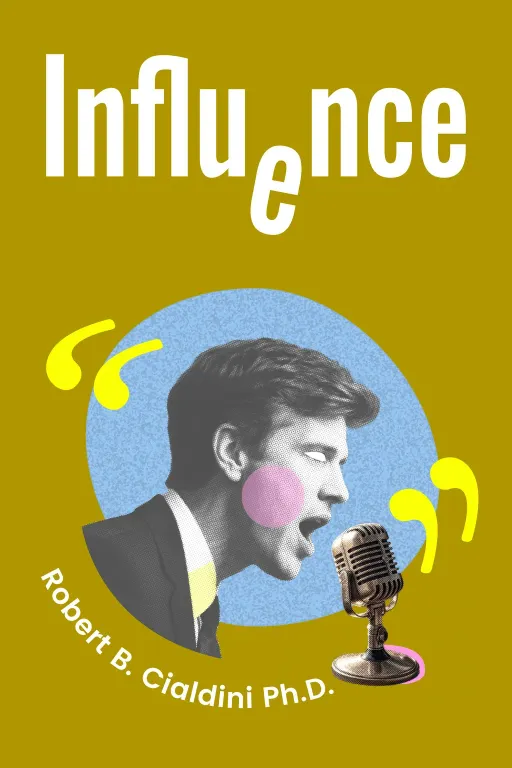
Nova: Excellent question, and that's precisely what we're dissecting today. We’re drawing insights from two foundational texts. First, "Influence: The Psychology of Persuasion" by Robert Cialdini, a book that fundamentally shifted how we understand human decision-making. Cialdini actually went undercover, embedding himself with various influence practitioners – from car salesmen to telemarketers – to observe these principles in their natural habitat. It’s like he was a social scientist spy!
Atlas: That’s a fascinating approach! And to complement that, we’ll also touch on Daniel Kahneman’s "Thinking, Fast and Slow." Kahneman, a Nobel laureate in Economic Sciences, gives us the internal map of our minds, explaining we're so susceptible to the very principles Cialdini observed.
Nova: Exactly! Together, they paint a complete picture. So, let's start with Cialdini. He identified six universal principles of influence. These aren't about conscious manipulation, but rather deeply ingrained psychological triggers that operate almost invisibly, often overriding our logical thought processes.
Atlas: Okay, so, we're talking about the subconscious currents beneath the surface of conversation. What’s one of these hidden architects of decision? Give me an example.
The Hidden Architects of Decision: Cialdini's Principles of Influence
SECTION
Nova: One of the most powerful is the principle of Reciprocity. It’s simple: we feel obligated to return favors. Think about it: a restaurant gives you a small mint with the bill. It’s a tiny, unsolicited gift. But studies show that even that small gesture can significantly increase the tip amount.
Atlas: Oh, I've seen that! It’s like if someone holds a door for me, I'm almost compelled to do something for them in return, even if it’s just a smile. So, the cause is a small favor, the process is a subconscious feeling of debt, and the outcome is compliance with a larger request you might not have otherwise considered.
Nova: Precisely. It’s not about the logical value of the mint; it’s the psychological trigger of indebtedness. Another massive one is Social Proof. We look to others to determine what is correct behavior. If everyone else is doing it, it must be right.
Atlas: Right, like when you see a long queue outside a restaurant, and suddenly you think, "That must be amazing food," even if you know nothing about it. Or even in professional settings, if a new initiative is gaining traction, and everyone's signing on, there's a strong pull to join in.
Nova: Absolutely. The cause is observing others' behavior, the process is assuming it’s the correct behavior, and the outcome is conforming to that group action. Think about those "best-seller" lists. Is that book objectively the best? Maybe. But the social proof that "everyone else is reading it" is a powerful motivator for many.
Atlas: But wait, looking at this from a professional perspective, isn't that risky? If my logical argument for a project is rock-solid, but a competitor just offered a free consulting hour, or they've got more "social proof" because they worked with a bigger name, does my data just… disappear?
Nova: It doesn't disappear, but its impact diminishes. Your brilliant data presentation is still valuable, but if you haven't addressed these underlying psychological triggers, you're fighting an uphill battle. The free coffee, the established client list – those aren't logical arguments, but they are powerful influence levers targeting something deeper.
Atlas: So, are you saying that for someone who values precision and wants their message to land, ignoring these principles is a huge missed opportunity? That we need to integrate them, not just rely on the sheer force of our logic?
Nova: Exactly. It's about augmenting your logic, making it more palatable, more resonant. And that naturally leads us to the second key idea we need to talk about, which often acts as the internal mechanism that makes us so susceptible to these external principles.
Thinking Beyond Logic: Kahneman's Two Systems of Thought
SECTION
Nova: Daniel Kahneman, through his work with Amos Tversky, revealed that we actually have two systems of thinking. He calls them System 1 and System 2. System 1 is fast, intuitive, emotional, and largely unconscious. It's our gut reaction. System 2 is slow, deliberate, logical, and effortful. It's what we use for complex problem-solving.
Atlas: Oh, I see. So, System 1 is like the quick, automatic reflex, and System 2 is the careful, analytical thought process. I imagine a lot of our listeners, especially those who strive for clear communication and logical arguments, would identify strongly with System 2.
Nova: Absolutely. Many of us we operate primarily in System 2, especially in professional contexts. But the truth is, System 1 is almost always running the show, making quick judgments and assessments, often System 2 even gets a chance to fully engage.
Atlas: That makes me wonder, how does this internal battle between fast and slow thinking connect to Cialdini's external influence principles?
Nova: It's a perfect marriage! Cialdini's principles—like reciprocity or social proof—are incredibly effective because they largely target and activate System 1. When someone gives you a gift, your System 1 instantly feels a pull to reciprocate. When you see a crowd doing something, your System 1 quickly assumes it's the right thing to do.
Atlas: So, System 1 makes a quick, often emotional or heuristic-based judgment, and then System 2, our more logical side, often comes in afterwards to rationalize that decision?
Nova: Exactly! It’s what Kahneman calls "the intuitive mind's best guess." System 1 jumps to conclusions, and System 2 might then construct a plausible story to explain we made that decision, even if the real reason was a System 1 trigger. Think about the anchoring effect: if you see an expensive item first, subsequent items seem cheaper, even if they’re still pricey. Your System 1 is anchored, and System 2 then tries to justify the "good deal."
Atlas: That sounds a bit out there. For someone who prides themselves on rational thought and conveying exact meaning, how do we even begin to recognize when System 1 is in charge, leading us astray or making us susceptible?
Nova: The first step is awareness. Understanding that System 1 and is powerful is half the battle. Then, when you feel a strong, immediate pull towards something—a new product, a decision, a belief—pause. Ask yourself: "Is this a pure logical conclusion, or am I feeling a subconscious pull? Am I reciprocating a favor? Am I falling for social proof?"
Atlas: So, it’s not about eliminating System 1, but understanding its influence and giving System 2 a chance to weigh in, especially when the stakes are high. It's about being more intentional with our communication and our own decision-making.
Synthesis & Takeaways
SECTION
Nova: Precisely. The profound insight here is that true effectiveness in social interaction—whether it’s persuading a client, motivating a team, or simply having a meaningful conversation—requires moving beyond the false belief that pure logic is king. It’s about leveraging our understanding of these external psychological triggers and internal cognitive processes.
Atlas: That’s actually really inspiring. It means we have more tools in our communication arsenal. The next time my logical argument isn't landing, I won't just double down on the data. I'll pause and ask myself: Which influence principle am I missing? Which system am I addressing?
Nova: Exactly! It’s not about being manipulative, but being profoundly effective. It’s about recognizing that humans are complex beings, driven by more than just spreadsheets and bullet points. It’s about connecting with people on a deeper, often subconscious, level.
Atlas: How might understanding these two layers of influence—the external pull and the internal processing—fundamentally shift your next critical conversation or presentation, making your precise message truly land and resonate? That's a question worth pondering.
Nova: Absolutely. This is Aibrary. Congratulations on your growth!