The 'Influence Illusion': Why Your Best Ideas Don't Always Stick.
Golden Hook & Introduction
SECTION
Nova: "The Influence Illusion: Why Your Best Ideas Don't Always Stick." Atlas, let's do a five-word review of that core problem. My five words are: "Brilliant, ignored, frustratingly, tragically, common."
Atlas: Oh, I like that. Mine are: "Logic fails, hearts don't follow."
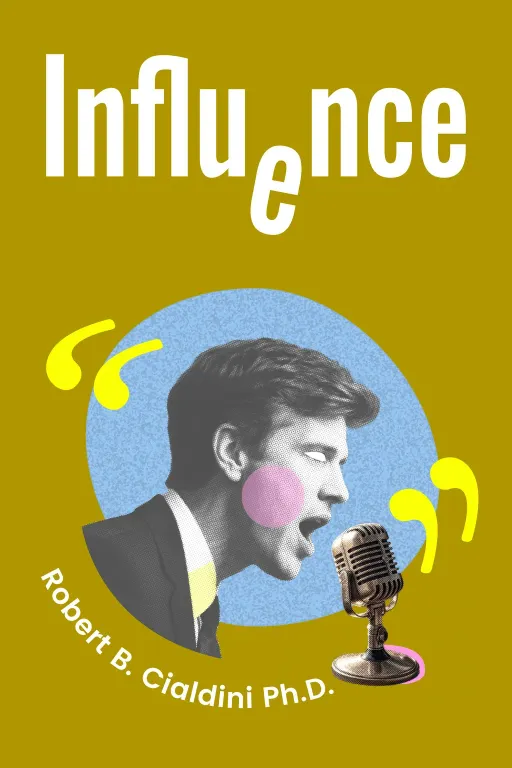
Nova: Exactly! It's that moment when you've poured your heart and soul into a strategy, a vision, a perfect solution, and it just… sits there. Unadopted, unloved, unheard. Today, we're tackling that infuriating reality with two absolute titans in the field. We're diving into Robert Cialdini's seminal work, "Influence: The Psychology of Persuasion," and then we'll jump into Chip and Dan Heath's brilliant "Made to Stick: Why Some Ideas Survive and Others Die."
Atlas: These are classics for a reason. Cialdini, he spent years doing undercover research, right? Infiltrating sales organizations, even cults, just to understand how real-world persuasion actually happens. It gives his work this incredible, grounded credibility.
Nova: Absolutely. He wasn't just theorizing from an ivory tower. And the Heath brothers? They're masters at distilling complex behavioral science into frameworks that are not just understandable, but genuinely actionable. You could explain their stuff to a five-year-old and they'd get it.
Atlas: They really make it accessible. So, we're talking about moving beyond just having a good idea, or even a great strategy, to actually getting people to enthusiastically embrace it. For anyone leading teams, driving change, or building a legacy, that's the holy grail. It’s about transforming understanding into action.
Nova: Exactly. Because as a leader, your vision is only as powerful as its adoption. And that naturally leads us into our first deep dive: the hidden levers of influence. The invisible forces that make people say 'yes,' often without even realizing why.
The Hidden Levers of Influence: Understanding the Psychology of Persuasion
SECTION
Nova: Cialdini, after all his deep dives, distilled influence into six universal principles. They're like the fundamental laws of social physics. Today, we're going to pull back the curtain on two of the most powerful for leaders: Reciprocity and Social Proof.
Atlas: Okay, Reciprocity. That sounds straightforward, like "you scratch my back, I'll scratch yours." But I'm guessing there's more to it.
Nova: Much more. It’s not just about direct favors. It's a deep-seated human instinct to repay. Even for small, unasked-for gestures. Think about the classic example: the free mint at the end of a restaurant meal.
Atlas: Oh, the mint. I always feel a little happier, a little more generous with the tip when that happens.
Nova: Precisely. Researchers found that if a waiter brings a single mint with the bill, tips go up by about 3%. If they bring two mints, tips jump by 14%. But here’s the kicker: if they bring one mint, walk away, then turn back, make eye contact, and say, "For you nice people, here's an extra mint," tips skyrocket by 23%.
Atlas: Wow. So, it's not just the gift; it's the it's given. The unexpected, personalized gesture. That’s a huge jump for a tiny piece of candy.
Nova: Exactly. The cause is that feeling of being seen, of receiving something unexpected, which triggers a powerful, often unconscious, drive to reciprocate. The process is a small, unexpected gift, and the outcome is increased generosity, often disproportionate to the gift itself.
Atlas: That makes me wonder, how does a strategic leader apply this without feeling like they’re bribing their team? When I'm trying to get buy-in for a big, perhaps controversial, strategic shift, it's not like I can hand out mints.
Nova: That’s a brilliant question, and it’s where ethical application comes in. It's about unexpected value. Maybe it's investing extra time to genuinely understand a team member's concerns before presenting the new strategy. Perhaps it's sharing valuable, actionable insights or resources that benefit them personally or professionally, not directly tied to the project, you ask for their commitment. It’s building a bank of goodwill, not a transactional exchange.
Atlas: So, it's about giving first, authentically, and without immediate expectation. That builds trust, which then makes people more open to your ideas.
Nova: Precisely. Now, let’s pivot to Social Proof. This is about our fundamental human tendency to look to others for guidance on how to think, feel, and act, especially when we're uncertain.
Atlas: Like when you’re driving and you see everyone else slowing down, even if you don’t see a cop car. You just do it.
Nova: Perfect example. Or the hotel towel reuse signs. For years, hotels tried to get guests to reuse towels by appealing to environmental conscience. "Help save the planet!" The results were modest. But then, they changed the message.
Atlas: What did they change it to?
Nova: Instead of "Help save the environment," they said something like, "75% of guests who stayed in this room reused their towels." Or, even more powerfully, "75% of guests who stayed in reused their towels."
Atlas: Wait, that’s incredibly specific.
Nova: And incredibly effective. Compliance jumped significantly. The cause is our desire to conform, to do what others are doing, especially if those others are perceived as similar to us. The process is seeing others' behavior, and the outcome is behavior change. If other people are doing it, it must be the right thing to do.
Atlas: So, if I want my team to adopt a new, perhaps innovative, strategic direction, I should show them that other successful leaders or even other teams internally are already embracing similar approaches?
Nova: Exactly. You frame it not as a novel, risky experiment, but as an established, successful practice, backed by the actions of peers or respected figures. It’s about creating a sense of "everyone's doing it, and it's working." This is particularly powerful for resilient leaders seeking to master organizational evolution. You're leveraging inherent human psychology to make your vision not just understood, but enthusiastically embraced.
Crafting 'Sticky' Ideas: Making Your Vision Unforgettable and Actionable
SECTION
Nova: That brings us beautifully to our next big idea: how do you make sure your vision doesn't just get a 'yes,' but actually? This is where Chip and Dan Heath come in with their brilliant SUCCESs framework. They identified six principles that make ideas memorable and impactful. We'll explore Simplicity and Credibility.
Atlas: Simplicity. That sounds obvious. "Keep it simple, stupid." But I imagine it's much harder in practice, especially with complex strategic initiatives. How do you simplify a really complex, multi-year strategic vision without dumbing it down so much that it loses its actual strategic value?
Nova: You've hit the nail on the head. Simplicity isn't about dumbing down; it's about finding the message, the single, most important thing. It's about stripping away extraneous details until only the essential remains. Think of Southwest Airlines. When they started, their internal strategy wasn't "be an airline with good customer service and low prices." It was simply, "The Low-Fare Airline."
Atlas: That's incredibly clear. Every decision would then filter through that lens. Does this make us a low-fare airline?
Nova: Exactly. Cause: it’s easy to understand. Process: it creates a clear priority. Outcome: consistent execution, from how they boarded planes to how many peanuts they served. Every single employee knew core message. It becomes a guiding star. For a visionary catalyst, simplifying your core strategy into a single, undeniable statement is crucial. It’s not about reducing complexity, but about clarifying priority.
Atlas: That makes sense. It’s like a compass for the entire organization. But then there's Credibility. How do you build that quickly, especially for truly innovative or audacious ideas that might seem far-fetched initially?
Nova: Credibility isn't just about the person delivering the message; it's about the message itself. How can you make your idea believable? The Heath brothers talk about using "anti-authority" – unexpected sources of credibility – or providing verifiable details. Think about Wendy's "Where's the Beef?" campaign from the 80s.
Atlas: Oh, the three old ladies looking at a tiny burger patty! That was iconic.
Nova: It was. Instead of telling you their burgers were bigger, they you the problem with their competitors' burgers by asking a simple, direct question. The cause was providing a tangible, verifiable challenge. The process was inviting scrutiny and comparison. The outcome was a memorable, trustworthy brand that highlighted a real difference. For a visionary leader trying to get buy-in for a big, audacious goal, you need to provide concrete anchor points. It might be data, a small pilot project that proves concept, or even a compelling testimonial from an unexpected source.
Atlas: So, it's about giving people something real to latch onto, something they can see or verify, rather than just abstract promises. It’s about building trust in the idea itself.
Synthesis & Takeaways
SECTION
Nova: So, what we've really explored today is this powerful combination. On one hand, Cialdini gives us the psychological levers of influence, the innate human responses that guide decision-making. On the other, the Heath brothers show us how to craft our messages so they are not just heard, but truly and inspire action.
Atlas: It's the difference between getting a temporary nod and securing enthusiastic, lasting commitment. It’s how you move from a brilliant idea in your head to real, tangible impact across an entire organization. For leaders driven by impact and sustainable growth, this isn't just theory; it's the blueprint for building legacies.
Nova: Absolutely. And here's your tiny step, your immediate action item: Identify one key message you need to convey this week. It could be a new team initiative, a change in strategy, or even just an important insight. Now, how can you apply of Cialdini's principles—maybe reciprocity or social proof—and of the Heath brothers' SUCCESs principles, like simplicity or credibility, to make that message not just persuasive, but truly unforgettable?
Atlas: That’s a fantastic challenge. Because the 'Influence Illusion' isn't just about others; it's often our own illusion that a great idea will sell itself. It won't. You have to craft it, present it, and influence for it.
Nova: Precisely. The goal isn't just to be understood; it's to be embraced, to spark genuine enthusiasm, and to move people to action. It's about leading with purpose and psychological acumen.
Atlas: This is Aibrary. Congratulations on your growth!