The 'Influence Illusion': Why Logic Alone Won't Win Hearts and Minds.
Golden Hook & Introduction
SECTION
Nova: What if I told you that being right, having all the facts, and presenting the most airtight logical argument... is actually a terrible way to persuade anyone?
Atlas: Wait, so all those hours I spent perfecting my PowerPoint slides were for nothing? My entire leadership strategy might be fundamentally flawed? That sounds like a tough pill to swallow for anyone who prides themselves on being rational.
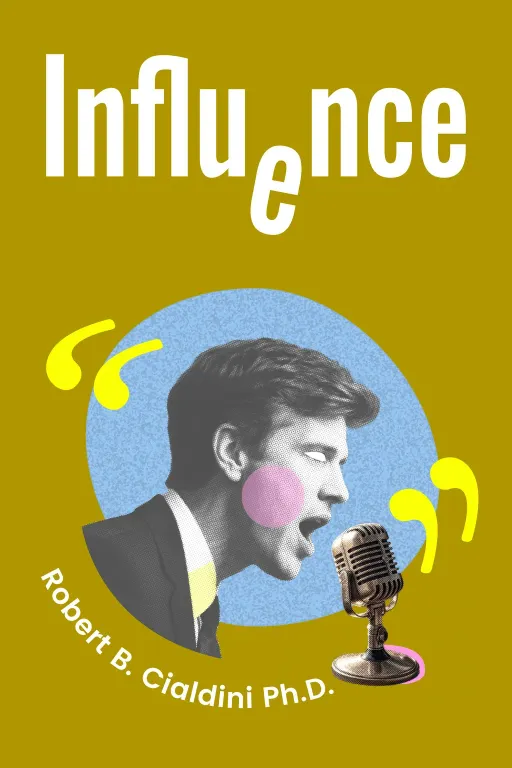
Nova: It absolutely can be, Atlas, and that's the 'Influence Illusion' we're dissecting today. We're drawing heavily from two seminal works: Robert Cialdini's groundbreaking 'Influence: The Psychology of Persuasion' and Annie Duke's incredibly insightful 'Thinking in Bets.'
Atlas: Cialdini, right? The name rings a bell, but I haven't deep-dived into his work.
Nova: He's a legend in the field, a social psychologist who famously went undercover for years, embedding himself in sales organizations, telemarketing firms, and advertising agencies. He wasn't just theorizing from an ivory tower; he was on the ground, observing the mechanics of influence from the inside out. His work is foundational for understanding how we're persuaded, often without even realizing it.
Atlas: That's a fascinating approach. So he learned the 'tricks of the trade' by experiencing them firsthand?
Nova: Precisely. And Annie Duke, a former professional poker player, brings a similar street-smart, practical edge to decision-making under uncertainty. Her insights are gold for anyone making high-stakes choices. Together, these two authors reveal a profound truth: our human decisions are deeply influenced by subtle psychological triggers, not just pure logic. And understanding that is crucial for effective leadership and communication. We often have this massive blind spot, assuming that if our arguments are good, persuasion will follow.
Atlas: Oh, I know that feeling! You present all the data, you lay out a perfectly logical case, and then... crickets. Or worse, resistance. It’s incredibly frustrating for anyone trying to drive change or get buy-in. I imagine a lot of our listeners, especially those who value strategic thinking and direct impact, feel that frustration keenly.
The Influence Illusion & The Blind Spot
SECTION
Nova: Exactly. We tend to operate under the assumption that everyone else is as rational as we believe ourselves to be. But the reality is far more complex. Our brains are wired with shortcuts, biases, and emotional triggers that often override our logical processing. Think of it like this: your logical brain is the driver, but your emotional, subconscious brain is the passenger with a secret remote control, constantly nudging the steering wheel.
Atlas: That’s a great analogy. So, how does this 'remote control' actually work? Give me an example of one of these subtle triggers that can completely derail a perfectly good argument.
Nova: Let's look at Cialdini's principle of Reciprocity. It's incredibly powerful. The core idea is that we feel a deep, often unconscious, obligation to return favors. If someone does something for us, we feel compelled to do something back.
Atlas: I guess that makes sense on a basic level – "you scratch my back, I'll scratch yours." But how does that bypass logic?
Nova: Let me paint a picture. Imagine you're walking through an airport, maybe a little tired, focused on getting to your gate. Suddenly, a cheerful person approaches you and hands you a flower, completely unasked. They smile, say "Here, this is for you! It's a gift from our organization."
Atlas: Okay, I'd probably be a bit confused, but I'd take the flower, I guess. It's a gift.
Nova: Exactly. Now, immediately after that, they ask if you'd be willing to donate to their cause. The Hare Krishna movement famously used this tactic for years. They'd give you a "free" book or flower, and then ask for a donation.
Atlas: Wait, so the flower wasn't actually 'free' if it came with an immediate ask? That sounds a bit out there, but I can see how it would create an awkward moment.
Nova: It's more than just awkwardness, Atlas. It triggers a deep-seated social norm. Most people, having just received an unexpected gift, feel an immediate, almost primal urge to reciprocate. Even if they don't care about the cause, even if they logically don't want to give money, the feeling of obligation is so strong that many will donate, often more than they would have otherwise. It completely bypasses their rational decision-making process. Their logical brain might say, "I don't support this," but their subconscious brain is screaming, "You return the favor!"
Atlas: Wow. That's kind of manipulative, isn't it? As a leader, I want to influence, but I definitely don't want to feel like I'm tricking people. How do you draw the line between understanding these triggers and using them ethically?
Nova: That's the critical distinction, and Cialdini himself emphasizes it. Understanding these principles isn't about manipulation; it's about understanding human nature. It's about designing your communication and interactions in a way that aligns with how people make decisions, rather than how you they would. Ethical influence uses these principles to facilitate a mutually beneficial outcome, to help people see the value in something that truly serves them, not to trick them into something they'd regret. It’s about building trust and connection, not exploiting a vulnerability.
Atlas: I can see that. For our listeners who are trying to get buy-in on a new strategy, or influence their team's performance, it means going beyond just presenting the quarterly numbers. You have to think about the human element.
Unlocking Persuasion: Cialdini's Principles & Duke's Decision-Making
SECTION
Nova: Absolutely. Once we acknowledge that blind spot, Atlas, the real power comes from understanding those triggers are. And that's where Cialdini's principles, like reciprocity, and Annie Duke's work on decision-making, become indispensable. It's about actively applying these insights.
Atlas: So beyond reciprocity, what are some of Cialdini's other heavy hitters? And how do they connect to making better decisions, especially under uncertainty?
Nova: Well, two more powerful ones are Social Proof and Authority. Social Proof is the idea that we look to others for cues on how to think, feel, and act. If everyone else is doing it, it must be right. Think of online reviews, or the "bestseller" sticker on a book. Our logical brain might question it, but our social brain says, "If so many people like it, there must be something to it." Authority, on the other hand, is our tendency to defer to credible experts. Doctors in white coats, people with impressive titles, they automatically carry more weight, often regardless of the actual content of their message.
Atlas: That’s fascinating. I can definitely see how those play out in marketing, but how does this connect to Annie Duke's work on 'Thinking in Bets,' which sounds more about individual decision-making?
Nova: That's where it gets really interesting. Cialdini shows us the of influence, and Duke helps us understand the and needed to make those levers effective, especially when the outcomes aren't guaranteed. Duke, with her background as a professional poker player, understands uncertainty better than almost anyone. She teaches us how our biases, like our tendency to avoid losses or seek confirmation for our existing beliefs, warp our decision-making process.
Atlas: I love that. Her experience in poker must give her a unique perspective on managing risk and making choices with incomplete information, which is essentially what leaders do every day.
Nova: Precisely. She argues that we often judge the quality of a decision by its outcome, but that's a mistake. A good decision, made with sound reasoning, can still have a bad outcome due to luck. And a bad decision can sometimes have a good outcome. Her work is about improving the of decision-making, acknowledging human nature and our inherent biases.
Atlas: So, for a leader trying to get buy-in on a risky new initiative, it’s not enough to just show the projected ROI. You have to also consider how you're framing the uncertainty, and perhaps even leveraging social proof from early adopters, or the authority of an internal expert, to influence the of that risk?
Nova: Exactly! Let’s say you’re proposing a new AI-driven marketing strategy. Instead of just presenting the technical specs and potential cost savings, you might frame it in terms of "embracing the future of our industry", highlight how other successful companies are already adopting similar tech, and bring in an internal expert who has successfully piloted a smaller version. You're still presenting the logical arguments, but you're wrapping them in psychological understanding.
Atlas: That’s a powerful shift in perspective. It's about understanding the human operating system, not just the logical input. For our future-focused leaders and practical innovators, this isn't about being manipulative; it's about being effective and ensuring your brilliant ideas actually get adopted. It’s about applying knowledge to build for tomorrow, not just analyzing data from yesterday.
Synthesis & Takeaways
SECTION
Nova: Absolutely. What Cialdini and Duke both illuminate, though from different angles, is that true influence comes from understanding human nature, not just data. It’s about designing communication that respects psychological realities. You can have the most brilliant idea, the most solid strategy, but if you ignore the subtle currents of human psychology, you'll be swimming against the tide.
Atlas: That makes me wonder about that recent attempt I made to persuade someone, where it just felt like I was hitting a wall. I was so focused on the facts, on proving I was right. I completely overlooked the relational aspect, the subtle cues.
Nova: And that's the deep question we want to leave our listeners with today. Consider a recent attempt you made to persuade someone—whether it was a colleague, your team, or even a friend. Which of Cialdini’s principles did you perhaps overlook? Was it reciprocity, commitment, social proof, authority, liking, or scarcity? And how might applying that principle, or understanding your own biases as Annie Duke would suggest, have changed the outcome?
Atlas: That’s a powerful challenge. It forces you to look inward and realize that persuasion isn't just about the message, but about the messenger and the mind receiving it.
Nova: Indeed. It's about moving beyond the 'Influence Illusion' and truly mastering the art and science of human connection and decision-making.
Atlas: This is Aibrary. Congratulations on your growth!