The Art of Persuasion: Guiding Clients to Their Best Tattoo Choices.
Golden Hook & Introduction
SECTION
Nova: Alright Atlas, five words. If you had to review 'The Art of Persuasion' for a tattoo artist, what would they be?
Atlas: Ethical, powerful, insightful, client-first, transformative.
Nova: Ooh, I really like that! Mine would be: Guide, not dictate, elevate art. Because that's truly what we're talking about today, isn't it? Guiding clients to their absolute best tattoo choices.
Atlas: Absolutely. It’s a fascinating tightrope walk, marrying artistic vision with client desires, and doing it with integrity.
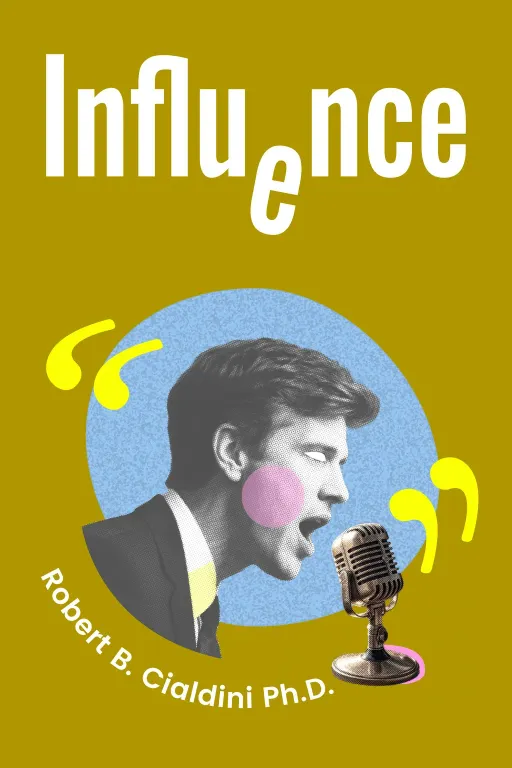
Nova: Exactly. And to unpack this, we're diving into some truly foundational work in psychology. We're talking about Robert Cialdini’s seminal "Influence: The Psychology of Persuasion" and Daniel Kahneman’s groundbreaking "Thinking, Fast and Slow." Cialdini, a social psychologist, did something incredible; he spent years going undercover, studying various compliance professionals—salespeople, fundraisers, recruiters—to understand persuasion in the wild, which gives his work this incredible real-world grit.
Atlas: That’s amazing. It’s one thing to theorize, but to embed yourself in the trenches of persuasion like that, it’s a whole different level of insight.
Nova: It really is. And Kahneman, alongside Amos Tversky, actually won a Nobel Memorial Prize in Economic Sciences for his work, essentially bringing psychology into how we understand economic decision-making. His insights are so profound, they changed how we view human rationality itself.
Atlas: So we’re talking about the deep mechanics of how people make decisions, and how we can ethically, keyword there, ethically, use that understanding to make better art and build stronger relationships.
Nova: Precisely. It's about elevating the client consultation from just taking an order to a truly collaborative, trust-building experience.
The Ethical Art of Influence: Cialdini's Principles in Client Guidance
SECTION
Nova: So let's start with Cialdini. He outlines six universal principles of persuasion. Reciprocity, commitment and consistency, social proof, authority, liking, and scarcity. Now, for an artist, a creative professional, how do you leverage these without feeling like you're just... selling? How do you genuinely guide someone to a decision they’ll cherish for a lifetime?
Atlas: That's the core question for anyone who wants to maintain their artistic integrity. It’s easy to see how these principles be manipulative. But how do you use, say, 'authority' without sounding arrogant, or 'social proof' without just showing off?
Nova: That’s a brilliant point, and it comes down to intent and authenticity. Take authority. As an artist, your authority isn't about bragging; it’s built on your expertise, your portfolio, your experience. I remember one artist, let's call her Sarah, had a client who was absolutely set on a very trendy, geometric pattern for a forearm tattoo—something Sarah knew wouldn't age well or fit the client's overall aesthetic in the long run.
Atlas: Oh man, that’s a classic scenario. The client comes in with a Pinterest board full of fleeting trends.
Nova: Exactly. Instead of just saying "that's a bad idea," Sarah pulled up her portfolio. She showed the client a few examples of similar trendy pieces she'd done early in her career, and then contrasted them with timeless, custom designs she’d created for other clients, explaining the artistic principles of longevity, flow, and how certain designs truly complement the body's natural lines. She spoke with a calm, confident expertise, demonstrating her deep understanding of tattoo history and design.
Atlas: So she wasn’t just saying "I know better," she was showing "I understand the long game of tattoo art, and here’s why this approach works better." That’s a subtle but powerful difference. She used her authority to educate, not dominate.
Nova: Exactly. The client saw the visual evidence, heard the reasoned explanation, and trusted Sarah's judgment. She ended up with a custom piece that incorporated elements she liked but in a way that was much more enduring and personal. And that’s authority in action—it's about demonstrating competence and trustworthiness.
Atlas: That makes sense. What about social proof? In a world of online reviews and Instagram feeds, it feels almost too easy to fake. How does an artist use that ethically?
Nova: That’s where authenticity is key. Ethical social proof isn't about manufacturing hype; it's about showcasing genuine client satisfaction. Think about a busy studio, the buzz of happy clients, or a curated gallery on an artist's website that features incredible healed photos and heartfelt testimonials. I heard about another artist, Mark, who had a client hesitant about a large-scale back piece. It was a significant investment, both financially and in terms of time.
Atlas: That’s a huge commitment. I imagine a lot of our listeners who do large-scale work face that often.
Nova: Definitely. Mark, instead of pushing, simply said, "I understand this is a big decision. Maybe take a look at the testimonials on my site, especially the ones from clients who got full back pieces. You can see their journey and hear their thoughts after a year or two." He also subtly highlighted a few framed photos on the wall of other clients proudly displaying their completed, healed large-scale work. Seeing that visual evidence of others' joy and commitment, coupled with words from people who had been in her exact shoes, helped the client feel confident.
Atlas: So it's not just about saying "everyone else loves my work," it’s about letting the authentic experiences of others speak for themselves. That’s a really powerful way to build trust without any direct sales pressure. It’s like, "Don't just take my word for it, look at the community of happy clients."
Nova: Precisely. These principles aren't about manipulation; they're about understanding human decision-making and using that knowledge to facilitate better outcomes, for both the artist and the client.
Navigating Client Decisions: Kahneman's Fast and Slow Thinking in Consultations
SECTION
Nova: And that naturally leads us to the second key idea we need to talk about, which often acts as a counterpoint to what we just discussed: Daniel Kahneman’s work on System 1 and System 2 thinking.
Atlas: Oh, I love this. The gut reaction versus the deep dive. How does that play out in a tattoo consultation? Because I imagine a lot of clients come in with a very strong System 1 desire. Like, "I saw this on TikTok, I want it now!"
Nova: Oh, absolutely. System 1 is our fast, intuitive, emotional thinking. It’s what gives us that immediate "I want that!" feeling. System 2 is slower, more deliberate, logical, and requires effort. The challenge for an artist is when that immediate System 1 desire might not align with the client’s long-term satisfaction or the artist’s best judgment.
Atlas: So how do you gently nudge someone from their 'fast,' immediate desire to 'slow,' more considered decision without them feeling like you're judging their taste or trying to talk them out of something they love?
Nova: It's all about framing and engagement. I heard about an artist who had a client come in wanting a very specific, highly detailed, miniature portrait on their inner wrist. It was a classic System 1 "I want it there, exact size, exact image." The artist knew, from experience, that such detail on that small, mobile area would blur over time and become illegible.
Atlas: That’s a tough one. The client is emotionally invested in the idea, but the reality of skin and time is completely different.
Nova: Right. Instead of directly contradicting, the artist engaged their System 2. They started by asking, "What does this image mean to you? Why this specific detail?" They listened intently, validating the client's emotional connection. Then, they gently explained, "For something this meaningful, you want it to look incredible for decades, not just a few years. Let me show you what happens to fine lines in high-movement areas." They showed examples of blurred tattoos on wrists, then contrasted them with larger, equally meaningful portraits on different body parts that had held up beautifully over time.
Atlas: So, they respected the System 1 emotional connection, but then brought in the System 2 data and long-term implications. They shifted the conversation from "what I want now" to "what will make this meaningful for life."
Nova: Exactly. They engaged the client's deliberative thinking by providing concrete examples, explaining the "why," and offering alternative solutions that still honored the original sentiment but were far more practical and visually enduring. The client ultimately chose a slightly larger, more accessible placement, which allowed the detail to be preserved beautifully.
Atlas: That's a perfect example of guiding without dictating. What are some of the common pitfalls artists fall into when dealing with System 1 and System 2?
Nova: A big one is trying to fight System 1 with System 2 logic right out of the gate. If a client is super excited, directly hitting them with a lecture on tattoo longevity can feel dismissive. You have to acknowledge and validate that initial excitement first. Another pitfall is not giving enough time for System 2 to engage. Some decisions need a cooling-off period.
Atlas: So it's about understanding that initial spark, but then providing the space and the information for a more thoughtful, informed decision to emerge. That's going to resonate with anyone who’s ever had a client change their mind a week later, wishing they'd gone with the artist's initial suggestion.
Synthesis & Takeaways
SECTION
Nova: Absolutely. What we're really talking about here is the profound power of understanding human behavior. When you combine Cialdini's ethical principles of influence—like leveraging your authority through demonstrated expertise or showing social proof through authentic client experiences—with Kahneman's insights into how people actually make decisions, fast and slow...
Atlas: You move beyond just being a skilled technician. You become a true guide, a consultant who helps clients navigate their own desires and make choices that transcend fleeting trends, leading to art that truly stands the test of time. It’s about building a deeper level of trust and respect.
Nova: Precisely. It's about empowering artists to elevate their craft, not just in skill, but in how they connect with and serve their clients. It’s about transforming a transaction into a truly collaborative creative journey. The ultimate goal isn't just a happy client in the moment, but a client who continues to love their tattoo for years, decades even, and who becomes a lifelong advocate for your art.
Atlas: That’s a powerful distinction. So, for our listeners who are ready to integrate this, what's one tiny step they can take this week?
Nova: During your next client consultation, consciously listen for their unspoken needs or concerns. Then, try to address them using just one principle of influence. Maybe it's gently establishing your authority by explaining the 'why' behind a design choice, or subtly showcasing social proof with a relevant piece from your portfolio. Just one conscious application.
Atlas: Make it a conscious practice, a moment of intentional growth in every interaction. Trust your process. Your journey is unique. Embrace every step.
Nova: This is Aibrary. Congratulations on your growth!