The Art of Persuasion: Crafting Messages That Resonate
Golden Hook & Introduction
SECTION
Nova: Atlas, rapid-fire word association for "creative impact." Ready?
Atlas: Oh, I love this game. Hit me.
Nova: Resonance.
Atlas: Echo.
Nova: Persuasion.
Atlas: Whisper.
Nova: Virality.
Atlas: Wildfire.
Nova: Connection.
Atlas: Bridge.
Nova: That’s it! Speaking of influencing perception and building bridges that lead to wildfire spread, today we’re unpacking two seminal works that lay bare the psychology behind why some ideas just…stick.
Atlas: Right, like that one earworm song you can’t shake, or a story that just to be retold. It’s not accidental, is it?
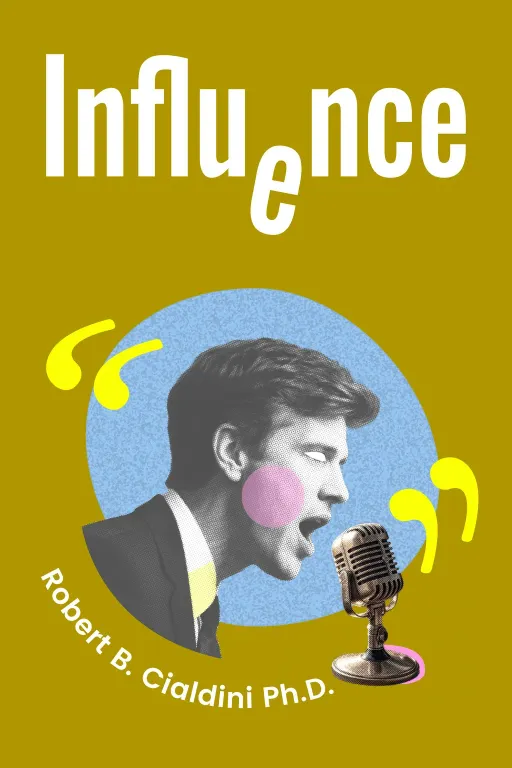
Nova: Absolutely not. We’re diving into "Influence: The Psychology of Persuasion" by Robert Cialdini, a social psychologist who famously went undercover in various sales and marketing environments to understand the underlying principles of compliance. And then, we’ll turn to "Contagious: Why Things Catch On" by Jonah Berger, a marketing professor at the Wharton School, whose research unpacks the science of social transmission.
Atlas: That makes me wonder, for creators who are trying to build their own worlds or share their unique perspectives, is this about selling out, or is it about truly being heard?
The Foundational Principles of Influence (Cialdini)
SECTION
Nova: That’s the core question, isn't it? And Cialdini would argue it’s about being heard, ethically. He identified six universal principles that guide human decision-making, and once you understand them, you see them everywhere. Let’s start with one that’s incredibly powerful for independent creators: Social Proof.
Atlas: Okay, so you’re saying we’re all sheep?
Nova: Ha! Not exactly sheep, but highly social creatures. Social Proof is the principle that we often determine what is correct by finding out what other people think is correct. Think about it: if you see a long line outside a new restaurant, what’s your immediate thought?
Atlas: That it must be good, or at least worth checking out. I’m instantly curious.
Nova: Exactly. Or an artist with a thousand glowing reviews versus one with none. The reviews act as social proof. Cialdini recounts a fascinating study where researchers placed signs in hotel bathrooms asking guests to reuse towels. One sign said, "Help save the environment." Another said, "The majority of guests in this room reuse their towels." Which one do you think was more effective?
Atlas: Oh, I know that feeling of wanting to fit in. I’d guess the second one, because it taps into what others are doing, right?
Nova: You got it! The second sign was significantly more effective. It wasn't about the environment, it was about conforming to a perceived social norm. For a creator, this means testimonials, showing how many people have joined your community, or highlighting popular pieces of your work. It's about demonstrating that others value what you do.
Atlas: That makes sense. So, for someone building a unique world or a complex narrative, it's not enough to just good work; you also need to show that believe it's good. But wait, what if you're just starting out and don't have a massive following? How do you generate social proof authentically without feeling like you're faking it or just chasing numbers?
Nova: That’s a brilliant question, Atlas, and it highlights Cialdini’s emphasis on ethical application. It’s not about fabricating numbers. It’s about leveraging the genuine connections you have. Even a few heartfelt testimonials from early supporters, or showing engagement from a small, dedicated community, can be powerful. It’s about quality over quantity in the beginning. Another key principle is Reciprocity. This is the ingrained human tendency to want to return a favor.
Atlas: Oh, I’ve been there. Someone does something nice for you, and you feel almost compelled to do something back.
Nova: Exactly. Cialdini gives a famous example of the Hare Krishnas, who, despite their unpopularity, became incredibly successful at fundraising. Their technique? They would give passersby a "free gift"—a flower—and then ask for a donation. Even if people tried to refuse the flower, the Krishnas insisted it was a gift. Once the gift was accepted, the principle of reciprocity kicked in, and people were far more likely to donate, even if they didn't want the flower.
Atlas: Wow, that’s kind of manipulative for a flower. But I can see how it works. So for a creator, this could be offering free content—a mini-guide, a bonus track, an exclusive short story—without immediate expectation, creating that sense of obligation?
Nova: Precisely. You offer genuine value upfront, a true gift, and that builds goodwill and a desire in your audience to reciprocate, whether through sharing your work, supporting a future project, or simply engaging more deeply. It creates a foundation of trust and generosity, which is vital for any independent creator.
Making Ideas Contagious and Shareable (Berger)
SECTION
Nova: So, Cialdini gives us the levers for direct influence. But once you've influenced initial perception, the next step is getting your work to organically, to become, well, contagious. This is where Jonah Berger's work comes in, with his STEPPS framework for why things catch on.
Atlas: Okay, so Cialdini is about influencing person, or a small group, to act. Berger is about influencing people to share?
Nova: That’s a great way to put it. Cialdini is about the spark; Berger is about the wildfire. One of Berger's core principles is Social Currency. It's about making people feel smart, special, or in-the-know when they share your content. We share things that make us look good.
Atlas: Right, like when you discover an obscure band before they blow up, and you tell all your friends. It’s not just about the music; it’s about showing you have good taste, you’re an early adopter.
Nova: Exactly! If sharing your art, your story, or your ideas makes someone feel cool or knowledgeable, they're much more likely to do it. Think of exclusive access, behind-the-scenes content, or an intriguing concept that makes the sharer look insightful. Another powerful principle is Emotion. Berger found that highly emotional content, particularly content that evokes awe, anger, or amusement, is far more likely to be shared.
Atlas: That gives me chills. So it’s not just about logical arguments; it’s about tapping into that visceral human experience. For someone who connects disparate worlds, like a storyteller or a poet, this is gold. How do you construct a narrative that makes people something so strongly they can't help but pass it on?
Nova: Consider the story of "Susan Boyle" from Britain's Got Talent. Her initial appearance evoked surprise, then awe, then collective joy. The emotional arc was so powerful, it became a global phenomenon, shared millions of times. It wasn't just her voice; it was the entire emotional journey she took people on. For creators, it's about finding the emotional core of your work and amplifying it. Is it hope, wonder, humor, or a shared frustration?
Atlas: So, it’s not just about making a good product, but designing the of discovering and sharing that product to be inherently rewarding, both emotionally and socially. This sounds like it connects to world-building – how do you make your contagious within your creative universe? Like, how do you build in those triggers and social currency elements so that the very act of engaging with your world makes people want to talk about it?
Nova: That's the deep question, isn't it? It's about designing your creative projects from inception to inherently possess qualities that make them shareable and memorable. It’s not an afterthought; it’s baked into the DNA. Imagine creating a narrative where simply understanding a certain nuanced character's motivation makes the reader feel like they've unlocked a secret, a piece of social currency. Or a piece of music that evokes such profound awe that listeners share it to try and convey that feeling.
Synthesis & Takeaways
SECTION
Nova: So, what we’ve discussed today isn't about manipulating an audience. It’s about deeply understanding the human psyche. Cialdini gives us the foundational levers of influence—like social proof and reciprocity—that can build initial trust and engagement. And Berger shows us how to make that engagement, through principles like social currency and emotion, making your creative work inherently contagious.
Atlas: That’s actually really inspiring. It frames "persuasion" not as a dirty word, but as a way to ensure your message, your art, reaches those who truly need to hear it. It’s about building a better bridge, not just yelling louder.
Nova: Exactly. Your art has intrinsic value. Learning to effectively communicate that value isn't 'selling out,' it’s ensuring your message reaches those who need to hear it most, allowing your unique perspective to leave its mark. It's about empowering your authentic voice to resonate widely.
Atlas: I love that. It’s about intentionality, not just hoping for the best. To take that "Tiny Step" from the book, I imagine a lot of our listeners could identify one piece of their creative work and consciously think, "How can I apply Social Proof to how I present this?" Or, "What's the emotional core of this that would make someone to share it?"
Nova: And that's the starting point. Think about that deep question: how can you design your creative projects from inception to inherently possess qualities that make them shareable and memorable, fostering organic growth for your independent work? It’s a challenge, but one that promises immense reward.
Atlas: Food for thought for all the architects and bards out there. Thank you, Nova.
Nova: Always a pleasure, Atlas. And thank you, our listeners, for joining us on this journey into the art and science of persuasion. We'd love to hear how these ideas resonate with your own creative endeavors. Share your thoughts and insights with us!
Nova: This is Aibrary. Congratulations on your growth!