The Art of Influence: Mastering Consumer Psychology for Market Expansion
Golden Hook & Introduction
SECTION
Nova: You know, Atlas, I was thinking about how we make decisions, especially when we’re shopping. It’s like, sometimes I walk into a store for milk, and I walk out with a new gadget I didn’t even know I needed. What’s going on there?
Atlas: Oh, I know that feeling! It’s like my wallet has a mind of its own. I find myself wondering, was that my choice, or was I… nudged?
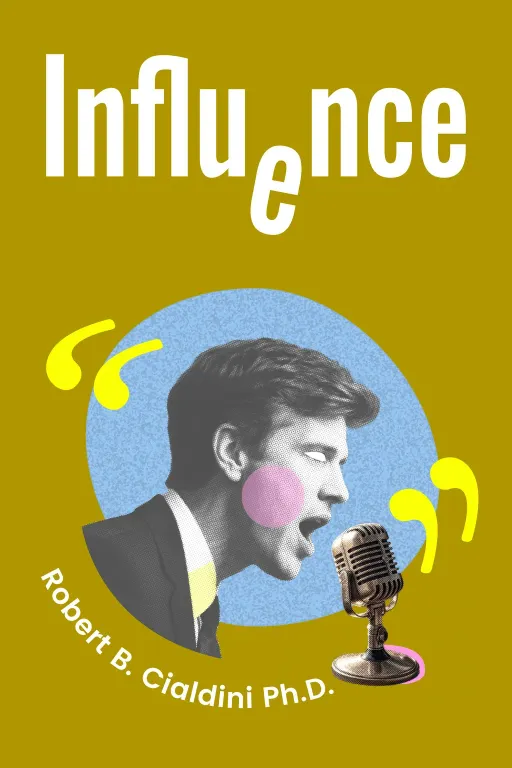
Nova: Nudged, indeed! And that’s what brings us to today’s fascinating dive into the intricate world of consumer psychology. We’re unpacking three foundational texts that unlock the customer's mind. First up, we're talking about by the legendary Robert Cialdini.
Atlas: Cialdini! That name rings a bell. Didn't he famously go undercover for years, infiltrating sales organizations and marketing firms to understand persuasion from the inside out? It’s not often you hear about an academic literally immersing himself in the trenches to research a book.
Nova: Exactly! He spent years observing and participating, not just theorizing. And that hands-on, almost ethnographic approach is what gives his six principles of persuasion such a grounded, practical edge. It’s not just academic theory; it’s what actually works in the real world.
Atlas: So you're saying he didn't just read about influence; he it? That's incredible. And it makes me wonder, for anyone out there trying to grow a business, especially in a competitive space like food or wellness, understanding these principles isn't just nice-to-have, it's essential for connecting with your market.
Nova: Absolutely. And that naturally leads us to our first core topic: Cialdini's Six Principles of Persuasion and how they ethically guide consumer choices.
Unlocking the Customer's Mind with Cialdini's Principles
SECTION
Nova: So, Cialdini identified these six universal principles: Reciprocity, Commitment and Consistency, Social Proof, Authority, Liking, and Scarcity. They're like the fundamental building blocks of human decision-making when it comes to saying "yes."
Atlas: Okay, I’m curious. Reciprocity. That sounds straightforward, like "you scratch my back, I'll scratch yours." But how does that play out in, say, a brand trying to get someone to buy their new organic snack bar?
Nova: That’s a perfect example, Atlas. Think about free samples. It's not just about letting you taste the product. It subtly triggers the principle of reciprocity. You've received something of value—a delicious, organic snack—and now there's a subconscious, often powerful, urge to give something back, which often translates into a purchase.
Atlas: Oh, I get it! It's like when a company sends you a free ebook or a useful tool. You feel a little bit indebted, and then when they offer a paid service, you're more inclined to consider it because they've already provided value.
Nova: Precisely. And then there's Social Proof. This is huge in the digital age. It's the idea that we look to others to determine what is correct behavior. If everyone else is doing it, it must be right.
Atlas: So reviews, testimonials, influencer endorsements—that's all social proof in action. For a food brand, if everyone's raving about a new plant-based burger, I'm much more likely to try it, even if I'm usually a skeptic. It's like, if a thousand people on a popular review site say it's amazing, my internal alarm bells quiet down.
Nova: Exactly. And Authority builds on that, but with a different flavor. It's our tendency to obey credible experts. Think about dentists recommending a specific toothpaste, or a renowned chef endorsing a brand of olive oil.
Atlas: That makes sense. For someone navigating the complexities of the food industry, like regulatory compliance or supply chain optimization, seeing that a product is endorsed by a respected industry figure or certified by a recognized body would build immense trust. It speaks to that "grounded approach" we often talk about.
Nova: Absolutely. And then Liking. We're more likely to be persuaded by people we like. This might seem obvious, but it's why brands invest so much in relatable, charismatic spokespeople, or why sales reps build rapport.
Atlas: So it's not just about the product itself, but the connection you feel to the person or brand presenting it. I imagine a food brand that shares its origin story, its values, and has a friendly, authentic face behind it would naturally leverage this principle.
Nova: Spot on. And Scarcity is another powerful one. We value things more when they are less available. "Limited edition," "last chance," "only a few left"—these phrases aren't just marketing jargon; they tap into our fear of missing out.
Atlas: Wow. So when a local bakery announces a special seasonal pastry that's only available for a week, that creates a buzz, doesn't it? My brain immediately shifts from "I might try that someday" to "I need to get that before it's gone."
Nova: Yes, that's the scarcity principle at work. For a new product launch, creating a sense of exclusive access or limited availability can drive initial demand. But it has to be authentic, otherwise, it backfires.
Atlas: And finally, Commitment and Consistency. This one feels a bit more subtle. How does that influence our choices?
Nova: This is a fascinating one. Once we make a small commitment, even publicly, we feel a strong pressure to remain consistent with that commitment. So, if a brand asks you to sign a petition for a cause they support, or to agree to a small trial, you're more likely to follow through with larger actions later, like purchasing.
Atlas: So, getting someone to say "yes" to a small, seemingly insignificant request can pave the way for bigger "yeses" down the line? That's a powerful insight. It's about building momentum, one small agreement at a time. This feels like a strategic approach for long-term customer relationships, rather than just a one-off sale.
The Dual Systems of Thought: Kahneman's Fast and Slow
SECTION
Nova: Now, while Cialdini gives us the of persuasion, Daniel Kahneman, with his groundbreaking work in, delves into the behind our decisions. He introduces us to two systems that govern human thought: System 1 and System 2.
Atlas: System 1 and System 2. I've heard those terms before. Is that the fast, intuitive thinking versus the slow, deliberate kind?
Nova: Precisely. System 1 is our automatic, fast-acting, intuitive self. It's what makes you instantly recognize a face, or flinch at a loud noise. It's emotional and often operates subconsciously. System 2 is the slower, more effortful, logical part of our brain. It's what you use to solve a complex math problem or analyze a business report.
Atlas: So, when I grab that organic snack bar because it's on sale and looks appealing, that's System 1. But if I then stop to read the nutritional label, compare ingredients, and check for allergens, that's System 2 kicking in?
Nova: Exactly! And here's the kicker: System 1 is lazy. It prefers to rely on shortcuts and heuristics. System 2, our rational self, is easily fatigued. So, most of our daily decisions, especially consumer choices, are largely driven by System 1.
Atlas: That's a huge insight, especially for businesses. It means that while we might we're making rational choices, a lot of it is driven by gut feelings, subconscious biases, and quick associations. So, for a food brand, packaging, branding, and even the placement on a shelf might be more influential than a detailed nutritional breakdown for that initial grab.
Nova: You've hit the nail on the head. This isn't to say System 2 is irrelevant, but understanding how to appeal to System 1 first is crucial for market expansion. Think about the "peak-end rule" from Kahneman's work—we tend to remember the peak emotional moment and the end of an experience, rather than the average.
Atlas: So, a product experience needs to have a memorable "peak" and a satisfying "end" to leave a lasting positive impression. That's not just about the product itself, but the entire customer journey. It means making that unboxing experience delightful, or the checkout process seamless.
Nova: Exactly. It's about crafting an "irresistible experience," as our text calls it. For a brand, this means not just having a great product, but making the entire interaction with that product and brand feel good, easy, and memorable.
Nudging Towards Better Decisions: Thaler and Sunstein
SECTION
Nova: And this brings us beautifully to our third essential book, by Richard H. Thaler and Cass R. Sunstein. They take these insights about System 1 and System 2 and introduce the concept of 'nudge' theory.
Atlas: Nudge theory. That sounds like a gentle push, rather than a shove. So, it’s about guiding people without forcing them?
Nova: Precisely. A nudge is any aspect of the choice architecture that alters people's behavior in a predictable way without forbidding any options or significantly changing their economic incentives. It's about designing environments that make it easier for people to make better choices, for themselves and for society.
Atlas: So, going back to our food example, instead of outright banning unhealthy options, a nudge might be placing the healthier snacks at eye level in the cafeteria, or making the default option for a meal the salad instead of fries.
Nova: That's a perfect example, Atlas. Or think about organ donation. In some countries, you have to actively opt-in, and rates are low. In others, you're automatically an organ donor unless you actively opt-out, and rates are much higher. That simple change in the default is a powerful nudge.
Atlas: That’s fascinating. It’s about leveraging our natural human tendencies, like inertia or the path of least resistance, to guide us towards outcomes that are beneficial. And it aligns perfectly with the idea of aligning your product with genuine needs and desires, not just manipulating.
Nova: Absolutely. The ethical application of nudges is key. It's not about tricking people; it's about making the desired behavior the easiest or most obvious one. For a brand, this could mean designing their app to default to more sustainable shipping options, or making it simpler to find products with ethical sourcing.
Atlas: So, if I'm a visionary in the food industry, looking to expand my market while also promoting healthier or more sustainable choices, I'm not just selling a product. I'm designing an experience, a choice architecture, that gently guides my consumers towards decisions that benefit them and the planet. This feels incredibly powerful, and frankly, a bit more responsible.
Nova: It is. It transforms marketing from mere persuasion into a form of benevolent design. It's about understanding the whole picture of consumer behavior—from the subconscious triggers Cialdini identified, to the fast and slow thinking Kahneman revealed, to the subtle environmental design that Thaler and Sunstein championed.
Synthesis & Takeaways
SECTION
Nova: So, bringing it all together, what we've learned from Cialdini, Kahneman, and Thaler and Sunstein isn't about manipulation. It's about deep empathy, really understanding the customer's mind.
Atlas: That’s it. It’s about recognizing that consumers aren't always rational robots. They're driven by deeply ingrained psychological principles, by fast, intuitive thinking, and by the environments we create for them.
Nova: Exactly. And for anyone looking to make an impact, whether it's expanding a business, promoting healthier choices, or simply communicating more effectively, the takeaway is clear: design with human psychology in mind. Don't just tell people what to do; understand what makes them tick and build a path that leads them to a better choice.
Atlas: That’s a profound shift in perspective. Instead of fighting against human nature, we can work it. It’s about aligning your product with those genuine needs and desires, making the right choice the easy choice. It’s a strategic mind at work, but also one that’s grounded in how real people actually behave.
Nova: Indeed. It's about recognizing that whether it's a "limited edition" offer, a glowing review, or simply putting the healthy option front and center, these aren't just tricks. They are insights into the fundamental operating system of human decision-making, used to create value.
Atlas: That’s actually really inspiring. It means you can be both pragmatic and visionary in your approach to market expansion, all by understanding the incredible complexity of the human mind.
Nova: This is Aibrary. Congratulations on your growth!