Stop Chasing, Start Attracting: The Art of Building Authentic Influence.
Golden Hook & Introduction
SECTION
Nova: Atlas, quick game. I'll say "influence," and you tell me the first thing that comes to mind, but make it wildly off-base, something completely what we're aiming for.
Atlas: Oh, I love this! Okay, influence… Hmm. "That guy at the office who he's influencing everyone by talking really loudly at the coffee machine about his weekend."
Nova: Oh, that's perfect! Absolutely spot-on. Because today, we're talking about influence, not just volume, not just noise, but the art of building authentic, deep-seated influence that doesn't feel like a push, but a pull.
Atlas: That sounds like a superpower, honestly. Especially for anyone who's ever felt like they're constantly impact, chasing recognition, instead of having it naturally come to them.
Nova: Exactly. And that's precisely what Dr. Evelyn Reed explores in her insightful work, "Stop Chasing, Start Attracting: The Art of Building Authentic Influence." Dr. Reed spent a decade as a high-stakes negotiation consultant before writing this. She saw firsthand how often people mistook manipulation for genuine connection, and it fueled her to distill these powerful principles into a truly ethical framework.
Atlas: That's fascinating. I can imagine in high-stakes negotiations, the line between persuasion and manipulation must be incredibly thin. So, what's her secret? How do we stop chasing and start attracting, without, you know, just becoming a better coffee machine talker?
Nova: Well, she brilliantly synthesizes insights from two giants in the field: Robert Cialdini and Simon Sinek. And we’re going to dive into both. First up, the mechanics. The hidden levers of human behavior.
The Mechanics of Influence: Cialdini's Ethical Persuasion
SECTION
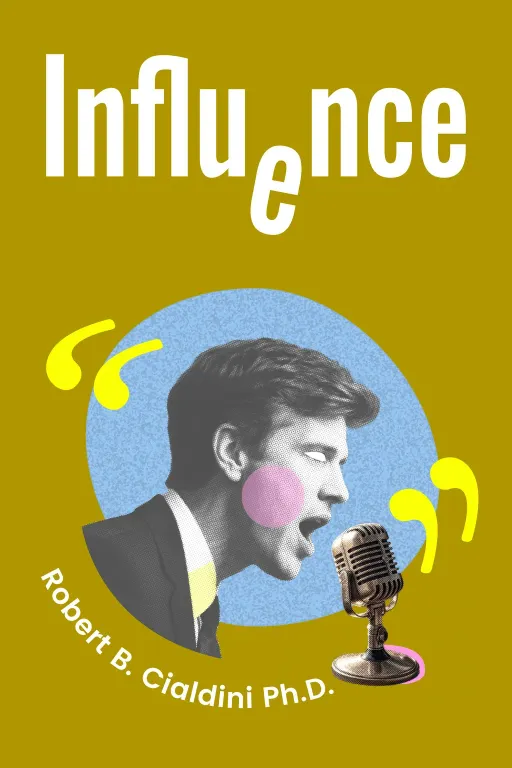
Nova: So, Cialdini, in his classic book "Influence: The Psychology of Persuasion," unpacks six universal principles that subtly guide our decisions. These aren't tricks; they're deeply wired human responses. And when you understand them, you can build connections that are both powerful and profoundly ethical.
Atlas: Six principles, huh? I’m curious, for someone who values strategic dominance and wants to understand the "why" behind human actions, how do these translate from just, say, selling a product, to actually building authentic influence?
Nova: That’s a brilliant distinction, Atlas. Because Reed’s work, building on Cialdini, argues that it’s about, not just a one-off sale. Let's take reciprocity, for instance. It’s the human tendency to want to give back when something has been given to us.
Atlas: Right, like when someone buys you a coffee, you feel obligated to get the next round.
Nova: Exactly. But in the context of attraction, it’s not about a transactional exchange. Imagine a startup founder, let's call her Lena. Instead of constantly pitching her product, she starts by generously sharing valuable insights, offering free workshops, and providing genuinely useful open-source tools to her target community. She’s not asking for anything in return, initially.
Atlas: So she’s building goodwill, essentially.
Nova: Precisely. She’s giving genuine value upfront. Over time, when she eventually launches her product or asks for support for a new initiative, people aren't just buying a product; they're reciprocating the value and trust she’s already built. They to support her because she's already supported them. It’s a natural, almost subconscious desire to balance the scales.
Atlas: That makes sense. It’s not a direct "I gave you this, now give me that." It’s more like, "You've been so valuable to me, I trust you, and I want to be part of what you're building."
Nova: Yes, it shifts from obligation to genuine connection. Another powerful one is social proof. We tend to do what we see others doing, especially people we perceive as similar to us or authoritative.
Atlas: So, like seeing a long line outside a restaurant and assuming it must be good?
Nova: Perfect example. Now, for a leader, or someone building a personal brand, this isn't about faking popularity. It's about genuinely showcasing the positive outcomes and engagement that already exist. Let's say a team leader, Alex, wants to foster a culture of open feedback. Instead of just people to give feedback, Alex starts publicly acknowledging and praising team members who give constructive feedback.
Atlas: Ah, so they're highlighting the desired behavior.
Nova: Exactly. They’re creating visible social proof that giving feedback is not only safe but rewarded and valued. Other team members see this, and it subtly influences them to follow suit. It’s far more effective than a top-down mandate. It creates a ripple effect of desirable actions, demonstrating what’s expected and rewarded within the group.
Atlas: I can see how that would be powerful. It’s like showing versus telling. But wait, how do you ensure these principles are used ethically? For an ambitious achiever, the temptation might be to use these for short-term gain, which could easily cross into manipulation.
Nova: That’s the critical point, Atlas. And Reed emphasizes this repeatedly. The ethics come from your. Are you genuinely trying to build value, foster connection, and lead positively? Or are you trying to trick someone into doing something for your sole benefit? If your intent is authentic, these principles become tools for deeper connection. If your intent is self-serving and deceptive, they become manipulative. It's about building trust, not just creating compliance.
The Power of Purposeful Attraction: Sinek's 'Start with Why'
SECTION
Nova: And that naturally leads us to the second key idea Reed integrates, which often acts as the ultimate ethical compass for influence: Simon Sinek’s "Start with Why." Sinek argues that people don't buy you do; they buy you do it.
Atlas: I love that. For someone driven by proving their worth and achieving mastery, understanding the "why" seems like the ultimate leverage. But what exactly does Sinek mean by "why"? Is it just a fancy mission statement?
Nova: It’s so much more profound than a mission statement. Your "why" isn’t about profit or market share; it’s your core belief, your purpose, the cause that inspires you to do what you do. It’s what gets you out of bed in the morning. Sinek illustrates this with his "Golden Circle": Why, How, What. Most people communicate from the outside in—they tell you they do, then they do it, and maybe, eventually,.
Atlas: And I imagine the most influential people do the opposite?
Nova: Exactly! They communicate from the inside out. They start with their "why." Think about Apple. They don't just say, "We make great computers". They start with, "Everything we do, we believe in challenging the status quo and thinking differently". "The way we challenge the status quo is by making our products beautifully designed and user-friendly". "And we happen to make great computers".
Atlas: Wow, that’s such a powerful reframe. You’re not just buying a laptop; you’re buying into a philosophy. You’re attracting people who resonate with your core belief.
Nova: Precisely. And for an ambitious achiever, this is game-changing. If you’re driven by validation, by proving your worth, articulating your "why" isn't just about sounding good. It’s about attracting like-minded individuals—team members, clients, mentors—who are drawn to your deeper purpose, not just your skills or achievements. This creates a magnetic personal brand.
Atlas: So, how does someone their "why"? Because I think a lot of people, myself included sometimes, are so focused on the "what" and the "how" – the metrics, the deliverables, the path to success – that the "why" can feel elusive.
Nova: That’s a brilliant question, and it’s where Reed’s synthesis truly shines. Finding your "why" isn't always an immediate epiphany. It often requires deep self-reflection, looking back at moments when you felt most fulfilled, most alive, most impactful. What was the underlying thread? What problem were you solving, or what value were you creating, that truly resonated with you beyond the immediate task?
Atlas: So it's about connecting with that deeper motivation, the core drive that fuels everything. It’s not about inventing a purpose, but discovering one that’s already there.
Nova: Exactly. And once you articulate it, everything you do—every project, every interaction, every decision—becomes aligned. And that alignment is incredibly attractive. It creates consistency, it builds trust, and it makes your influence feel authentic and earned, not forced. It’s how you move beyond just being good at something to being truly magnetic.
Synthesis & Takeaways
SECTION
Nova: So, what Dr. Reed essentially argues in "Stop Chasing, Start Attracting" is that authentic influence isn't about mastering manipulation or just being charismatic. It's a powerful fusion of understanding the fundamental psychological levers Cialdini describes, having a crystal-clear, deeply felt "why" that Simon Sinek champions.
Atlas: I guess that makes sense. You can understand the mechanics of how to build a bridge, but if you don't know you're building it, or what purpose it serves, it’s just a pile of materials. The "why" gives the "how" its meaning and its magnetic pull.
Nova: That’s a perfect analogy, Atlas. It's about attractive, not just persuasion. It’s about building a gravitational field around your purpose, rather than constantly pushing your agenda. And for ambitious achievers, this isn't just a soft skill; it's a strategic imperative for lasting impact and true leadership.
Atlas: I can definitely see how that would resonate with anyone who wants to not just succeed, but to dominate their field ethically, to build something truly meaningful that attracts the best. It’s about impact that transcends personal validation, becoming a source of inspiration for others.
Nova: Absolutely. And as a tiny step listeners can take right now, Reed suggests consciously identifying which of Cialdini's six principles you are naturally using, or could intentionally apply, in your next interaction. But now, do it through the lens of your "why." How can you apply reciprocity or social proof not to get something, but to genuine connection and reinforce your purpose?
Atlas: I love that. It turns a tactical move into a strategic act of attraction. So, the next time you're interacting, ask yourself: How can I genuinely give value, or authentically showcase positive engagement, in a way that aligns with my deeper purpose and attracts the right people to my vision?
Nova: Precisely. It’s about mindful self-reflection and asking, "Why does this matter to me?" And then letting that "why" guide your influence.
Atlas: What if, by focusing on our "why," we discover a completely different path than we initially expected?
Nova: Then you’ve found authentic influence, Atlas. And that's a journey worth taking.
Atlas: That’s a powerful thought to leave our listeners with.
Nova: This is Aibrary. Congratulations on your growth!